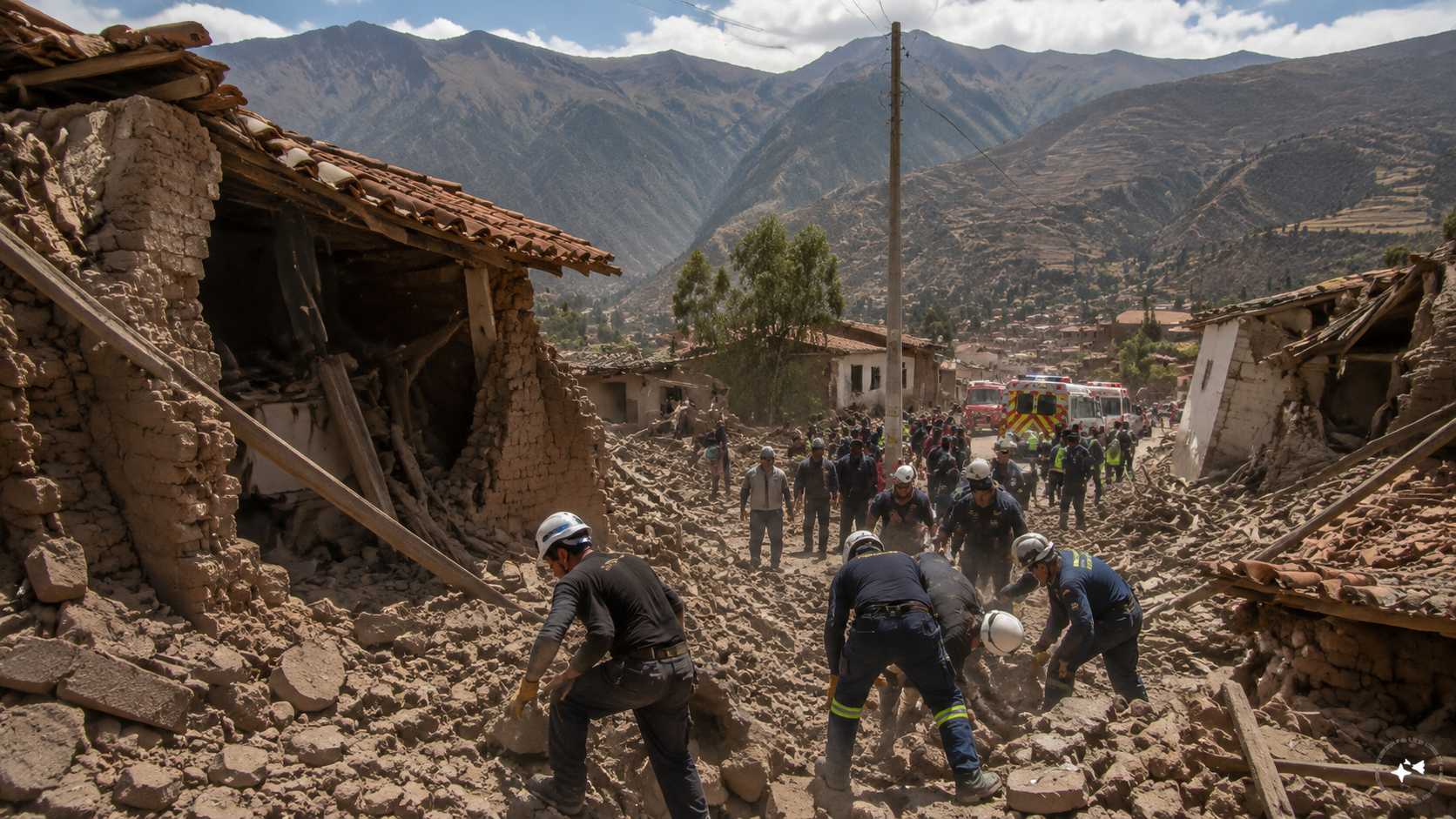
Rescue workers and residents inspect collapsed adobe homes after a 5.1-magnitude earthquake struck Peru's Junín region, killing at least five people and leaving hundreds homeless.
Peru Earthquake Kills Five, Leaves Hundreds Homeless
Why a Moderate 5.1-Magnitude Tremor Became a Deadly Disaster in Peru’s Andes Region
A Peru earthquake measuring 5.1 magnitude has left at least five people dead, injured more than 20 others and displaced around 300 residents after striking the Junín region in central Peru on Saturday night. Although classified as a moderate earthquake, the tremor caused extensive destruction because of its shallow depth and the widespread presence of vulnerable adobe and quincha homes. The disaster has renewed concerns about earthquake preparedness in one of the world’s most seismically active regions and highlighted the ongoing risks facing communities living along the Pacific Ring of Fire.
A Moderate Earthquake With Deadly Consequences
At first glance, a magnitude 5.1 earthquake might not appear capable of causing widespread devastation. In many parts of the world, earthquakes of similar strength result in limited structural damage and few casualties.
However, Peru’s latest disaster demonstrates that an earthquake’s impact depends on much more than its magnitude.
The tremor struck late Saturday near Chupaca in the Junín region, approximately 300 kilometres east of Lima, with an epicentre at a depth of about 24 kilometres. Seismologists classify this as a relatively shallow earthquake, meaning seismic energy reaches the surface with greater intensity than deeper earthquakes.
Within minutes of the main event, a second earthquake measuring 3.7 magnitude shook the same region. Although significantly weaker, the aftershock added to residents’ fears and complicated emergency response efforts.
According to Peruvian authorities, rescue teams immediately began assessing collapsed buildings, damaged infrastructure and communities requiring urgent humanitarian assistance.
Why This Peru Earthquake Became So Destructive
The severity of the disaster can largely be traced to the type of housing found throughout the affected region.
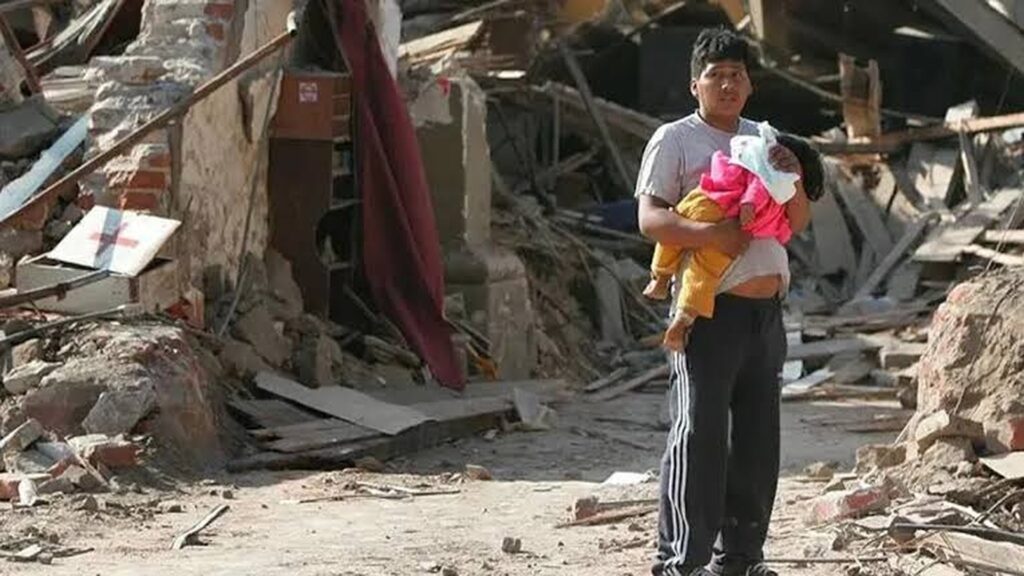
Many families in Chongos Bajo and neighbouring communities live in homes built with adobe bricks or quincha, a traditional construction method using wood, cane and mud. While these materials remain affordable and culturally significant, they are particularly vulnerable during earthquakes.
As strong ground shaking spread across the region, many of these structures failed almost instantly.
One resident described the devastation simply:
“The earthquake destroyed our home. Here there are many adobe houses that collapsed.”
That testimony reflects the reality facing hundreds of families who lost not only their homes but also much of their personal belongings within seconds.
Officials from Peru’s National Civil Defense Institute reported that at least 48 houses were completely destroyed, while additional buildings suffered varying degrees of structural damage.
Approximately 300 people were left homeless, forcing emergency authorities to establish temporary shelter for displaced residents.
Rescue Teams Race Against Time
Emergency responders moved quickly after the earthquake to search damaged buildings and assist injured residents.
Medical workers treated dozens of people suffering from injuries caused by collapsing walls, falling debris and panic during the tremor.
Authorities also continued inspecting damaged communities to determine whether additional buildings faced the risk of collapse.
As reported by international media, emergency officials warned that the full scale of the destruction may take several days to determine as engineers continue structural assessments across the affected districts.
For hundreds of displaced families, immediate priorities now include emergency shelter, food supplies, clean water and medical assistance while recovery efforts continue.
Hospitals and Historic Sites Sustain Damage
The earthquake’s impact extended beyond residential communities.
In Huancayo, two important healthcare facilities suffered structural damage.
The Daniel Alcides Carrión Hospital, which received many of the injured, experienced damage during the quake.
The El Carmen Mother and Child Hospital also reported cracks inside its paediatric intensive care unit, prompting further safety inspections.
Several cultural and religious landmarks were also affected.
Historic structures, including the Cani Cruz stone cross in Chongos Alto and parts of the centuries-old Santiago de León convent, sustained visible damage.
Although road infrastructure remained largely intact, authorities also reported temporary electricity outages affecting several districts across the region.
Peru Earthquake and the Pacific Ring of Fire
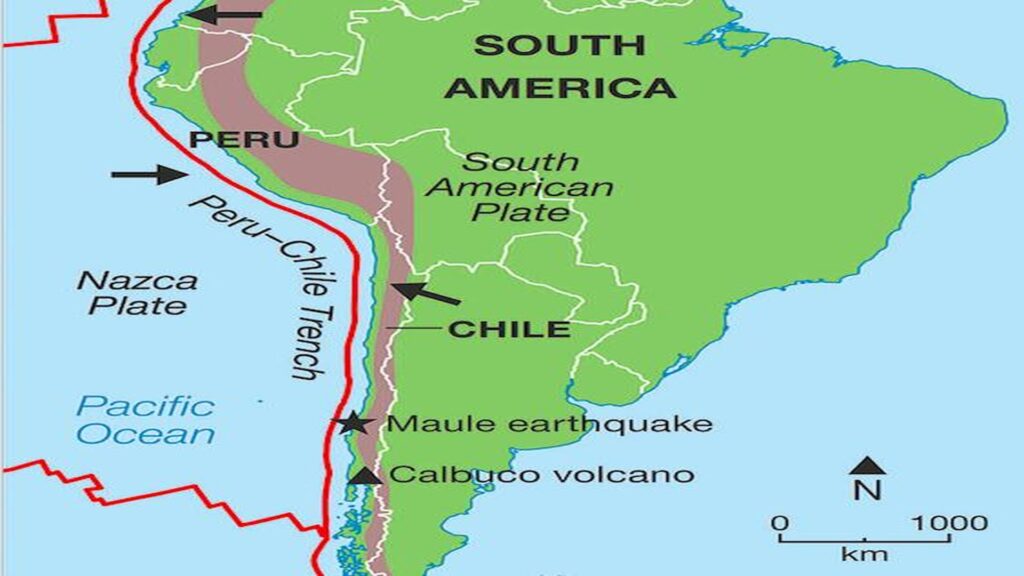
The latest Peru earthquake serves as another reminder of the country’s unique geographical reality. Peru sits on the Pacific Ring of Fire, a vast horseshoe-shaped belt stretching around the Pacific Ocean where the movement of several tectonic plates produces frequent earthquakes and volcanic activity.
According to the Geophysical Institute of Peru (IGP), the country experiences hundreds of earthquakes every year because it lies along one of the world’s most active seismic zones.
Scientists estimate that nearly 85 percent of the world’s earthquakes occur within this region.
For Peru, seismic activity is part of everyday life. According to the country’s seismologists, Peru records approximately 400 earthquakes every year, although most are too weak to be felt by the population.
The Junín region, where this latest earthquake struck, is particularly vulnerable because of its mountainous terrain, traditional housing methods and proximity to active geological fault systems.
Authorities say earthquakes measuring 5.0 magnitude or higher occur in the Chupaca area roughly every 13 years, while smaller tremors are far more common.
Although scientists cannot accurately predict when an earthquake will occur, modern seismic monitoring helps authorities identify high-risk zones and improve emergency planning.
Why a 5.1 Magnitude Earthquake Can Still Be Deadly
One of the biggest misconceptions about earthquakes is that only massive tremors above magnitude 7 cause fatalities.
The Peru disaster demonstrates why that assumption is incorrect.
Several factors determine whether an earthquake becomes a humanitarian disaster:
The Earthquake Hazards Program | U.S. Geological Survey Program explains that earthquake damage depends not only on magnitude but also on factors such as depth, distance from populated areas, local geology and building quality.
1. Shallow Depth
The earthquake struck at approximately 24 kilometres below the surface.
Because it occurred relatively close to the ground, much of its energy reached populated communities with greater intensity.
2. Building Construction
Many homes in Chongos Bajo and surrounding communities were built using adobe bricks or quincha, a traditional mixture of wood, cane and mud.
These materials perform poorly under strong horizontal shaking.
Modern earthquake-resistant buildings are designed to flex during seismic activity, while older adobe structures often crack and collapse.
3. Population Exposure
The earthquake struck populated communities rather than isolated mountain terrain.
Even moderate shaking can become deadly when large numbers of people occupy structurally weak buildings.
4. Aftershocks
Seventeen minutes after the main earthquake, a magnitude 3.7 aftershock struck the same region.
Although considerably weaker, aftershocks create additional hazards by weakening already damaged structures and complicating rescue efforts.
Humanitarian Impact Extends Beyond Casualties
While official attention naturally focuses on fatalities and injuries, earthquakes often leave long-lasting humanitarian consequences.
In Peru’s affected communities, hundreds of residents suddenly found themselves without shelter.
Many families lost:
- Homes
- Clothing
- Household possessions
- Livelihood equipment
- Personal documents
Schools, hospitals and religious centres also suffered damage, disrupting essential public services.
Recovery will likely continue long after emergency rescue operations conclude.
Economic Impact of the Peru Earthquake
Natural disasters frequently create economic losses that extend well beyond damaged buildings.
Authorities must now finance:
- Emergency medical care
- Temporary shelters
- Food distribution
- Infrastructure inspections
- Road and utility repairs
- Reconstruction projects
For many affected families, rebuilding may take months or even years.
Agricultural communities could also experience income losses if damaged roads or infrastructure disrupt local trade and transportation.
Insurance coverage remains limited in many rural communities, meaning reconstruction often depends heavily on government assistance and humanitarian support.
Why This Story Matters Beyond Peru
Although the disaster occurred thousands of kilometres from Africa, its lessons remain highly relevant across the developing world.
Many communities throughout Africa—including parts of Nigeria—also rely on traditional building materials that may not withstand natural disasters.
The Peru earthquake reinforces several important lessons:
- Building standards save lives.
- Disaster preparedness cannot wait until after tragedy strikes.
- Public education remains essential.
- Emergency response systems require continuous investment.
As climate-related disasters become more frequent globally, governments are increasingly recognising the need for stronger infrastructure capable of protecting vulnerable populations from multiple hazards.
African and Nigerian Relevance
Nigeria is not located within a major earthquake zone like Peru, but disaster preparedness remains a growing public policy concern.
Flooding, coastal erosion, building collapses and other emergencies continue to threaten communities across the country.
The Peru earthquake highlights the importance of:
- Enforcing modern building regulations.
- Investing in resilient public infrastructure.
- Training emergency responders.
- Educating citizens about disaster preparedness.
- Improving coordination among emergency agencies.
For policymakers across Africa, Peru’s experience demonstrates that disaster resilience begins long before an emergency occurs.
Official Response and Ongoing Recovery
Peruvian emergency agencies continue assessing the full extent of the damage.
Search and rescue teams have been deployed to affected communities, while engineers inspect buildings that may still pose safety risks.
Temporary shelters have been established for displaced residents, and authorities continue evaluating damage to hospitals, schools, historic monuments and public infrastructure.
Officials have urged residents to remain alert for possible aftershocks while emergency assessments continue.
At the time of publication, authorities had not indicated that major national highways sustained significant structural damage, although electricity outages affected several districts immediately after the earthquake.
The full cost of reconstruction remains unknown.
Looking Ahead
Peru’s latest earthquake will likely renew national discussions about strengthening earthquake-resistant construction, particularly in rural regions where traditional housing remains common.
Experts argue that reducing future casualties requires long-term investment rather than emergency spending alone.
Potential priorities include:
- Expanding earthquake-resistant housing programmes.
- Modernising schools and hospitals.
- Updating building regulations.
- Improving seismic monitoring.
- Increasing public awareness campaigns.
- Strengthening disaster-response coordination.
While earthquakes cannot be prevented, their consequences can often be reduced through better planning, stronger infrastructure and informed communities.
Conclusion
The Peru earthquake that struck the Junín region demonstrates that an earthquake’s magnitude tells only part of the story.
Although measuring a moderate 5.1, the tremor proved deadly because it combined several high-risk factors: shallow depth, vulnerable housing, densely populated communities and the realities of living along the Pacific Ring of Fire.
With at least five lives lost, dozens injured and hundreds left homeless, the disaster underscores the importance of resilient infrastructure, effective emergency response and continuous public preparedness.
As recovery efforts continue, Peru once again confronts the challenge faced by many nations living in active seismic zones—how to reduce future tragedies in a landscape where earthquakes remain an unavoidable part of life.
For practical guidance on disaster preparedness and community resilience, readers can explore resources from the International Federation of Red Cross and Red Crescent Societies (IFRC).
Why This Story Matters
The tragedy in Peru is more than a breaking news event. It is a reminder that natural disasters become humanitarian crises when vulnerable infrastructure, limited preparedness and population exposure intersect. The lessons from Junín are relevant not only to Peru but also to countries worldwide seeking to build safer, more resilient communities.
Recommended Coverage
Bundibugyo Ebola Outbreak: Nigeria on High Alert
Natural disasters and disease outbreaks both test the resilience of communities and emergency response systems. Discover why Nigerian health authorities are on alert as the Ebola outbreak raises fresh cross-border concerns.
Bangkok Bar Fire Kills 28 as Safety Probe Begins
From earthquakes to deadly fires, disasters expose the importance of building safety and emergency preparedness. Read how investigators are examining another tragedy that claimed dozens of lives.
Congo Ebola Outbreak Highlights Africa’s Health System Struggles
Major crises often reveal the strengths and weaknesses of public institutions. Explore how Africa’s healthcare systems are responding to another humanitarian emergency and the lessons that could shape future disaster preparedness.
FAQ
What caused the Peru earthquake?
The earthquake was caused by tectonic plate movement beneath Peru, which lies on the Pacific Ring of Fire, one of the world’s most seismically active regions.
How strong was the Peru earthquake?
The main earthquake measured 5.1 magnitude, followed by a 3.7-magnitude aftershock about 17 minutes later.
How many people died?
Authorities confirmed that at least five people died, while more than 20 others were injured.
Why was a 5.1 earthquake so destructive?
Although considered moderate, the earthquake struck at a shallow depth and affected communities where many homes were built with adobe and quincha materials that are highly vulnerable to seismic shaking.
Where did the earthquake occur?
The earthquake struck near Chupaca in Peru’s Junín Region, approximately 300 kilometres east of Lima.
Is Peru prone to earthquakes?
Yes. Peru lies on the Pacific Ring of Fire and experiences around 400 earthquakes each year, although most are too weak to be felt.
About the Author