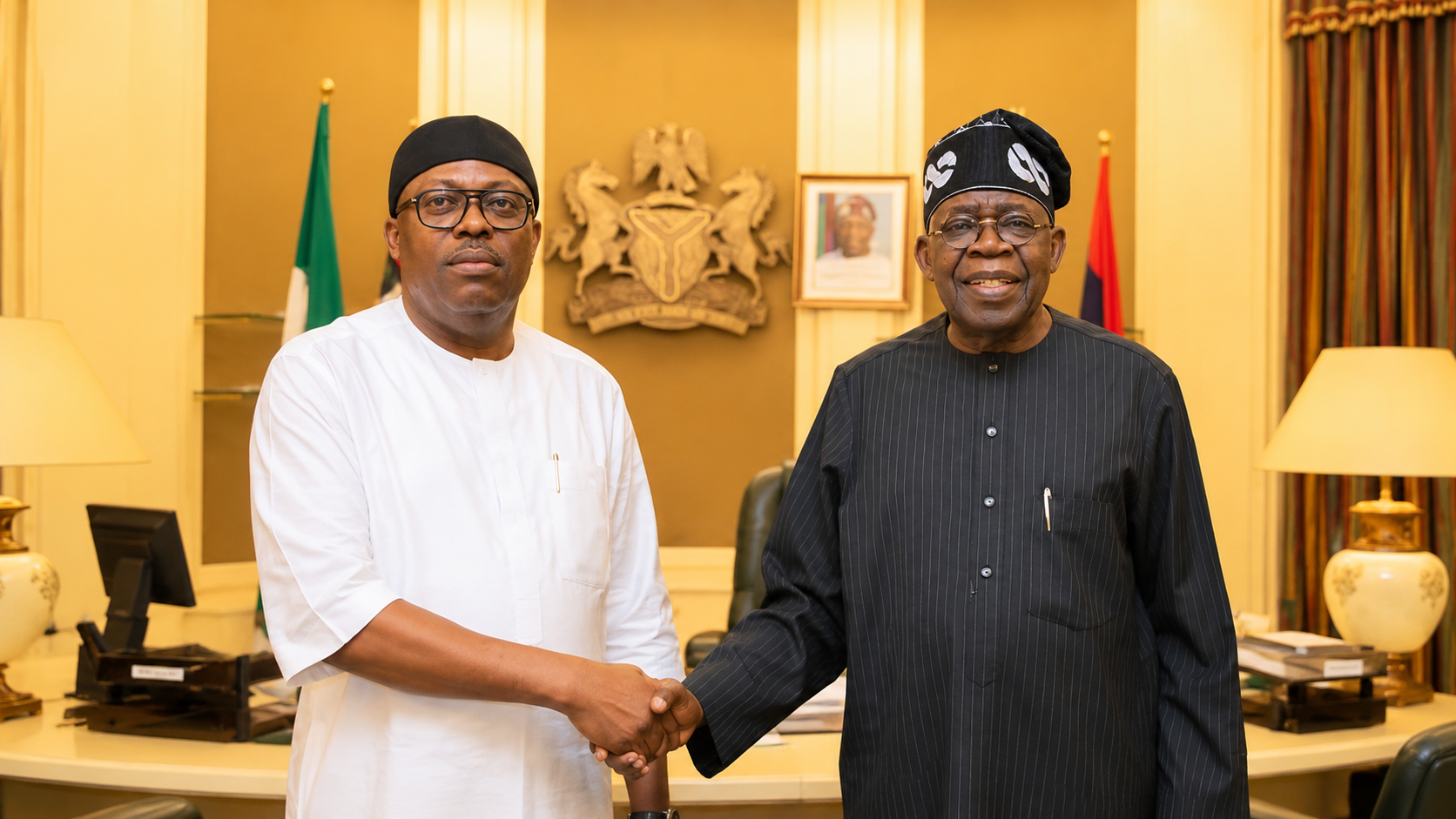
State Police Implementation Begins as Tinubu Launches 7-Man Panel
State Police Implementation enters a decisive new phase after President Bola Tinubu inaugurated a seven-member Presidential Working Group tasked with preparing the National Policing Bill, a key piece of legislation expected to transform Nigeria’s security architecture.
The committee, inaugurated on Tuesday at the Presidential Villa in Abuja, has been given seven weeks to produce an implementation-ready draft bill that will provide the legal framework for operating state police across the country. While the Constitution Alteration (State Police) Bill, 2026, has already established the constitutional basis for decentralised policing, the federal government says additional legislation is required before the system can become operational.
Rather than merely marking another political announcement, the inauguration signals the beginning of the practical phase of one of Nigeria’s most significant security reforms in decades. The proposed National Policing Bill is expected to define how federal and state police institutions will coexist, coordinate responsibilities and maintain national policing standards.
For years, debates over state police have centred on constitutional amendments and political disagreements. The government’s latest move shifts attention from legislative approval to implementation, where the success or failure of the reform will ultimately be determined.
State Police Implementation Moves Beyond Constitutional Reform
President Tinubu, represented during the inauguration by his Chief of Staff, Rt. Hon. Femi Gbajabiamila, explained that constitutional amendments alone cannot establish an operational policing system.
According to the Presidency, the recently approved constitutional changes provide only the legal authority for states to establish police services. They do not contain the detailed operational provisions necessary to govern recruitment, command structures, accountability mechanisms, funding arrangements or cooperation between federal and state policing institutions.
The responsibility for closing that gap now rests with the Presidential Working Group.
Its primary assignment is to prepare a comprehensive National Policing Bill that translates constitutional provisions into workable legislation capable of guiding implementation nationwide.
The administration believes this approach will help ensure that every state police organisation operates under nationally accepted legal standards while retaining the flexibility needed to respond to local security challenges.
The move also reflects growing recognition that constitutional amendments represent only the first stage of institutional reform. Without detailed implementation laws, governments often struggle to convert policy objectives into functioning public institutions.
Why the National Policing Bill Matters
The proposed National Policing Bill is expected to become the operational blueprint for Nigeria’s future dual policing system.
Rather than replacing the Nigeria Police Force, the legislation aims to establish clear legal relationships between federal police authorities and new state policing organisations.
Officials say the bill will focus on several major areas, including:
- establishing minimum operational standards applicable across all states;
- defining measurable criteria for determining whether individual states are prepared to establish police services;
- creating legal procedures for coordination between federal and state police agencies;
- preventing jurisdictional conflicts during investigations and security operations;
- strengthening accountability mechanisms; and
- embedding safeguards designed to protect citizens’ constitutional rights.
Human rights protections have emerged as one of the most closely watched elements of the proposed legislation.
Critics of state police have consistently argued that decentralised policing could expose law enforcement agencies to political interference or abuse by state governments. Supporters, however, maintain that carefully designed legal safeguards can minimise those risks while improving local security responses.
The forthcoming bill is therefore expected to strike a balance between operational independence and national oversight.
Seven-Member Committee Brings Together Key Institutions

The composition of the Presidential Working Group reflects the federal government’s intention to involve multiple institutions responsible for law, governance and national security.
The committee is chaired by Chief of Staff Femi Gbajabiamila.
Other members include:
- Attorney-General of the Federation and Minister of Justice, Lateef Fagbemi, SAN;
- the National Security Adviser;
- the Inspector-General of Police;
- the Chairman of the Nigeria Governors’ Forum;
- the Chairman of the Nigeria Governors’ Forum Committee on State Police; and
- President of the Nigerian Bar Association, Afam Osigwe, SAN.
The inclusion of legal experts, security officials, governors and representatives of the legal profession demonstrates an effort to ensure that the proposed legislation reflects operational realities, constitutional requirements and the interests of both federal and state governments.
It also highlights the complexity of introducing a policing model that distributes law enforcement responsibilities across multiple levels of government while preserving national security coordination.
Seven Weeks to Produce an Implementation Blueprint
One of the most notable aspects of the inauguration is the committee’s strict seven-week deadline.
Rather than conducting an open-ended review, members have been instructed to deliver a technically robust draft bill within a relatively short period.
Once completed, the legislation will be transmitted to the National Assembly for consideration.
The compressed timetable suggests the federal government intends to maintain momentum behind the state police initiative following recent constitutional amendments.
It also reflects increasing pressure from many stakeholders who have argued that Nigeria’s evolving security environment requires faster institutional reforms rather than prolonged legislative processes.
Governors Push for Coordinated Nationwide Adoption
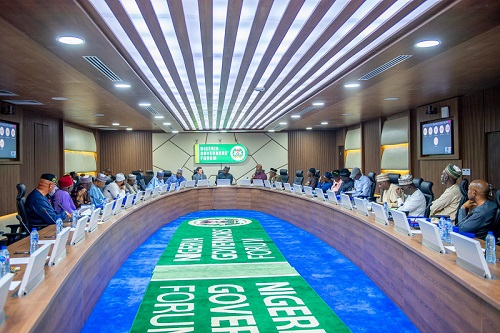
One of the most significant developments accompanying the inauguration of the Presidential Working Group is the strategy being proposed by the Nigeria Governors’ Forum (NGF) to accelerate implementation once the National Policing Bill is completed.
Speaking on behalf of the governors, Ogun State Governor Dapo Abiodun indicated that plans are already being developed to avoid lengthy legislative delays at the state level. According to the proposal, all 36 State Houses of Assembly would consider the bill simultaneously once it is transmitted after passage by the National Assembly.
If successfully executed, such coordination could shorten the period between federal legislative approval and state-level implementation, helping to establish a more uniform legal foundation for state police across Nigeria.
The approach also reflects growing cooperation between the Federal Government and state governments on security reforms, particularly at a time when many governors have repeatedly called for greater constitutional responsibility in addressing local security challenges.
Why Nigeria Is Revisiting State Police
The debate over state police is not new.
For decades, successive administrations, security experts, constitutional lawyers and civil society organisations have disagreed over whether policing should remain exclusively under federal control or become a shared responsibility between the federal and state governments.
Supporters of state police argue that Nigeria’s expanding population, vast geographical size and increasingly diverse security challenges have stretched the capacity of the centrally controlled Nigeria Police Force.
They contend that governors, as chief security officers of their states in practice, require policing institutions that are better positioned to respond quickly to local criminal activities, communal conflicts, kidnapping, banditry and other security threats.
Advocates also believe officers recruited from local communities may possess stronger knowledge of local languages, geography and social dynamics, potentially improving intelligence gathering and community policing.
Opponents, however, have historically warned that state-controlled police services could become vulnerable to political influence, particularly during elections or periods of political tension.
These concerns have remained central to public discussions on decentralised policing, making the design of legal safeguards a critical component of the proposed National Policing Bill.
Balancing Local Control With National Standards
The Tinubu administration’s approach suggests that decentralisation will not mean the absence of national oversight.
Instead, the proposed legislation seeks to create a dual policing structure in which federal and state police agencies operate under clearly defined legal boundaries.
Among the issues expected to receive detailed legislative attention are:
- operational jurisdiction;
- intelligence sharing;
- criminal investigations crossing state boundaries;
- officer training standards;
- disciplinary procedures;
- funding mechanisms;
- information management; and
- cooperation during national emergencies.
Uniform national standards could help reduce inconsistencies between states while allowing local police organisations sufficient flexibility to address community-specific security concerns.
This balance may prove essential if the reform is to strengthen public confidence while avoiding duplication of responsibilities among multiple law enforcement agencies.
A Reform With Broad Governance Implications
Beyond policing itself, the National Policing Bill represents a broader conversation about Nigeria’s federal structure.
Over the years, advocates of constitutional restructuring have argued that greater devolution of responsibilities could improve governance by allowing states to exercise more direct control over services affecting their residents.
Security has consistently featured among the most frequently cited areas requiring reform.
The establishment of state police therefore carries implications beyond law enforcement. It reflects ongoing efforts to redefine the relationship between federal and state institutions within Nigeria’s constitutional framework.
Should implementation proceed successfully, the reform could influence future discussions on fiscal federalism, institutional decentralisation and public sector governance.
Implementation Will Determine Success
While the inauguration of the working group represents meaningful progress, significant work remains before Nigerians experience any practical changes in policing.
The committee must first complete the National Policing Bill within its seven-week mandate before the draft proceeds through legislative consideration.
Following approval by the National Assembly, state legislatures would also need to complete their respective legislative processes before state police organisations can begin taking shape.
Beyond legislation, implementation will likely involve additional administrative decisions covering recruitment, training, infrastructure, equipment, funding, oversight bodies and operational guidelines.
The speed at which these stages unfold will largely determine how quickly the proposed reforms translate into functioning institutions.
Regional and International Context
Nigeria is not alone in operating multiple levels of policing.
Several federal systems around the world—including the United States, Canada, Australia and Germany—maintain policing responsibilities across national, state or provincial jurisdictions. While institutional structures differ, these systems generally rely on clearly defined legal frameworks to allocate responsibilities, coordinate investigations and maintain professional standards.
Supporters of Nigeria’s reforms often point to such models as examples of how decentralised policing can function within a federal system. However, analysts also note that each country has developed institutions suited to its own constitutional and political environment, meaning Nigeria’s framework will need to reflect its unique governance and security realities rather than replicate foreign models.
What Comes Next?
For now, attention shifts to the Presidential Working Group and its ability to deliver a technically sound National Policing Bill within the prescribed timeline.
Legal experts, security agencies, governors and civil society organisations are expected to follow the drafting process closely, particularly regarding accountability mechanisms, funding arrangements and protections against abuse of power.
The legislation is also likely to attract significant debate once it reaches the National Assembly, where lawmakers will examine its provisions before any final approval.
Although the constitutional pathway for state police has already been established, the success of the reform will ultimately depend on the quality of the legal framework now being developed and the effectiveness of its implementation across Nigeria’s federal system.
Conclusion
The inauguration of the Presidential Working Group marks more than the creation of another government committee. It represents the transition of State Police Implementation from constitutional reform to practical execution.
With a seven-week deadline, participation from key federal and state institutions, and a commitment to develop a comprehensive National Policing Bill, the Tinubu administration has entered the most consequential phase of Nigeria’s long-running state police debate.
Whether the initiative ultimately reshapes Nigeria’s security landscape will depend not only on the passage of new legislation but also on the government’s ability to build institutions that are professional, accountable and capable of responding effectively to the country’s evolving security needs.
Recommended Coverage
37 Constitution Amendment Bills in National Assembly
Discover how the wider constitutional reform agenda is reshaping Nigeria’s governance and why the State Police Implementation is one of the most significant changes under consideration. This explainer provides the broader legislative context behind the current reforms.
Tinubu Security Strategy Targets Terror With AI
Explore another pillar of the Tinubu administration’s security agenda and see how technology and policing reforms are expected to work together to tackle emerging security threats across Nigeria.
New Court of Appeal Complex Boosts Justice Delivery
Learn how ongoing judicial reforms complement proposed policing changes, highlighting the government’s broader efforts to strengthen Nigeria’s justice system and improve the rule of law.
State Police Nigeria Moves Closer to Reality
Discover the key constitutional changes that brought Nigeria closer to adopting state police and why this reform has become one of the country’s biggest security debates. Read the background that set the stage for today’s implementation phase.
State Police Bill Moves to States: What Next?
What happens after the National Assembly completes its work? Explore the next legal and political steps that could determine when and how state police becomes a reality across Nigeria.
Nigeria Security Crisis: Reps Push State Police, Forest Guards
Find out why lawmakers believe state police and forest guards are essential to tackling Nigeria’s growing security challenges. Learn how this proposal fits into the wider push for security reform.
About the Author