Tsion Electric Vehicles Signal Christ Embassy’s Bold Move Into Automotive Innovation
Something was striking about the scene. A Christian ministry better known for preaching, television, humanitarian work and evangelism was suddenly presenting automobiles.
Not just automobiles, but electric vehicles carrying a new name: Tsion.
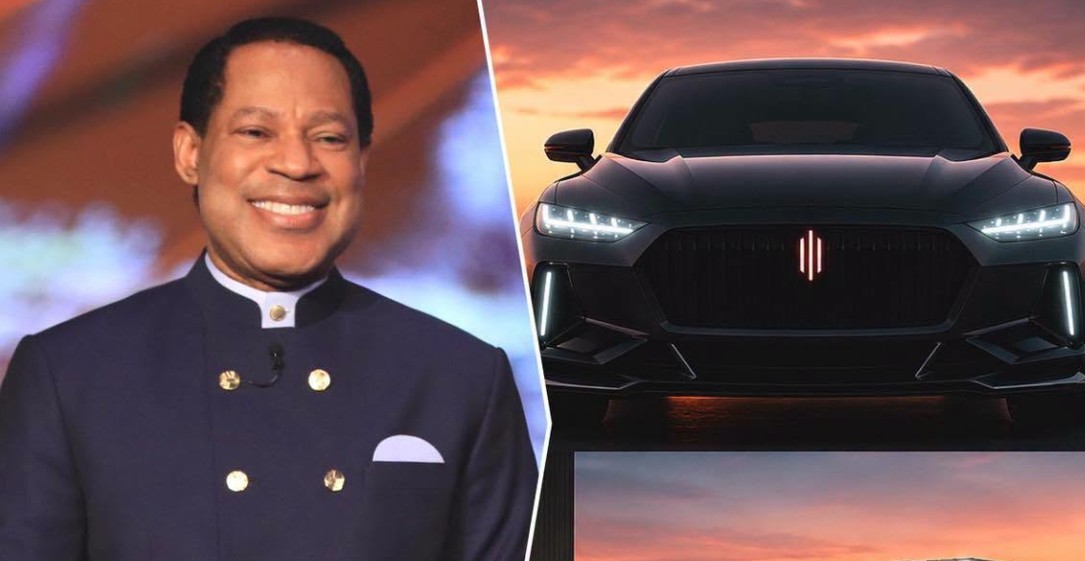
When Pastor Chris Oyakhilome unveiled the vehicles during The New Economy Unveiling 2026 with Pastor Chris, he introduced the public to a development that places Christ Embassy in an unusual and potentially significant corner of Nigeria’s technology story. The presentation featured the Tsion Passion, Tsion Falcon, Vision series, Vision Coupe and OG series, giving attendees a glimpse of an initiative that reaches well beyond the traditional image of a church organisation.
The unveiling has generated attention because of what it represents as much as what was displayed. For years, conversations about Nigerian churches and their influence have largely centred on religion, education, media, philanthropy and social intervention. The Tsion project introduces another possibility: a major religious organisation participating directly in technological and economic innovation.
Yet the most interesting part of the story may not be the vehicles themselves.
It may be what happens after the unveiling.
When a church enters the electric-vehicle conversation
The arrival of Tsion is difficult to separate from the changing technology landscape around it. Electric mobility is no longer simply a conversation taking place in advanced economies. Governments, businesses and technology entrepreneurs across Africa are increasingly exploring ways to reduce dependence on conventional fossil-fuel transportation and develop alternatives suited to local conditions.
Nigeria is part of that conversation, although the country’s transition comes with substantial challenges.
The Federal Government has expanded its electric-mobility ambitions, while regulators and industry stakeholders have begun developing the standards and infrastructure needed to support a growing EV ecosystem. Reuters reported in August that Nigeria’s electric-vehicle ambitions are being constrained by unreliable electricity and limited charging infrastructure, even as government incentives encourage greater adoption. (Reuters)
That makes the timing of the Tsion unveiling particularly interesting.
The country is trying to build an electric-vehicle market while still struggling with one of the most basic requirements of electric mobility: dependable electricity.
For Tsion, that reality could eventually become one of the most important tests of the project.
More than a vehicle presentation
At the event, Oyakhilome presented several vehicles associated with the Tsion name. The range included the Tsion Passion and Tsion Falcon, alongside the Vision series, Vision Coupe and OG series.
The names themselves suggest an attempt to establish a distinct identity rather than simply display a collection of vehicles.
But the presentation also contained an important qualification.
Oyakhilome indicated that some elements of the vehicles were still being refined. Among the components he mentioned was the steering-wheel design. He also explained that “OG”, used for one of the vehicle series, means “Of God.”
That detail changes the way the unveiling should be interpreted.
It suggests that the project is not necessarily at the point where every component, specification and production detail has been finalised. The vehicles may be further along than simple concepts, but the information currently available does not establish that they have entered mass production or are ready for widespread commercial sale.
That distinction matters.
The automotive industry is unforgiving. A vehicle can look impressive on a stage and still face years of engineering, testing, certification, manufacturing and market development before it becomes a viable commercial product.
The Tsion presentation has therefore opened the door to a much bigger question: what exactly is being built?
The questions behind the excitement
The unveiling has produced plenty of visual interest, particularly as videos from the event circulated online. But images of a vehicle tell only part of its story.
For potential customers, investors and industry observers, the questions begin with the fundamentals.
How much will a Tsion vehicle cost?
How large is its battery?
How far can it travel on a full charge?
Where will it be manufactured?
What technology powers the vehicles?
How many units can be produced?
Will the vehicles be sold to the general public?
When will commercial sales begin?
What kind of charging system will they require?
And, perhaps most importantly, have the vehicles completed the testing and certification required for commercial deployment?
The reports surrounding the unveiling do not provide answers to these questions. Pricing, production capacity, detailed specifications and commercial availability were not disclosed.
That does not diminish the significance of the unveiling, but it does place it in its proper context.
At this stage, Tsion should be understood as a developing automotive and technology initiative rather than automatically described as an established mass-market electric-car manufacturer.
Why Nigeria is watching the EV sector
The broader Nigerian environment gives the Tsion project a significance that extends beyond Christ Embassy.
Nigeria has a huge transportation market, but its electric-vehicle transition is still at an early stage. The country must simultaneously encourage cleaner mobility, develop charging infrastructure, strengthen electricity supply and create a regulatory environment that can support emerging technologies.
That combination creates both opportunities and obstacles.
A successful electric-vehicle project in Nigeria would need to work within the realities of the local market. Those realities include unreliable grid electricity, high energy costs, infrastructure gaps, financing constraints and the practical difficulties of maintaining sophisticated technology.
Reuters reported that Nigeria’s EV ambitions are running into the reality of weak electricity supply, with the country producing only a fraction of the power required to comfortably support a modern economy of its size. The limited availability of public charging infrastructure adds another layer to the challenge. (Reuters)
This means that the future of Nigerian electric vehicles will not be determined solely by who can design the most attractive car.
It will also depend on who can solve the infrastructure problem.
The technology challenge is bigger than the car
Electric vehicles bring together several industries that traditionally operated separately.
There is automotive engineering, but there is also software. There are batteries, power electronics, charging systems, telecommunications, data management and energy infrastructure.
For that reason, building a competitive EV ecosystem requires a much wider industrial base than simply assembling a vehicle.
A company developing electric cars for Nigeria must think about what happens when the customer leaves the showroom.
Where will the vehicle be charged?
Who will service the battery?
Where will replacement components come from?
Who will repair the electronic systems?
What happens when a charging station is unavailable?
How will owners deal with long-distance travel?
Those questions are central to the success of electric mobility anywhere, but they become even more important in a market where public charging infrastructure is still developing.
This is where the Tsion story could become particularly interesting.
If the project eventually develops vehicles and supporting systems specifically suited to Nigerian conditions, it could contribute to a broader conversation about locally designed technology.
If it does not progress beyond the unveiling stage, its significance will instead rest largely on its demonstration of technological ambition.
A different kind of marketplace message
Pastor Bolaji Idowu’s reaction to the unveiling adds another layer to the story.
The founder of Harvesters International Christian Centre praised the initiative and described it as an example of the church demonstrating its capacity in the marketplace.
His response was not simply about cars.
It was about the role of religious organisations in society.
Idowu said the development had broadened his understanding of what the church could achieve outside the pulpit. He argued that the church should not always wait for others to provide solutions, framing the initiative as an example of religious organisations demonstrating practical capability in the marketplace.
That argument is important because Nigeria’s major religious organisations possess enormous networks, large communities and substantial institutional influence.
When such organisations move into technology, education, healthcare, entrepreneurship or economic development, their activities can attract attention far beyond their immediate religious constituencies.
The Tsion project therefore becomes part of a wider debate about whether institutions traditionally associated with spiritual and social activities should also play a larger role in technological and economic development.
The meaning of “Of God”
There is also a cultural dimension to the project.
Oyakhilome’s explanation that “OG” means “Of God” gives the vehicle range an identity rooted directly in the religious philosophy of its creators.
That branding choice is significant because the vehicles are not being presented as culturally neutral products detached from the organisation behind them.
The Tsion name and the “Of God” explanation connect the technological project to the religious identity of Christ Embassy.
That could become an important part of the brand if the vehicles eventually enter the commercial market.
The question will then be whether the religious identity strengthens the product’s appeal among its natural audience or whether a commercial automotive brand must ultimately establish itself on broader considerations such as price, quality, reliability and performance.
In other words, branding may attract attention, but engineering will determine endurance.
From unveiling to production
This is where the Tsion story enters its most important phase.
Unveiling a vehicle creates a moment.
Building an automotive company creates an industry.
The difference between the two is enormous.
A production vehicle requires a reliable supply chain, manufacturing capacity, trained personnel, quality assurance, regulatory approval and after-sales support. Electric vehicles add battery technology, charging systems and specialised electronic components to that equation.
The fact that Oyakhilome acknowledged that some aspects of the vehicles were still being refined makes the development even more interesting. It indicates that the project is not necessarily being presented as a completely finished proposition.
That means the next announcements will matter.
More technical specifications would provide a clearer picture of the engineering behind the vehicles. Information about manufacturing would establish whether Tsion is developing a local production base or relying on another arrangement. Pricing would reveal the intended market. Certification and testing information would help establish the vehicles’ readiness for wider deployment.
Until those details emerge, the most responsible description is that Tsion has been unveiled as an emerging electric-vehicle initiative associated with Christ Embassy.
Could Tsion become a Nigerian automotive brand?
There is a potentially bigger story here if the project develops.
Nigeria has long sought to strengthen local manufacturing and reduce its dependence on imported products. The automotive industry is one of the sectors in which local production could generate jobs, technical expertise and supply-chain opportunities.
Electric mobility introduces another possibility.
A successful Nigerian EV project could eventually create demand for software developers, electrical engineers, mechanical engineers, battery specialists, technicians and charging-infrastructure providers.
It could also encourage research into technologies adapted to African operating conditions.
But none of those benefits should be assumed merely because vehicles have been unveiled.
They would depend on investment, production, technical capability, market demand and long-term execution.
That is why the coming months and years will be more revealing than the launch event itself.
The electricity problem cannot be ignored
There is an unavoidable irony in Nigeria’s electric-vehicle ambitions.
The country wants more electric vehicles on its roads, but the electricity system remains one of its biggest economic constraints.
For consumers, an electric car only becomes genuinely useful when charging is convenient and reliable.
For manufacturers, the challenge is even greater.
Factories require dependable electricity. Battery systems require sophisticated production and testing environments. Charging infrastructure requires a stable power supply.
That means Nigeria’s EV transition cannot be separated from the country’s wider energy challenge.
Any serious electric-vehicle project operating in Nigeria will eventually have to answer that question.
Tsion will be no exception.
The project may therefore have to compete not only in the automotive market but also in the search for practical energy solutions.
The bigger significance for Christ Embassy
For Christ Embassy, the Tsion initiative potentially represents something more profound than another addition to its portfolio of activities.
It offers the organisation an opportunity to demonstrate its philosophy of innovation through a tangible technology product.
Religious organisations frequently speak about empowerment, entrepreneurship and societal transformation. An automotive project provides a particularly visible way of testing those ideas.
If Tsion eventually produces commercially viable vehicles, the project could become a powerful demonstration of how a faith-based institution can participate in technological development.
If the project remains at the prototype or showcase stage, it could still demonstrate ambition and generate interest, but its industrial impact would be considerably more limited.
That distinction will become clearer only with time.
What the unveiling really tells us
For now, the Tsion vehicles tell us something important about where Christ Embassy appears to be directing part of its innovation agenda.
The organisation is not presenting technology merely as an abstract idea.
It has put physical vehicles before an audience.
Oyakhilome has unveiled named models. He has spoken about design elements that are still being refined. And the project has attracted public attention through videos circulating online.
That is enough to make the development newsworthy.
But it is not enough to answer every question about the project’s commercial future.
Those answers will require additional information and, ultimately, evidence of execution.
The road ahead for Tsion
The real test for Tsion begins after the cameras move away from the unveiling stage.
If the project advances into documented testing, certification, production and commercial distribution, the significance of the announcement will increase considerably. It would mean that Christ Embassy had moved beyond presenting an innovative concept and had established a functioning presence in the automotive market.
If that happens, Tsion could become part of Nigeria’s wider story of technological experimentation and industrial development.
But if production does not follow, the unveiling will be remembered differently: as an ambitious demonstration of what a major Nigerian religious organisation believed it could achieve in technology.
For now, both possibilities remain open.
What is certain is that the appearance of Tsion electric vehicles has changed the conversation around Christ Embassy.
A church organisation has stepped onto a stage normally occupied by automotive companies, technology entrepreneurs and industrial manufacturers.
The next question is no longer whether Christ Embassy can unveil an electric vehicle.
It has already done that.
The more consequential question is whether Tsion can move from the unveiling stage to Nigerian roads — and whether it can build the technology, infrastructure and commercial ecosystem needed to stay there.
That is where the real story begins.
About the Author