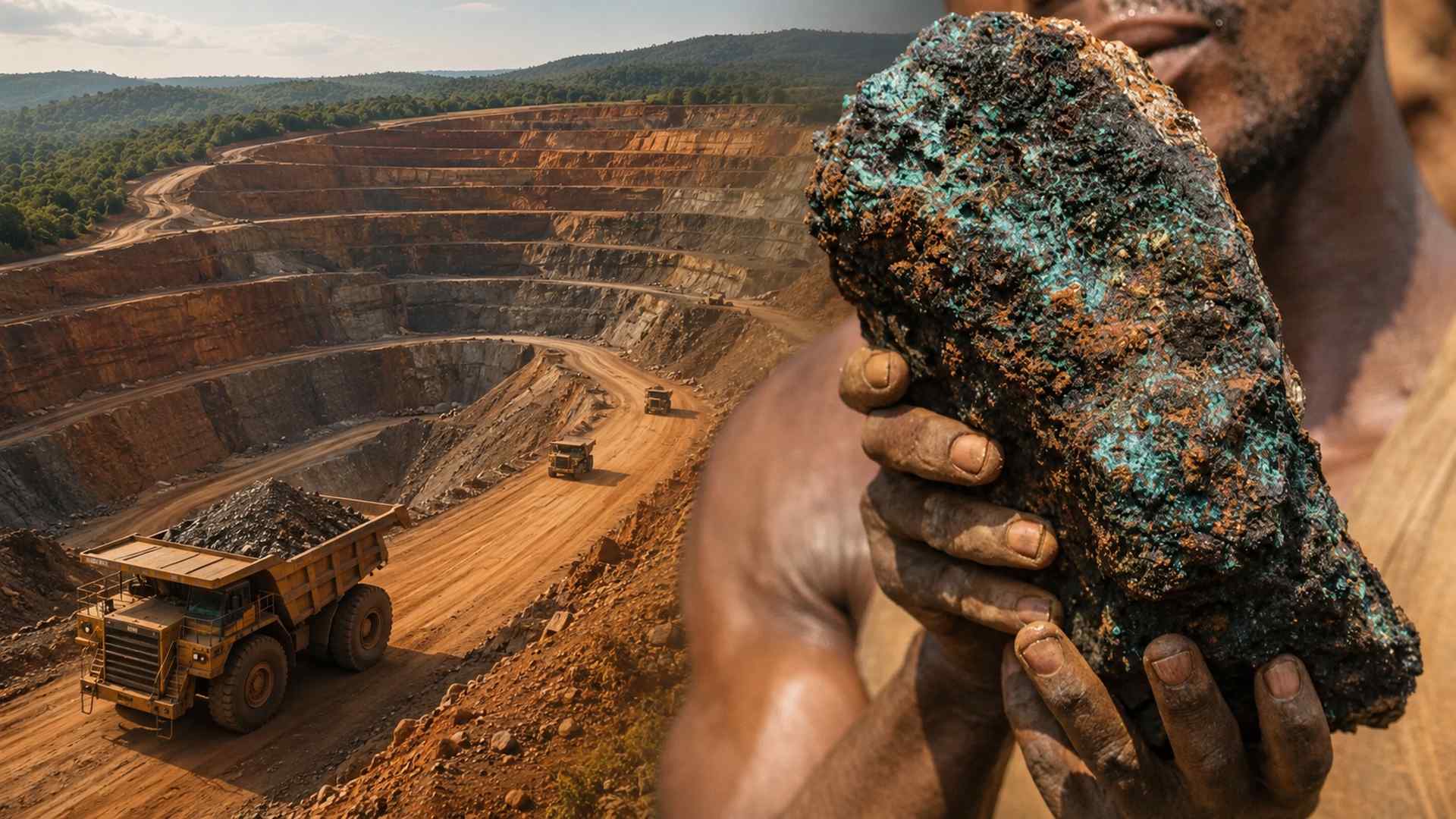
DRC Uranium Monitoring Faces New Questions Over Cobalt
The Democratic Republic of Congo is confronting a difficult question over one of its most important exports: whether radioactive material naturally occurring alongside cobalt has been adequately detected and tracked before entering the international mineral market.
The issue emerged after a peer-reviewed study published on July 30 estimated that between 2,000 and 5,000 tonnes of natural uranium may have been carried out of the DRC between 2000 and 2024 within cobalt-hydroxide shipments. The researchers based the estimate on geological and geochemical data, mine-level trade records and a model of how uranium behaves during cobalt processing.
The findings have prompted concern because uranium is a restricted mineral in the DRC, while the country’s Copperbelt contains uranium alongside the copper and cobalt that have made the region one of the world’s most important sources of critical minerals.
But the central issue is more complicated than the headline figure suggests.
The study does not establish that every historical shipment contained uranium, nor does it establish that the estimated material was deliberately recovered after reaching China or entered China’s nuclear sector. Instead, it points to a potential gap in how uranium is accounted for when it occurs naturally within a cobalt production system.
That distinction matters.
The controversy is therefore becoming a test of DRC uranium monitoring, mineral regulation and the ability of African resource-producing countries to maintain visibility over strategically important commodities once they leave the mine.
The monitoring question behind the uranium controversy
The DRC’s Copperbelt is naturally rich in several minerals, including copper, cobalt and uranium. That geological relationship is important because the minerals can move through related mining and processing systems.
The Nature Communications study found that uranium can follow cobalt through hydrometallurgical processing and become incorporated into crude cobalt hydroxide, the principal export form of DRC cobalt. Its researchers estimated that 2,000–5,000 tonnes of natural uranium could have been embedded in cobalt-hydroxide exports during the 2000–2024 period.
The researchers also estimated that another 1,000–4,000 tonnes could have accumulated in tailings around mining and processing operations.
Those figures are modelled estimates, not a physical inventory of uranium sitting in individual export containers.
The distinction is particularly important because the DRC government has questioned aspects of the study, including the absence of direct measurements of the historical shipments being assessed.
That disagreement does not eliminate the monitoring issue. It makes independent testing more important.
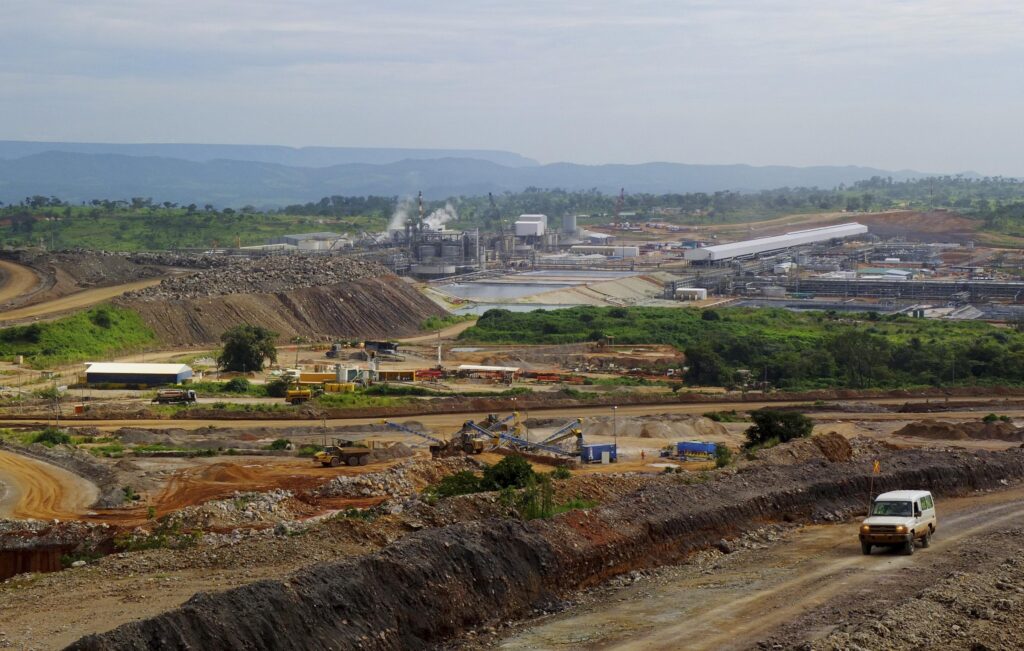
The government has said it intends to consult the International Atomic Energy Agency and use national and accredited international laboratories as part of its examination. Officials have also discussed installing radiation detectors on trucks leaving the country’s mining regions.
That response moves the debate away from speculation about what may have happened to individual shipments and towards a question that can actually be tested:
What is leaving the DRC today, and can authorities prove what is inside it?
Why uranium occurs alongside DRC cobalt
The geological background helps explain why this problem is difficult.
The DRC’s southeastern Copperbelt contains extensive mineral deposits formed through complex geological processes. Cobalt and copper are the dominant economic targets, but uranium also occurs in parts of the same mineral-bearing formations.
This is not a new phenomenon.
The region’s Shinkolobwe mine became historically famous because uranium extracted there supplied material for the Manhattan Project during the Second World War. The mine was subsequently closed, and the DRC has no officially reported uranium production today.
The modern controversy is different.
The issue is not a return to conventional uranium mining. It concerns uranium that may be unintentionally carried along when companies extract and process cobalt-bearing ore.
That creates a regulatory challenge.
A mining company can be targeting cobalt while uranium becomes part of the material moving through the processing circuit. If the uranium is not deliberately removed, some of it can follow the cobalt into the export product.
That is why DRC uranium monitoring cannot be separated from the country’s cobalt-processing system.
The question is not simply whether uranium exists underground. It is whether authorities, mining companies and international buyers have sufficient systems to identify, quantify and manage it.
What the 2,000–5,000 tonne estimate actually means
The largest figure in the controversy has also become the easiest to misunderstand.
The study estimated that 2,000–5,000 tonnes of natural uranium were likely embedded in cobalt-hydroxide exports between 2000 and 2024. Researchers reached the estimate by combining mineralisation maps, geochemical information, cobalt production and export records with a model of uranium’s behaviour during processing.
It is therefore not accurate to describe the finding as proof that 5,000 tonnes of uranium were physically measured in shipments entering China.
The research provides an estimated range.
The study says the majority of the estimated uranium associated with cobalt exports went to Chinese-owned companies, reflecting China’s dominant position in global cobalt refining.
But the researchers did not establish that the uranium was subsequently recovered and used for nuclear purposes.
That distinction is essential for responsible reporting.
The investigation also does not demonstrate that the material contributed to nuclear weapons production. Any such claim would go beyond the evidence presented.
What the study does establish is a potential accounting and oversight problem involving a radioactive element inside a critical-mineral supply chain.
Tenke Fungurume brings the issue into sharper focus
One of the most closely examined operations is Tenke Fungurume Mining, a major copper and cobalt producer in the DRC.
The supplied investigative material says internal records reviewed by investigators showed uranium concentrations reaching 1,100 parts per million in a cobalt sample in December 2016. Investigators said this was around 15 times the 75-parts-per-million export limit they used for comparison.
The records also indicated elevated uranium concentrations at the operation during other periods.
But there is an important limitation.
The existence of uranium in material tested at a mine does not by itself prove that every corresponding batch was exported, nor does it establish that the material retained the same concentration when it crossed an international border.
That is precisely why DRC uranium monitoring matters.
Testing at the mine, testing during processing, testing before export and testing at the border answer different questions.
Without a consistent chain of measurements, it becomes difficult to reconstruct what happened to a particular mineral shipment.
CMOC, the Chinese mining company that owns Tenke Fungurume, has rejected the investigation’s findings. The company said its cobalt hydroxide complied with Congolese regulations and customer requirements and disputed the historical data used by investigators.
That response remains an important part of the story.
A credible account must therefore present both the investigative findings and the company’s denial rather than treating disputed evidence as settled fact.
The DRC is now moving toward stronger oversight
The most consequential development may be what happens next.
According to recent reporting, the DRC has launched an investigation involving its nuclear safety and energy institutions and plans to use additional laboratory testing. Officials have also discussed radiation detectors for trucks transporting minerals out of the country’s mining areas.
The government has challenged the methodology behind some of the uranium estimates and wants a counter-verification process.
That could provide something the historical debate currently lacks: direct measurements.
A robust testing programme could help answer several questions:
- How much uranium is actually present in cobalt products leaving the DRC?
- Which mining operations produce material with elevated uranium concentrations?
- How much uranium remains in mine and processing waste?
- What proportion is removed during processing?
- What reaches export checkpoints?
- How much is ultimately present in products received by international buyers?
Those questions are more useful than simply debating whether the highest estimate is correct.
They can also help establish a baseline for future regulation.
A wider supply-chain problem
The controversy comes at a sensitive moment for the global cobalt industry.
Cobalt is essential to several industrial applications, particularly battery technologies, and the DRC is the world’s leading source of mined cobalt. The country has therefore become central to global discussions about electric vehicles, energy storage and critical-mineral security.
China occupies an equally important position further down the supply chain.
The Nature Communications study notes China’s dominant role in cobalt refining and estimates that about 65% of the uranium associated with the study’s estimated cobalt-export flows went to Chinese-owned companies.
That creates a supply-chain relationship in which the DRC is a dominant mining jurisdiction while China remains a major processing centre, reflecting a much broader China-Africa trade relationship that extends well beyond cobalt and other critical minerals.
The uranium controversy therefore has implications beyond radiation monitoring.
It raises questions about who controls information about mineral quality, who performs testing, where processing takes place and how much value-producing countries can capture before their resources enter international markets.
That debate is already influencing DRC policy.
Reuters reported on August 6 that the DRC had issued an order prohibiting exports of copper and cobalt concentrates as part of a broader push to expand domestic processing and retain more value from its mineral resources. The order allows certain exemptions and introduces changes to the treatment of mining by-products.
That policy was not created solely because of the uranium controversy, and it would be wrong to suggest otherwise.
But the two developments point in the same strategic direction: greater domestic control over mineral processing can give the DRC more visibility into what its mines are producing and exporting.
Why domestic processing matters
For African mineral producers, exporting raw or semi-processed material creates more than an economic problem.
It can also create an information problem.
Once a mineral leaves the country, the producer state may have less direct control over subsequent processing, separation and recovery.
Domestic processing does not automatically solve that problem. It requires investment, skilled personnel, reliable laboratories, radiation protection, environmental controls and transparent regulation.
But it can give governments a clearer point at which to measure mineral composition.
For the DRC, that could make DRC uranium monitoring part of a much larger critical-minerals strategy.
Instead of viewing uranium only as an unwanted contaminant, authorities could treat trace and ultra-trace minerals as part of a broader mineral-accounting system.
That would require companies to disclose relevant by-products and regulators to independently verify them.
The environmental question may be just as important
The export controversy has attracted international attention because uranium is associated with nuclear materials and safeguards.
But the study also raises a less dramatic and potentially more immediate issue: what happens to uranium that does not leave the country?
The researchers estimated that 1,000–4,000 tonnes could have accumulated in tailings over the study period. They warn that some uranium-bearing material could be vulnerable to mobilisation in the environment.
This creates questions about mine workers and communities living around mining and processing areas.
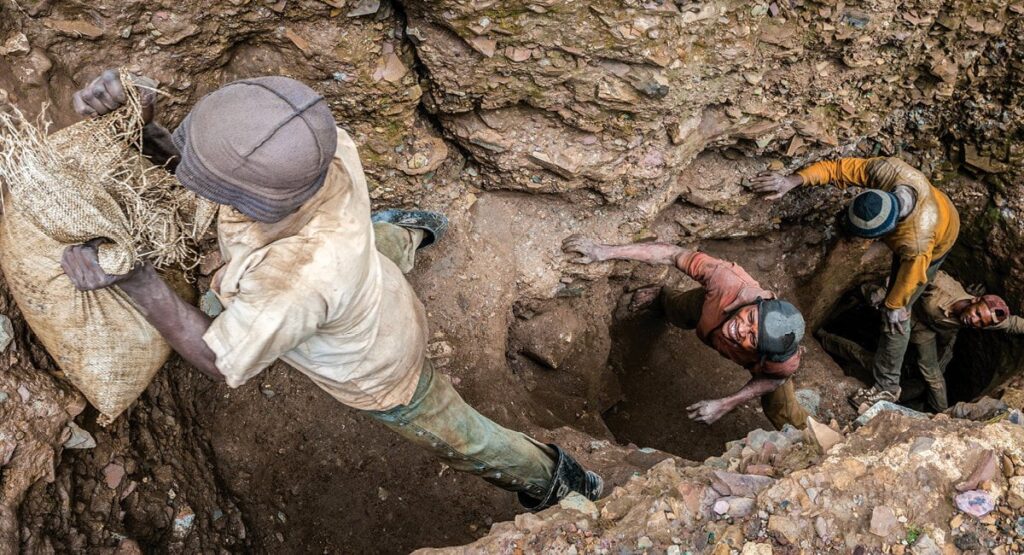
The study points to previous evidence of uranium exposure among people in the Copperbelt, while also acknowledging that it did not quantify specific health effects attributable to the estimated export flows.
That qualification matters.
It would be irresponsible to claim that the study proves a particular disease or health outcome was caused by uranium in cobalt exports.
The evidence instead supports a need for better environmental monitoring, occupational protection and waste management.
What this means for Africa’s critical-minerals strategy
The issue also sits within a much wider debate about China’s expanding economic and strategic presence across Africa. DSG Herald News has previously examined how China’s growing strategic influence in Africa is extending beyond individual trade deals into questions of infrastructure, access and geopolitical influence.
Across Africa, governments are increasingly looking beyond the traditional model of extracting minerals and shipping them abroad for processing. That shift is taking place alongside wider changes in the China-Africa trade relationship, as African governments seek greater access to international markets while trying to retain more value from their natural resources.
The cobalt controversy adds another dimension to that debate.
Processing minerals closer to their source can potentially create jobs, industrial capacity and tax revenue. It can also provide governments with more opportunities to inspect mineral composition and enforce environmental standards.
But the real test is implementation.
A domestic refinery without strong environmental controls can simply move the problem from an export checkpoint to a processing facility.
A radiation detector without trained personnel and transparent reporting can become little more than equipment on a roadside.
And regulations without independent verification may fail to establish public confidence.
The DRC therefore faces a broader institutional challenge: building a mineral-governance system capable of following complex materials from geological extraction to final export.
What remains unknown
Several important questions remain unresolved.
The investigation has not established what happened to the uranium after the cobalt shipments reached China.
It has not established that the material was recovered for commercial purposes.
It has not established that it entered China’s nuclear industry or contributed to weapons production.
It also has not demonstrated that every cobalt shipment from the DRC contained uranium at levels above applicable limits.
Those uncertainties should remain visible in any serious report about the controversy.
At the same time, uncertainty should not become an excuse for avoiding verification.
The DRC now has an opportunity to replace estimates with measurements.
Independent laboratory testing, mine-level sampling, export documentation and border radiation screening could provide a much clearer picture.
The bigger question for the cobalt supply chain
The most important outcome of the controversy may ultimately have little to do with the headline figure of 2,000–5,000 tonnes.
The more consequential question is whether the global cobalt industry has sufficient systems to know exactly what is moving through its supply chain.
That question extends beyond the DRC.
International buyers increasingly want assurances about where minerals originate, how they are produced and whether they meet environmental and regulatory standards.
For a mineral as strategically important as cobalt, those requirements are likely to become more demanding.
The DRC has an opportunity to turn the current controversy into a test of better mineral governance.
That means independent assays, stronger radiation screening, better tailings management, clearer disclosure of mining by-products and greater domestic processing capacity.
It also means international buyers must accept responsibility for understanding the materials they purchase rather than treating mineral traceability as solely the producer country’s problem.
Conclusion: From controversy to accountability
The latest debate over uranium and cobalt in the DRC should not be reduced to a claim that thousands of tonnes of uranium were secretly sent to China.
The available evidence is more nuanced.
A peer-reviewed study has modelled a potentially significant flow of natural uranium through the DRC’s cobalt supply chain. Investigators have presented historical records and other evidence raising questions about monitoring, while CMOC disputes key findings. The DRC government is now investigating the issue and considering stronger radiation detection and laboratory testing.
What happens next will matter far beyond this particular controversy.
If the DRC can establish reliable measurements, strengthen mineral accounting and improve oversight from mine to border, the country could turn a difficult episode into an opportunity to modernise its critical-minerals governance.
That is ultimately what the DRC uranium monitoring debate is about.
Not simply what may have left the country in the past, but whether governments, mining companies and international buyers can build a system capable of proving what is inside the minerals that power the modern global economy.
About the Author