African Gen Z Has Protest Power. Can It Win Power?
Africa’s young generation has demonstrated an extraordinary ability to challenge political decisions, organise outside traditional party structures and force governments to respond. From Kenya’s 2024 tax protests to Nigeria’s #EndSARS movement and youth-led activism elsewhere on the continent, the pattern is increasingly clear: African Gen Z can mobilise.
The harder question is what happens after the protest.
Can a generation that has mastered digital mobilisation, street demonstrations and political pressure convert that influence into lasting electoral power, stronger institutions and accountable government?
That may become one of the defining political questions of Africa’s next decade.
African Gen Z has already changed the political conversation
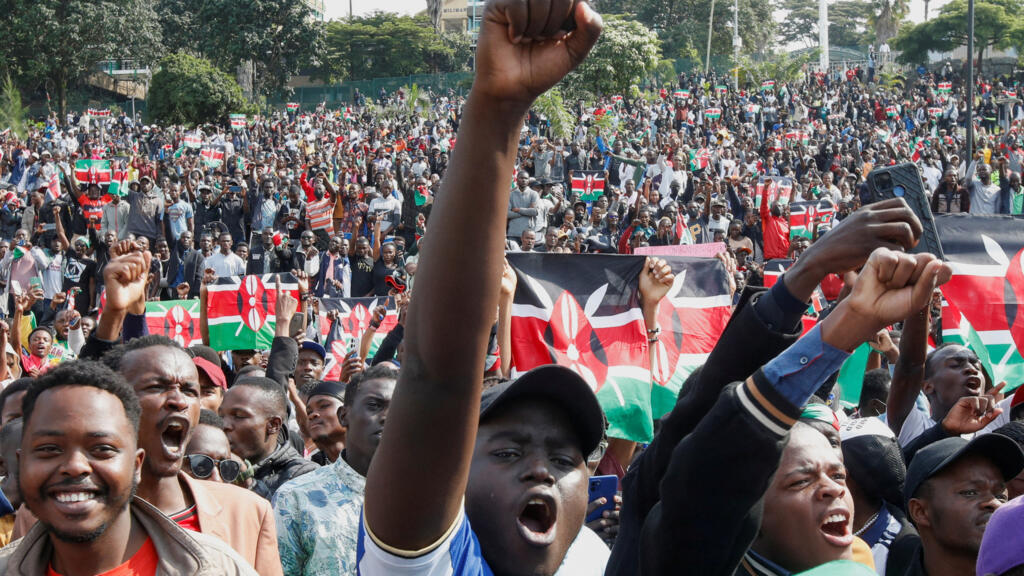
The events in Kenya in June 2024 provided one of the clearest demonstrations of the new political reality.
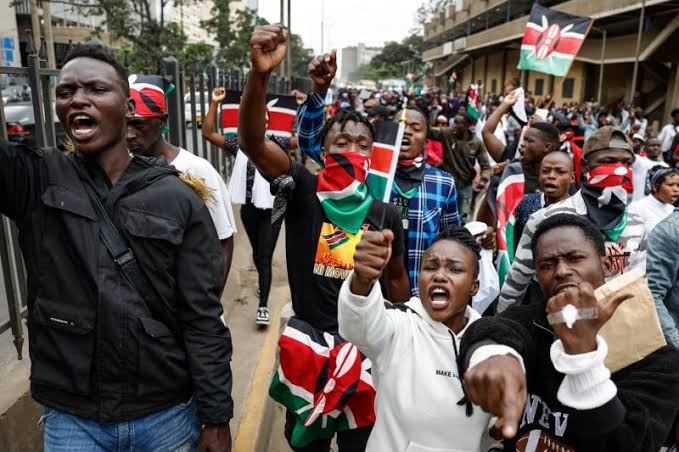
Young Kenyans used social media to organise opposition to the Finance Bill, which proposed a range of tax increases. The movement spread rapidly from online platforms into mass demonstrations in Nairobi and other parts of the country.
The protests became increasingly political after police confronted demonstrators and deaths were reported. On 26 June, President William Ruto announced that he would not sign the Finance Bill and that it would be withdrawn. Reuters described the reversal as a major victory for a youth-led movement that had grown from online opposition to tax increases into nationwide demonstrations and broader demands for political change.
The significance went beyond the bill itself.
The protests demonstrated that a movement without a conventional political party, central leadership or established opposition structure could exert extraordinary pressure on government.
That is the new political reality.
But it is also where the more difficult question begins.
Winning a protest and winning political power are not the same thing.
The protest generation is not politically apathetic
For years, young Africans have often been described as politically disengaged because they participate less consistently in elections and formal political structures than older citizens.
The evidence is more complicated.
Afrobarometer’s research across 39 African countries found that 64% of young people aged 18 to 35 preferred democracy to any other form of government. At the same time, 60% said they were dissatisfied with the way democracy was working in their country. Young people were also less likely than older citizens to vote or participate in several conventional political activities.
That combination matters.
It suggests that declining enthusiasm for political parties or elections should not automatically be interpreted as rejection of democracy.
For many young Africans, the problem may instead be the gap between the promise of democracy and their everyday experience of it.
A young person can believe in democratic government while distrusting the political institutions responsible for delivering it.
That distinction helps explain why protest has become such an important form of political expression.
The question is not necessarily whether young people care about politics.
It is whether they believe existing political structures deserve their participation.
Why distrust is becoming politically important
The credibility problem extends beyond youth.
Afrobarometer reported in 2024 that fewer than half of citizens across 39 African countries said they trusted their president, Parliament, courts or police. Parliament recorded an average trust level of just 37%, while religious leaders, the army and traditional leaders received substantially higher levels of trust.
For younger citizens, the problem is compounded by economic pressure.
Afrobarometer found that unemployment was the most frequently cited problem young Africans wanted governments to address, followed by economic management and health. The same research found that young people were more likely than older citizens to see government institutions and leaders as corrupt.
This changes the meaning of political participation.
For a young graduate without a stable job, an election is not simply a competition between political parties. It is a test of whether the political system can deliver opportunity.
For a young entrepreneur struggling with inflation, taxation or access to finance, democracy is judged partly by whether government policies make economic survival easier or harder.
And for a young citizen who sees corruption or unequal enforcement of the law, political legitimacy becomes inseparable from fairness.
That is why the politics of Africa’s youth cannot be reduced to ideology.
It is increasingly about results.
Kenya showed the power of mobilisation. The next test is organisation
Kenya’s 2024 protests exposed both the strength and weakness of the new youth politics.
The strength was speed.
Social media allowed young people to exchange information, coordinate demonstrations and develop a shared political language without relying on established parties.
The movement was therefore difficult to control from outside.
Traditional politicians could not simply claim ownership of it.
But the same decentralisation that made the movement powerful also created a structural problem.
A protest movement does not necessarily need:
- permanent offices;
- a national party structure;
- candidates;
- campaign financing;
- constituency organisations;
- election agents;
- long-term policy programmes; or
- a mechanism for governing after victory.
A presidential campaign does.
This is the central transition that many youth movements across Africa may eventually confront.
Digital mobilisation can create political pressure quickly. Building political institutions takes years.
That difference could determine whether the current generation becomes a permanent political force or remains primarily a protest constituency.
Nigeria offers an important warning
Nigeria’s #EndSARS movement demonstrated a similar contradiction.
In 2020, young Nigerians mobilised against police brutality and the Special Anti-Robbery Squad. Social media played a major role in organising the protests and spreading information.
The movement became one of the most visible demonstrations of youth political mobilisation in Nigeria’s recent history.
But its enormous visibility did not automatically produce a durable political organisation capable of transforming the country’s wider political system.
That distinction is important.
A movement can win the battle for public attention without winning the institutional battle for political power.
This does not make the movement unsuccessful.
Social movements can influence public debate, alter government policy, create new political identities and force institutions to respond without becoming political parties themselves.
But if the objective is to control legislation, budgets and executive power, mobilisation eventually has to connect with institutions.
That is the difficult bridge.
African youth politics is more complicated than one ideology
There is another danger in discussing Africa’s Gen Z as though it were a single political bloc.
The continent’s young population does not share one political ideology.
The ODI analysis that informs this report identifies several overlapping patterns among young Africans: democratic reformers, sovereignty-focused activists, livelihood pragmatists and digitally connected cosmopolitans.
These categories should not be treated as rigid political parties.
They illustrate something more important: young Africans can reach very different political conclusions from similar frustrations.
One young activist may demand stronger democratic accountability.
Another may prioritise national sovereignty and resistance to foreign influence.
A third may care primarily about jobs, electricity, education and the cost of living.
Another may be more interested in technology, entrepreneurship and Africa’s place in the global economy.
That diversity helps explain an apparent contradiction across the continent.
Young people can demand democratic reform in one country while supporting a military government in another.
They can reject established political parties while demanding stronger government.
They can criticise Western influence while embracing global digital culture.
These are not necessarily contradictions within individual people.
They can reflect different national experiences.
The Sahel shows why youth dissatisfaction does not automatically produce liberal democracy
The political upheavals in the Sahel offer perhaps the clearest counterpoint to the assumption that youth mobilisation will always strengthen conventional democratic politics.
In Mali, Burkina Faso and Niger, sections of the youth population have supported military governments and expressed frustration with civilian political elites and foreign influence.
The underlying motivations vary, but themes of sovereignty, security and national dignity have been prominent in the political discourse described by the ODI analysis.
This is an important warning for policymakers.
If democratic governments fail to provide security, jobs, dignity and credible institutions, dissatisfaction does not automatically translate into stronger liberal democracy.
It can produce demands for something radically different.
Afrobarometer’s research reinforces that complexity. While young Africans broadly support democracy, 56% of respondents aged 18 to 35 said they would tolerate military intervention if elected leaders abused their power.
The lesson is uncomfortable but important.
Democratic preference and democratic satisfaction are not the same thing.
Young people may support democracy in principle while becoming increasingly impatient with the way democracy works in practice.
Social media created new political power. Can it build institutions?
The smartphone has changed the economics of political mobilisation.
Traditional political organisations require offices, staff, meetings, transportation and communication networks.
A digital movement can communicate with thousands or millions of people almost instantly.
That has lowered the cost of political mobilisation.
But digital reach does not automatically create political organisation.
A viral post cannot replace a constituency office.
A hashtag cannot field election agents.
A livestream cannot write legislation.
A protest cannot, by itself, manage a national budget.
The next phase of youth politics will therefore require a different kind of organisation.
Young political movements will have to decide whether they want to remain decentralised pressure groups or develop structures capable of competing inside formal political systems.
Both approaches have advantages.
Remaining decentralised can protect movements from political capture and preserve their independence.
Formal organisation can provide the infrastructure needed to contest elections and implement policy.
The challenge is finding a way to build the second without losing the credibility created by the first.
The economic question may ultimately decide the political one
Behind much of Africa’s youth politics lies an economic problem.
The continent has a very young population, and millions of young people enter labour markets each year.
Their political expectations are therefore shaped not only by constitutional principles but by very practical questions:
Can I find work?
Can I afford housing?
Can I start a business?
Can I access electricity and reliable internet?
Can I obtain quality education?
Can I trust the government to apply the law fairly?
These questions explain why economic policy can rapidly become political crisis.
Kenya’s 2024 protests began around taxation, but the demonstrations quickly developed into a wider argument about governance.
Reuters reported at the time that the abandoned Finance Bill also created fiscal challenges for Kenya because the government had expected the proposed measures to raise substantial revenue.
That tension is unlikely to disappear.
Governments need revenue to fund public services and manage debt.
Citizens want relief from taxes and rising living costs.
Young people want jobs and economic opportunity.
The political system has to reconcile all three.
Failure to do so can transform an economic dispute into a legitimacy crisis.
Africa’s 2027 elections could provide an important test
The next major test for youth political power will not necessarily take place in the streets.
It may take place at polling stations.
Across Africa, upcoming elections will test whether young people who distrust established political systems will participate in them—or withdraw from them.
Afrobarometer’s 2024 findings already showed a significant gap between young Africans’ democratic preferences and their participation in elections and other formal political processes.
That gap matters.
If young citizens stay away from elections because they believe the political system is already compromised, established political networks may become relatively stronger.
In other words, political abstention can unintentionally preserve the system that abstainers oppose.
But voting alone will not solve the problem.
Young Africans also need credible candidates, functioning institutions, transparent electoral systems and political organisations capable of converting public demands into policy.
Otherwise, participation risks becoming another cycle of disappointment.
The real question is what happens after the protest
This is where the debate about Africa’s Gen Z needs to move.
The important question is no longer simply whether young Africans can mobilise.
They clearly can.
The more difficult questions are:
Can they organise for the long term?
Can they build institutions without being absorbed by them?
Can they contest elections without reproducing the patronage politics they oppose?
Can they develop policies rather than only protest against existing ones?
Can they govern differently if they eventually win power?
Those questions have no simple answer.
And the answer will probably differ from country to country.
But the stakes are enormous.
Africa’s young population represents one of the continent’s greatest political forces. If governments respond to its demands with better institutions, stronger accountability, economic opportunity and meaningful participation, youth frustration could become a powerful engine of democratic renewal.
If governments respond only when protests become too large to ignore, the cycle may continue: anger, mobilisation, government retreat, temporary reform and renewed frustration.
African Gen Z is not waiting for tomorrow
The most significant mistake governments can make is to continue treating young people as the “leaders of tomorrow.”
They are already citizens, voters, workers, entrepreneurs, activists and taxpayers.
They are already shaping political debate.
Their smartphones have become political tools.
Their economic choices have political consequences.
Their willingness—or unwillingness—to vote can influence elections.
Their protests can force governments to reconsider policies.
But influence is not the same as power.
The defining challenge of the next phase of African youth politics will be converting influence into durable institutions without sacrificing independence, accountability or public trust.
That will require more than hashtags.
It will require organisation, ideas, leadership, policy competence and a willingness to engage with the slow machinery of democratic politics.
Africa’s Gen Z has already shown that it can make governments listen.
The bigger test is whether it can build the political power to make governments change.
And that may ultimately determine whether the continent’s youth movement becomes a temporary era of protest—or the beginning of a much deeper transformation of African politics.
Recommended Coverage
Nigeria’s Economy: The Tinubu Administration — Progress or Crisis?
Nigeria’s economic pressures show why jobs, living costs and government performance are increasingly shaping how young Africans view politics.
Nigeria Political Realignment Deepens as NDC Rises
But can political frustration move beyond protests and become a force capable of reshaping established political structures?
Zambia Presidential Election: 5 Things at Stake
Elections remain the ultimate test of whether Africa’s growing youth political influence can translate into real power at the ballot box.
About the Author