INTRODUCTION
Africa news 12 November 2026 is dominated by important developments in security, public health, energy safety and environmental management. From new allegations concerning a deadly massacre in South Sudan to the escalating Ebola crisis in the Democratic Republic of the Congo, the latest developments raise serious questions about institutional responsibility and the protection of African communities.
In East Africa, Kenya has discharged its last Ebola patient and begun a 42-day countdown towards a possible declaration that the country is free of the disease. In Libya, an explosion at a gas facility in Marsa Brega killed one worker and injured four others, bringing attention to industrial safety and maintenance in the country’s energy sector.
Meanwhile, Ghana is pursuing a major environmental cleanup at Accra’s Agbogbloshie waste site, with the government targeting the removal of approximately one million tonnes of accumulated waste and the creation of up to 20,000 permanent jobs in waste management and recycling.
These developments reflect different challenges facing African governments, from civilian protection and epidemic control to industrial regulation, environmental sustainability and economic opportunity.
Here are five major stories shaping Africa.
STORY 1: SOUTH SUDAN MASSACRE — AMNESTY QUESTIONS GOVERNMENT AND UN RESPONSE AFTER MORE THAN 200 KILLED
A new investigation by Amnesty International has raised serious questions about the failure of South Sudanese authorities and United Nations peacekeepers to prevent a deadly attack in Abiemnom, where more than 200 people were killed on 1 March 2026.
In a report released on 11 November, Amnesty said both South Sudanese authorities and the United Nations Mission in South Sudan (UNMISS) had received warnings about a possible attack before armed men stormed the town. The findings are detailed in Amnesty’s report, The Abiemnom Massacre: Inaction and Impunity in South Sudan.
The report documents how an estimated 1,000 to 1,500 armed men from Mayom County in Unity State attacked Abiemnom in the early hours of 1 March.
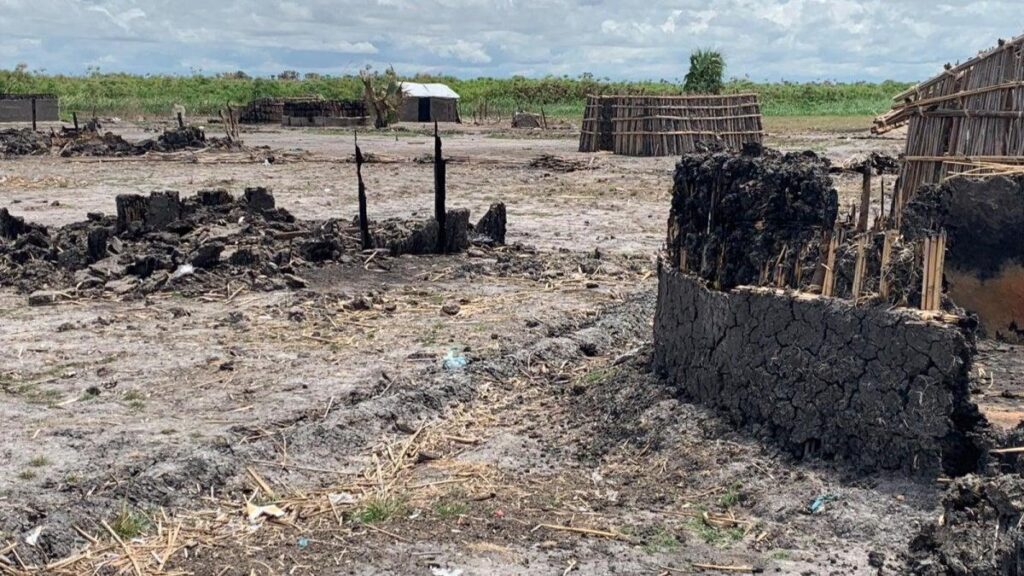
According to the investigation, the assault lasted approximately four hours. The attackers reportedly shot residents, burned homes, destroyed sections of the market and looted parts of the local hospital.
South Sudanese authorities reported 213 deaths, including 130 town residents, 76 security personnel and seven foreign nationals. At least 109 people were also reported injured.
Amnesty said its findings were based on interviews with 82 people, including survivors, witnesses, medical personnel and community leaders. Researchers also reviewed satellite imagery and verified photographs and videos.
Warnings reportedly received before the attack
One of the most serious findings concerns the information available to authorities and UNMISS before the massacre.
Amnesty said its investigation found that both South Sudanese authorities and the UN peacekeeping mission knew approximately two weeks in advance that an attack was likely.
Community members reportedly warned that armed men from Mayom County were mobilising fighters and weapons. The report also said tensions had escalated in the days before the attack.
UNMISS acknowledged that tensions had been high since mid-February. Amnesty reported that approximately 1,000 people sought protection at the mission’s temporary operating base during the 48 hours before the assault.
However, the organisation questioned why additional peacekeeping personnel were not deployed to strengthen protection before the attack.
Amnesty also documented seven killings outside the rear gates of the UNMISS base, where residents had fled in search of protection.
The report said more than 230 structures were destroyed by fire, while most of the victims were buried in two mass graves.
UNMISS responds to the allegations
The findings have placed the performance of the UN peacekeeping mission under renewed scrutiny.
UNMISS said it did its best with limited resources to protect and provide medical care to approximately 2,500 people who sought shelter at its protected area.
The mission also said it had repeatedly asked South Sudan’s national army to deploy additional forces following the early warnings.
After the attack, UNMISS deployed an additional 40 police personnel to strengthen protection efforts.
Amnesty questioned why these reinforcements were not sent before the massacre, particularly given the warnings and an earlier deadly attack in the area in April 2025. Its investigation and call for accountability set out the organisation’s concerns about the response.
South Sudanese authorities had not responded to Amnesty’s requests for information and comments at the time of the report’s publication. UNMISS provided a response to the organisation, which Amnesty said was reflected in its report.
The massacre and South Sudan’s fragile political transition
The findings emerge as South Sudan approaches its planned presidential and other elections on 22 December 2026.
The African Union’s top representative for South Sudan, former Tanzanian President Jakaya Kikwete, has urged the United Nations to help ensure that the election takes place peacefully.
In an appeal to the UN Security Council, Kikwete warned that a poorly conducted or violent election could trigger a major political and security crisis. An Associated Press report on the election and South Sudan’s fragile peace examined the concerns surrounding the country’s political transition.
The country continues to experience armed conflict, displacement and political tensions despite the 2018 peace agreement that ended five years of civil war.
President Salva Kiir dissolved the transitional government in September and appointed a caretaker administration. His political rival, Riek Machar, remains under house arrest and is facing trial on charges that include treason. Machar’s allies deny the allegations.
The International Crisis Group has also warned that rushing the election could undermine the peace agreement.
The humanitarian situation remains severe. UN representatives estimate that approximately 10 million people need assistance, including 7.5 million facing food insecurity.
The Abiemnom investigation therefore raises questions that extend beyond the massacre itself: whether civilians can rely on government and international protection, whether those responsible will face accountability and whether South Sudan’s political transition can deliver lasting stability.
What happens next?
Amnesty International is calling for an independent investigation into the killings, accountability for those responsible, reparations for victims and a separate review of UNMISS’s response.
The survivors and displaced families also need security guarantees, medical and psychosocial support, and conditions that will allow them to return home safely.
STORY 2: DR CONGO EBOLA OUTBREAK SURPASSES 11,000 CASES AS DEATH TOLL REACHES 5,387
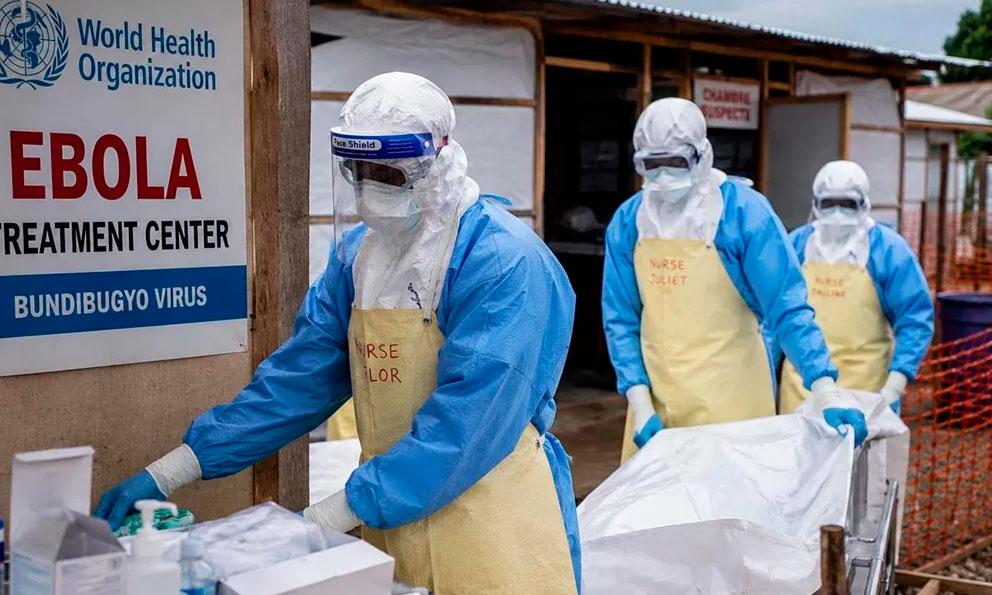
The Democratic Republic of the Congo is facing an increasingly severe Ebola emergency, with confirmed infections reaching 11,042 and deaths rising to at least 5,387, according to government figures reported on 11 November.
The outbreak, caused by the Bundibugyo strain of the Ebola virus, is now the largest and deadliest Ebola outbreak recorded in the country’s history.
The figures place the outbreak among the most serious public health emergencies currently affecting Africa. It is also the second-largest and second-deadliest Ebola outbreak on record, behind the 2014–2016 West African epidemic.
According to the reported figures, eight of the DRC’s 26 provinces have been affected. Al Jazeera’s report on the outbreak detailed the increase in cases and deaths.
Why containment is proving difficult
Health authorities are facing significant challenges in containing the outbreak.
Delayed detection, armed conflict, strained health services and difficulties accessing affected communities have contributed to the spread of infections.
The situation is particularly difficult in areas where insecurity and weak health infrastructure make it harder for medical teams to identify cases, trace contacts and provide treatment.
The Bundibugyo strain also presents a major medical challenge because there is currently no specifically approved vaccine or treatment for the strain.
The outbreak has been reported beyond the DRC, with cases recorded in other African countries. This has increased concerns about regional surveillance, cross-border cooperation and the ability of health authorities to respond quickly to new infections.
The wider Ebola situation has also affected communities, healthcare facilities and schools in affected areas.
Healthcare workers face additional risks
The response has been further complicated by attacks on health workers and medical facilities.
Reports indicate that four health workers have been killed in two recent incidents. These attacks have disrupted contact tracing and reduced the ability of response teams to monitor people who may have been exposed.
More than 1,000 contacts were reportedly left unmonitored, while three suspected cases were unaccounted for in the reporting.
These gaps create additional risks because early detection and the monitoring of contacts are essential to controlling an outbreak.
Health officials have called for improved access to affected communities, stronger cooperation and an end to fighting that prevents medical teams from carrying out their work.
The regional implications
The outbreak is no longer simply a domestic health emergency for the DRC.
The movement of people across borders creates the possibility of further transmission, making cooperation between national health authorities and international institutions particularly important.
Kenya’s recent Ebola experience demonstrates the importance of rapid identification, contact tracing and coordinated public health action.
However, the wider outbreak in the DRC remains a serious concern, and the discharge of patients in neighbouring countries does not mean the regional threat has disappeared.
The challenge facing the DRC is to strengthen surveillance, protect health workers, improve access to treatment and prevent further transmission.
An Associated Press report on the DRC’s Ebola outbreak also examined the scale of the emergency and the growing number of reported infections.
STORY 3: KENYA DISCHARGES LAST EBOLA PATIENT, BEGINS 42-DAY COUNTDOWN TO DISEASE-FREE STATUS
Kenya has discharged its last Ebola patient, marking a significant milestone in the country’s effort to contain its first recorded outbreak of the disease.
Health Cabinet Secretary Aden Duale announced on 11 November that the final patient had recovered and left the treatment facility. The last 11 people who had been under monitoring as contacts also completed their monitoring period and returned home in good health.
For the first time since the outbreak began, Kenya had no Ebola patients undergoing treatment and no contacts remaining in quarantine.
The development marked an important achievement for the country’s public health response, but authorities cautioned that the work was not yet complete.
The 42-day countdown
Kenya began its 42-day countdown on 12 November.
The period represents twice the longest incubation period of the Ebola virus. If no new cases are recorded during the monitoring period, the country could be declared free of the disease on 23 December 2026.
Kenya confirmed its first case of Bundibugyo virus disease on 6 October. The initial patient had travelled from the Democratic Republic of the Congo through Uganda.
The outbreak subsequently recorded nine confirmed cases. Four were family members of the first patient, while four were healthcare workers who had cared for him before Ebola was suspected.
The first patient and one other person died, while the remaining seven patients recovered.
Health authorities identified and monitored 135 people who had been in close contact with the initial patient.
According to the Ministry of Health, the confirmed cases remained within a single transmission cluster, with no community transmission recorded.
WHO commends Kenya’s response
The World Health Organization congratulated Kenya on the milestone, praising the country’s coordination, surveillance and contact-tracing efforts.
The agency also recognised the work of healthcare professionals, laboratory teams, contact tracers and other personnel involved in the response. In its report, WHO Africa described the discharge of Kenya’s last Ebola patient and the beginning of the 42-day countdown.
However, WHO emphasised that the country must remain vigilant throughout the 42-day period.
Health authorities said rapid response teams would remain on alert, and every suspected case would continue to be investigated.
The country is also maintaining surveillance at health facilities and points of entry.
Why the countdown matters
The discharge of the last patient is a major achievement, but it does not immediately establish that the country is free of Ebola.
The 42-day monitoring period is necessary to ensure that no new infections emerge from the outbreak.
Kenya’s experience also demonstrates how cross-border movement can complicate disease surveillance. The first case was linked to travel from the DRC through Uganda, highlighting the importance of cooperation between neighbouring countries.
While Kenya moves towards a possible Ebola-free declaration, the DRC continues to face a much larger outbreak.
The contrast underlines the importance of early detection, contact tracing, public cooperation and sustained investment in health systems.
Reuters also reported on Kenya’s last patient being released and the start of the 42-day countdown, while Kenya News Agency reported the country’s discharge milestone.
STORY 4: LIBYA GAS FACILITY EXPLOSION KILLS ONE WORKER, INJURES FOUR AT MARSA BREGA
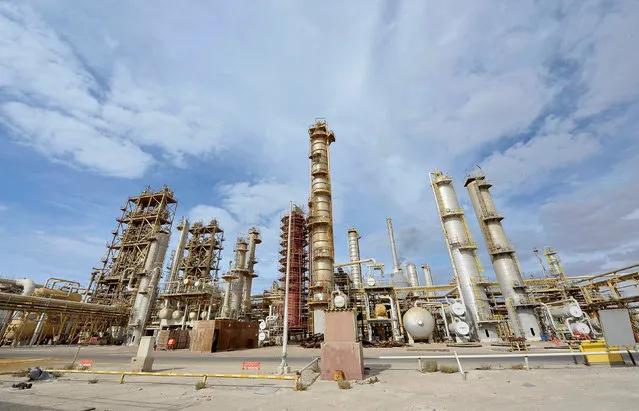
An explosion following a fire at a gas facility operated by Sirte Oil Company in Marsa Brega, Libya, has killed one worker and injured four others.
The incident occurred on the morning of 11 November at the company’s gas complex, according to Libya’s National Oil Corporation (NOC).
Preliminary information indicated that a leak in a gas line supplying one of the facility’s boilers triggered the incident.
Emergency and firefighting teams responded to the fire, isolated the gas lines and brought the blaze under control.
The entire plant was shut down as a precaution while the site was secured.
Repairs expected to take at least two weeks
NOC Chairman Massoud Soleman told Reuters that repairs were expected to take at least two weeks.
Despite the shutdown at the affected facility, the corporation said there had been no disruption to domestic gas supplies or crude oil production.
The company also confirmed that operations elsewhere continued normally.
The incident nevertheless raises concerns about the safety and maintenance of energy infrastructure. Reuters’ report on the Marsa Brega explosion detailed the casualties, the preliminary explanation and the expected repair period.
Maintenance concerns raised by NOC chairman
Soleman warned that delays in the allocation and disbursement of funds for essential maintenance and major overhauls could contribute to similar or more serious incidents in the future.
His comments draw attention to the relationship between infrastructure maintenance, industrial safety and the continuity of energy operations.
Libya’s oil and gas sector has experienced repeated disruptions since the 2011 uprising that toppled Muammar Gaddafi, with production affected by political disputes and technical problems.
The Marsa Brega incident adds another reminder of the importance of maintaining industrial facilities and ensuring that safety systems are properly inspected.
What happens next?
The immediate priorities are to complete repairs, establish the precise cause of the explosion and ensure that the facility can safely resume operations.
The NOC’s statement that national gas supplies and crude production were unaffected provides reassurance about the immediate energy impact.
However, the loss of life and injuries among workers make a full safety assessment essential.
The Libya National Oil Corporation’s official statement on the fire at the Sirte Oil Company gas complex provides the corporation’s account of the incident.
STORY 5: GHANA TARGETS 20,000 JOBS IN MAJOR CLEANUP OF ACCRA’S AGBOGBLOSHIE WASTE SITE
Ghana is pursuing a major environmental cleanup at the Agbogbloshie waste site in Accra, with the government targeting the removal of approximately one million tonnes of accumulated refuse and the creation of up to 20,000 permanent jobs.
The cleanup is part of a broader effort to address decades of environmental damage around the Korle Lagoon delta, where large quantities of discarded electronics, clothing, plastics and other waste have accumulated.
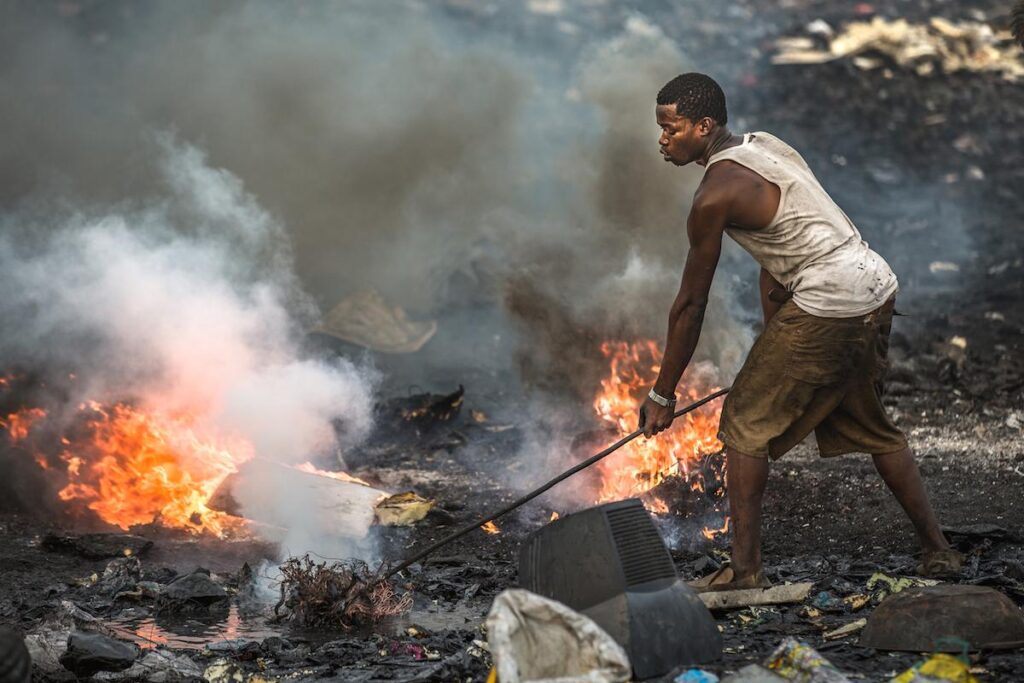
The site has become a major source of pollution, with informal waste workers exposed to smoke, dust and potentially toxic substances as they recover materials for resale.
Thousands of tonnes of refuse have accumulated over several decades, affecting the surrounding wetlands and communities.
An estimated 80,000 people live in the nearby settlement, many of them migrants and traders.
A major environmental and public health concern
Waste workers often dismantle discarded electronics and appliances without protective equipment.
Environmental health experts have raised concerns about exposure to toxic metals and chemicals through skin injuries, smoke and dust.
The burning of computer cables, batteries and other discarded materials can release substances such as lead, mercury and other pollutants.
Runoff from the surrounding area also affects the Korle Lagoon and nearby soil.
However, experts have cautioned that although the pollution presents serious health concerns, specific diseases have not yet been conclusively linked to individual exposures at the site.
The issue also extends beyond Ghana’s borders.
Greenpeace Africa has raised concerns about the volume of used clothing entering Ghana from international markets. The organisation estimates that approximately 15 million used garments arrive in the country every week, with a significant proportion eventually becoming waste.
This has increased pressure on local waste-management systems and raised questions about the environmental responsibilities associated with international second-hand clothing markets.
One million tonnes of waste targeted for removal
President John Mahama launched a three-month cleanup operation in September to remove approximately one million tonnes of accumulated waste.
Heavy military and public works equipment has been deployed to transport refuse to a landfill about 50 kilometres outside Accra.
At the new site, the waste is expected to be compacted and covered under environmental safeguards.
The government says the cleanup will also provide an opportunity to reorganise the informal recycling sector.
Local Government Minister Mahama Ayariga said waste pickers and tricycle hauliers would be brought into a more formal recycling system.
The government hopes this transition will create up to 20,000 permanent jobs in waste management and the circular economy.
The development was reported by Africanews in its coverage of Ghana’s Agbogbloshie cleanup, waste removal target and projected employment opportunities.
Can environmental cleanup create sustainable jobs?
The project presents Ghana with an opportunity to address two related challenges: environmental pollution and informal employment.
However, the success of the programme will depend on whether the cleanup is sustained beyond the initial operation and whether informal workers can transition into safer and more reliable livelihoods.
Questions also remain about how the government will monitor the disposal of collected waste, prevent new dumping and ensure that recycling activities meet environmental and occupational safety standards.
The Agbogbloshie project therefore represents more than a waste-removal exercise. It is a test of whether environmental restoration can be combined with public health protection and long-term economic opportunity.
THE BIGGER PICTURE: AFRICA’S INSTITUTIONS UNDER PRESSURE
The five developments in this edition reveal the different responsibilities facing African governments and institutions.
In South Sudan, the Abiemnom massacre investigation has raised questions about civilian protection, early-warning systems and accountability. The country’s approaching election adds another layer of uncertainty to an already fragile political transition.
In the Democratic Republic of the Congo, the scale of the Ebola outbreak demonstrates the importance of accessible healthcare, effective surveillance and protection for frontline medical personnel.
Kenya’s progress towards ending its Ebola outbreak shows what coordinated public health action can achieve, while also reminding neighbouring countries that vigilance must continue.
In Libya, the Marsa Brega explosion has brought industrial maintenance and worker safety into focus, particularly in a sector that remains important to the country’s economy.
Ghana’s Agbogbloshie cleanup illustrates the challenge of turning environmental damage into an opportunity for sustainable employment and safer recycling systems.
These stories are different, but they share a common institutional question: are public authorities doing enough to protect people, manage risks and deliver lasting improvements?
The answer cannot be measured only by announcements, targets or official statements. It must also be judged by whether civilians are protected, diseases are contained, workers are safe and communities experience tangible improvements in their living conditions.
CONCLUSION
Africa’s latest developments show a continent facing complex challenges that require effective public institutions, regional cooperation and long-term planning.
South Sudan must confront questions of accountability and political stability. The DRC needs a stronger response to its Ebola emergency. Kenya must complete its monitoring period before it can be declared free of the disease. Libya must establish the cause of its gas facility explosion and strengthen industrial safety, while Ghana must ensure that its environmental cleanup produces lasting benefits for workers and surrounding communities.
The developments of 11–12 November 2026 demonstrate that the future of Africa will depend not only on the policies governments announce but also on how effectively those policies protect lives, strengthen institutions and improve the everyday conditions of their people.
This is AFRICA IN MOTION from DSG HERALD NEWS — Reporting the Changes Shaping Africa and Its Future.
Stay informed. Stay ahead.
Visit DSG HERALD NEWS for more African, Nigerian and global news coverage.
About the Author