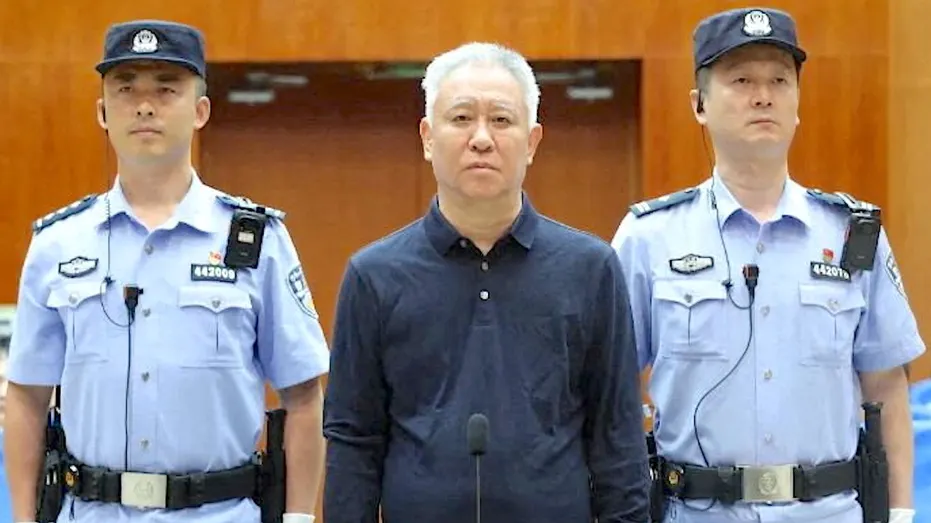
The Evergrande founder life sentence marks the dramatic end of Hui Ka Yan’s extraordinary rise from modest beginnings in rural China to the head of one of the country’s biggest property empires, with a Shenzhen court ordering the 67-year-old businessman to spend the rest of his life in prison after he pleaded guilty to multiple financial crimes.
The Shenzhen Intermediate People’s Court also ordered the confiscation of Hui’s personal property and imposed heavy fines on Evergrande Group and its main property subsidiary. Reuters reported that the companies were fined a combined 15.82 billion yuan, while Hui’s conviction followed his April guilty plea to eight charges including misuse of funds, fundraising fraud, illegally taking public deposits, fraudulently issuing securities and bribery. (Reuters)
The verdict is significant not simply because it brings one of China’s most spectacular corporate careers to an end. It also places a formal judicial conclusion on a business model that once appeared to embody the extraordinary expansion of China’s property market but later became one of its most visible symbols of financial excess.
Hui built Evergrande through aggressive expansion and heavy borrowing. When China’s authorities began tightening controls on property-sector debt, the foundations supporting that expansion became increasingly unstable. The company’s eventual collapse left enormous debts and contributed to a property downturn that continues to weigh on China’s economy. (Reuters)
From Rural China to Property Billionaire
Hui Ka Yan, also known as Xu Jiayin, did not begin his career at the centre of China’s corporate establishment.
Raised in rural China, Hui eventually entered the property business and founded Evergrande in 1996. Over the following decades, he built the company into a national real estate powerhouse as China’s cities expanded and demand for housing accelerated.
Evergrande’s rise coincided with one of the most important economic transformations in modern Chinese history.
Millions of people moved into rapidly growing cities. Infrastructure expanded. Housing construction became a major engine of economic activity, while property became an important source of wealth for households and revenue for local governments.
Evergrande positioned itself at the heart of that transformation.
The company expanded aggressively across China’s property market and eventually became the country’s largest real estate developer. Its growth also made Hui extraordinarily wealthy.
At one point, he ranked among Asia’s richest people.
That wealth, however, was closely tied to the continuing expansion of the business empire he had built.
The larger Evergrande became, the more capital it needed to maintain its expansion.
And much of that expansion depended on debt.
How Evergrande Built an Empire on Borrowing
Evergrande’s business model depended heavily on borrowing and the continued ability to sell property.
During China’s property boom, that strategy helped the company expand at remarkable speed.
New developments generated sales. Sales provided cash. Borrowing supplied additional capital for expansion.
The model could produce spectacular growth while property demand remained strong and access to financing remained available.
But it also created significant vulnerabilities.
If property sales slowed, developers could face difficulty meeting their financial obligations. If regulators restricted borrowing, companies that depended heavily on debt could suddenly find themselves without the same ability to refinance or expand.
That vulnerability became increasingly important as Beijing moved to address excessive leverage within China’s property sector.
The policy shift would eventually become one of the defining turning points in Evergrande’s history.
The Moment China’s Property Boom Changed
In 2020, Chinese authorities introduced measures designed to reduce excessive borrowing in the property industry.
For heavily indebted developers, the new environment was fundamentally different.
Evergrande was particularly exposed.
The company had accumulated enormous liabilities while continuing to pursue an aggressive expansion strategy. As access to financing became more difficult and property conditions weakened, the company increasingly struggled to meet its obligations.
It began offering properties at substantial discounts in an effort to generate cash.
But the financial pressure continued.
By 2021, Evergrande had defaulted on its debt.
The collapse of the company quickly became much larger than a problem involving one developer.
Evergrande had become deeply connected to homeowners, suppliers, contractors, creditors, investors and financial institutions.
Its failure therefore became a major test of China’s ability to contain the consequences of the property downturn.
Reuters describes Evergrande as having defaulted on most of its more than $300 billion in liabilities, making it one of the most heavily indebted corporate failures in the world. (Reuters)
The Evergrande Collapse Changed More Than One Company
The Evergrande collapse became a symbol of the broader problems confronting China’s property sector.
For years, property development had been a powerful contributor to China’s economic expansion.
But when the sector weakened, the consequences extended beyond developers.
Homebuyers faced uncertainty over unfinished projects. Investors suffered losses. Banks and other creditors faced exposure to troubled borrowers. Local governments also faced pressure as property-related revenues weakened.
The crisis also damaged confidence.
A property developer is not simply selling buildings. It is selling an expectation that a building will be completed, that property values will remain relatively stable and that the financial system supporting those transactions will continue to function.
When confidence falls, the consequences can spread quickly.
Evergrande’s troubles therefore became part of a wider economic problem rather than remaining an isolated corporate failure.
AP reported that the company’s collapse involved more than $300 billion in debt defaults and reverberated throughout China’s property market. (AP News)
What Happened to the Money?
One of the most serious elements of the case concerns the financial practices that prosecutors and the court examined.
According to the supplied report, the court heard that Evergrande had received millions of dollars in pre-sale funding from prospective homebuyers that was not used for the construction projects for which it had been raised.
Instead, the money was channelled into other developments.
That created an increasingly complicated financial structure in which funds from existing projects could be used to support new projects.
As the company’s financial difficulties intensified, that system became increasingly difficult to sustain.
The consequences were visible in hundreds of unfinished developments.
The court also addressed allegations involving falsified records and concealed liabilities. Reuters reported that Hui pleaded guilty to eight financial charges, including fundraising fraud, illegal acceptance of public deposits, securities-related offences and bribery. (Reuters)
The sentencing therefore goes beyond the simple story of a company that borrowed too much.
It reflects the Chinese authorities’ assessment that serious financial crimes were committed during the company’s rise and collapse.
Why Hui Ka Yan Received Life in Prison
The Shenzhen court’s decision represents the harshest possible conclusion to Hui’s corporate career.
The court said Hui and his businesses had seriously disrupted the Chinese property market and caused significant economic losses.
AP reported that the court cited the scale of the financial fraud and the severe damage to society in explaining the severity of the punishment. (AP News)
Hui’s personal property was confiscated.
Evergrande Group and Evergrande Real Estate Group were also subjected to substantial financial penalties.
The punishment sends a powerful message about the Chinese government’s approach to corporate misconduct involving major financial institutions and public funds.
It also demonstrates how dramatically Hui’s circumstances have changed.
The businessman who once controlled one of China’s largest property companies is now at the centre of one of the country’s biggest corporate criminal cases.
From Asia’s Richest Man to Prison
Perhaps the most striking element of Hui’s story is the scale of the reversal.
At Evergrande’s height, Hui represented the extraordinary wealth created during China’s property boom.
He was a billionaire whose business interests extended far beyond a single property development.
Evergrande’s expansion transformed Hui into one of Asia’s richest men.
The company itself became a household name in China’s property industry.
Its size and market valuation reflected the confidence investors once placed in its future.
But the same rapid expansion that created Hui’s fortune also exposed the company to enormous financial risk.
When the property market weakened and credit conditions tightened, the value of that empire deteriorated with extraordinary speed.
Reuters’ profile of Hui’s rise and fall describes him as a property tycoon who once appeared alongside China’s political and business elite before Evergrande’s financial troubles brought his position crashing down. (Reuters)
The transformation is difficult to ignore.
A businessman who once symbolised China’s property boom now symbolises its painful unwinding.
Evergrande’s Market Value Almost Disappeared
The destruction of Evergrande’s financial value provides another measure of the company’s collapse.
The supplied source reports that the company’s stock-market valuation fell by about 99% before its shares were removed from the Hong Kong exchange in August 2025.
That collapse illustrates the difference between the company investors once believed they were buying into and the heavily indebted business that eventually emerged from the property crisis.
Evergrande was no longer the symbol of endless growth.
Instead, it became a warning about what can happen when expansion, debt and confidence move in the same direction for too long.
The company’s fall also demonstrated how quickly financial markets can reassess a business when its ability to generate cash and service debt becomes uncertain.
The Wider China Property Crisis
The China property crisis did not begin and end with Evergrande.
Other major developers also experienced financial difficulties as China’s property market entered a prolonged downturn.
The significance of Evergrande lies partly in its size.
At its height, the company was the biggest developer in China’s property industry, a sector that had become deeply important to the country’s economic model.
Property was not simply another business sector.
It supported construction, manufacturing, household wealth, financial activity and local government revenue.
When the sector weakened, those connections became channels through which economic pressure could spread.
The result has been a prolonged adjustment that has challenged policymakers trying to support growth while preventing another debt-fuelled property expansion.
What Hui’s Sentence Means for China’s Property Industry
The Evergrande founder life sentence is unlikely by itself to resolve China’s property crisis.
The underlying economic problems are much larger than one company or one executive.
China still has to deal with weak property demand, unfinished projects, developer debt, financial losses and questions about consumer confidence.
The sentencing does, however, mark an important point in the government’s response to the crisis.
It establishes accountability at the top of one of the industry’s most prominent failures.
It also reinforces the message that corporate executives cannot assume that enormous size or political and economic importance will protect them from legal consequences.
For China’s property industry, that may encourage greater caution.
Developers, investors and lenders are likely to pay closer attention to balance sheets, cash flows and regulatory restrictions than they did during the industry’s most aggressive expansion years.
The old assumption that property prices and development would continue rising indefinitely has already been badly damaged.
The Evergrande case gives that shift a powerful human face.
A Warning About Debt-Fuelled Growth
There is a broader economic lesson in Evergrande’s story.
Rapid expansion can make a company look stronger than it really is when growth depends heavily on continuous borrowing.
Debt can finance new projects, increase market share and accelerate expansion.
But debt also creates fixed obligations.
When revenue slows or financing becomes more expensive, those obligations remain.
That is why the Evergrande story matters beyond China.
Emerging economies around the world have used construction, infrastructure and property development to drive economic growth.
The underlying principle is not unique to China.
Growth becomes vulnerable when companies or governments become excessively dependent on continuously rising asset prices and easy access to credit.
The Evergrande experience demonstrates how quickly confidence can reverse when those assumptions fail.
The Cost Has Fallen on More Than Hui Ka Yan
Although Hui’s sentence is the most dramatic personal consequence of the Evergrande collapse, the financial damage extends far beyond the company’s founder.
Homebuyers have had to contend with unfinished properties.
Investors have lost substantial amounts of money.
Creditors have spent years trying to recover funds.
Suppliers and construction companies have faced the consequences of delayed or abandoned projects.
Local governments have also had to navigate the effects of weaker property-related revenues.
That makes the Evergrande story fundamentally different from a conventional corporate scandal.
The company’s failure became intertwined with people’s homes, savings, investments and expectations about China’s economy.
The human consequences therefore cannot be measured simply by the size of Hui’s personal fortune or the fines imposed on his companies.
A New Chapter After Evergrande
Hui Ka Yan’s life sentence closes an extraordinary chapter in China’s corporate history.
But it does not close the Evergrande collapse itself.
The company’s debts, unfinished developments and financial consequences have continued to work their way through China’s economy.
The property sector also faces the difficult task of rebuilding confidence after years of instability.
The next phase will depend less on the fortunes of one billionaire and more on whether China can establish a sustainable property market that does not rely on the same level of debt-driven expansion that helped create Evergrande’s empire.
That will be a considerably harder task than bringing one corporate leader before a court.
The End of an Era for China’s Property Boom
Hui Ka Yan’s story can be read as the story of an entire economic era.
He founded Evergrande in 1996, when China’s property industry was still developing into the enormous economic force it would later become.
He expanded with the market.
He borrowed when credit was available.
He built when demand appeared almost limitless.
And he became extraordinarily wealthy.
But when the rules changed, the same structure that had accelerated Evergrande’s rise helped accelerate its decline.
The result was one of the most dramatic corporate collapses in modern China.
Now, with Hui sentenced to life imprisonment, the legal system has delivered its verdict on the man who stood at the centre of that empire.
The economic verdict is still being written.
China’s property market remains under pressure, and the broader consequences of the Evergrande collapse continue to shape the world’s second-largest economy.
For Hui Ka Yan, however, the rise is over.
The property empire that once made him one of Asia’s richest men has become the defining backdrop to his fall.
And the Evergrande founder life sentence may ultimately be remembered not only as the punishment of a fallen billionaire, but as one of the clearest symbols of the end of China’s debt-fuelled property boom.
About the Author