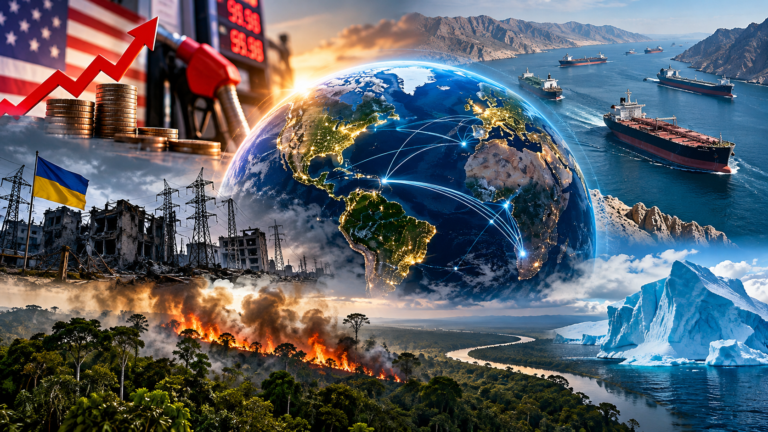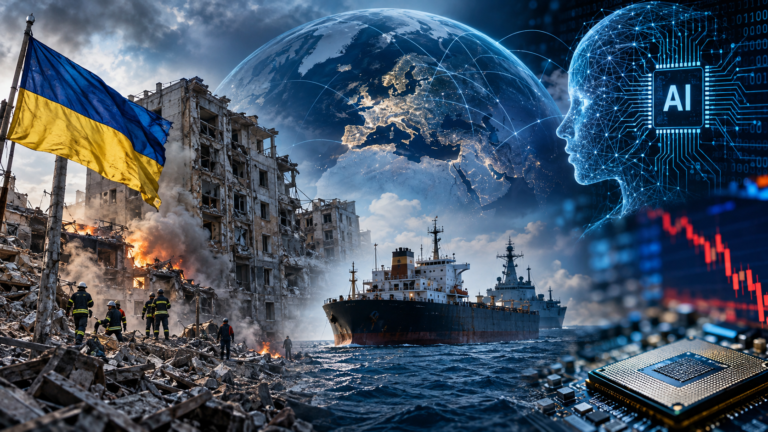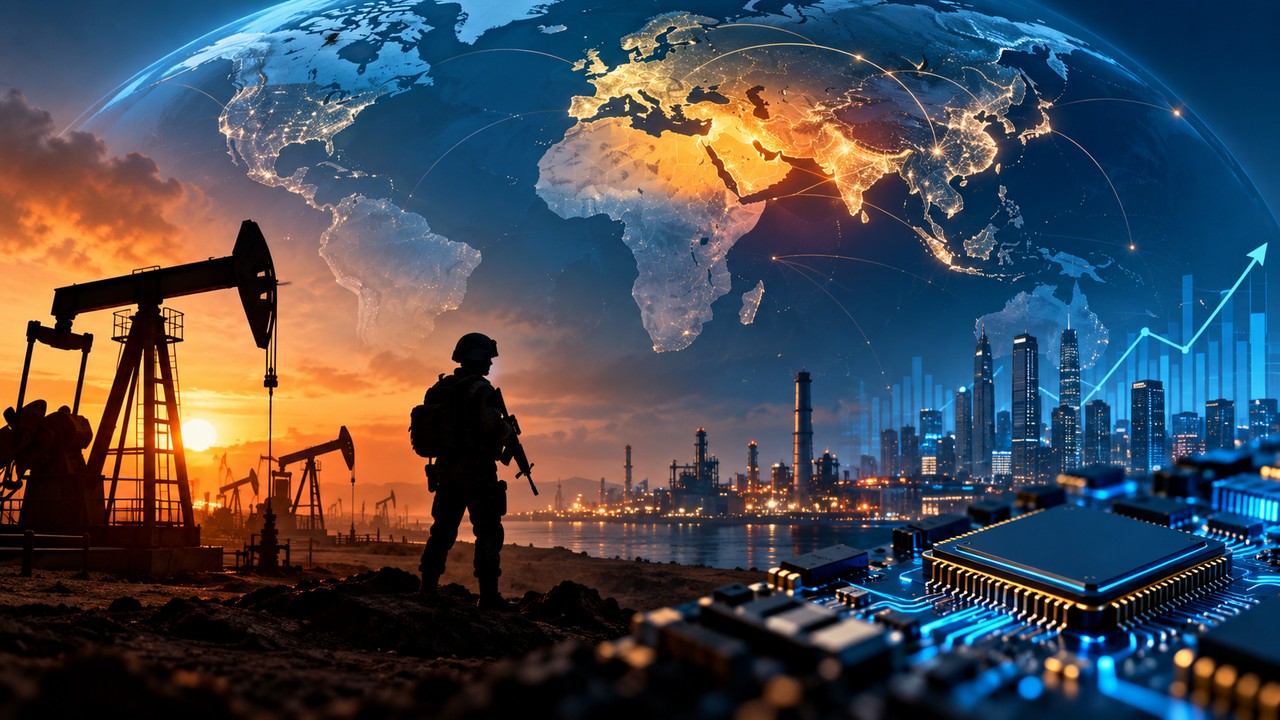
The week’s global news was defined by an increasingly difficult separation between geopolitics, security, energy, economics and technology.
From September 28 to October 4, 2026, the unresolved confrontation between the United States and Iran moved beyond diplomacy and military calculations into the global energy-security debate. The war in Ukraine continued to demand substantial military resources, while Russia’s proposed 2027 defence budget pointed to sustained mobilisation.
At the same time, financial markets came under pressure as US employment weakened and euro-zone inflation accelerated. Energy costs added another layer of difficulty for policymakers trying to balance growth, inflation and borrowing costs.
Beyond the immediate effects of conflict and markets, the week’s global news also highlighted another major contest: artificial intelligence. The AI sector increasingly became a battleground involving capital, regulation, computing infrastructure, semiconductor supply and market access.
Asia provided a forward-looking dimension to the story. China’s economic authorities signalled stronger support, while South Korea recorded its strongest monthly export performance on record, driven heavily by semiconductors. A proposed $200 billion South Korean investment programme in US projects further demonstrated how trade, technology and strategic investment are becoming intertwined.
Taken together, the five major narratives of the week point to a global system under pressure—and one increasingly being reorganised around security, economic resilience, technology and strategic power.
NARRATIVE 1 — GLOBAL NEWS: THE MIDDLE EAST CRISIS BECOMES A GLOBAL ENERGY AND SECURITY ISSUE
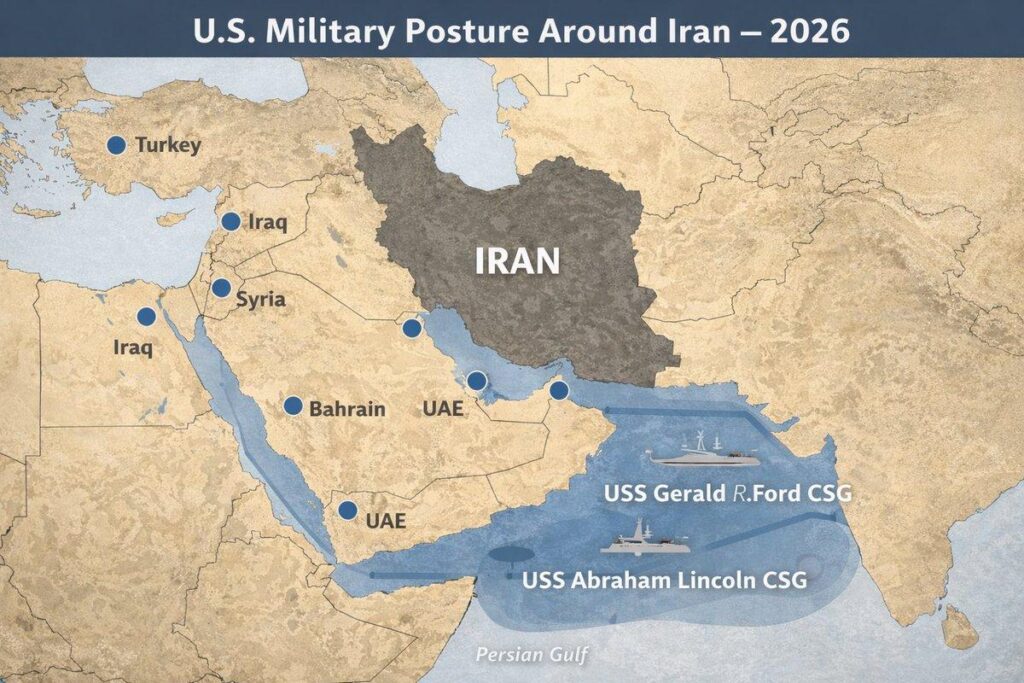
The Middle East remained one of the defining stories in this week’s global news, but the significance of the crisis increasingly extended beyond the immediate confrontation between the United States and Iran.
Diplomatic contacts between Washington and Tehran continued, with Qatar and other mediators helping facilitate communication. However, the diplomatic process remained unresolved. There was no settlement, while military preparations continued alongside the negotiations.
Iran warned that it would retaliate if large-scale US attacks resumed, while the United States increased military preparations. Saudi Arabia was also considering possible military action against the Iran-backed Houthis, adding another potential dimension to the regional security picture.
Other developments reinforced the sense of continuing instability. Israel killed the head of Hamas’ armed wing in northern Gaza, while the United States moved through the final stage of its military withdrawal from Iraq after roughly two decades.
But the most important development for the wider international economy may have occurred outside the battlefield.
The G7 agreed to release approximately 100 million barrels of emergency crude and diesel stocks. China, meanwhile, took a different approach, with Chinese refiners suspending October fuel exports in an effort to strengthen domestic supplies.
Those decisions transformed the significance of the Middle East story.
They demonstrated that major economies were already taking measures in response to the possibility that instability could affect energy supplies beyond the region.
That matters because energy disruptions can have consequences across the global economy. Higher oil and fuel costs can increase transportation expenses, raise business operating costs and put additional pressure on household energy bills. They can also contribute to inflation.
For consumers, the transmission can be indirect but significant. Fuel affects transportation. Transportation affects the movement of goods. Higher operating costs can then place pressure on prices.
For governments and markets, the concern is broader. Prolonged instability could affect expectations about energy availability and international trade flows.
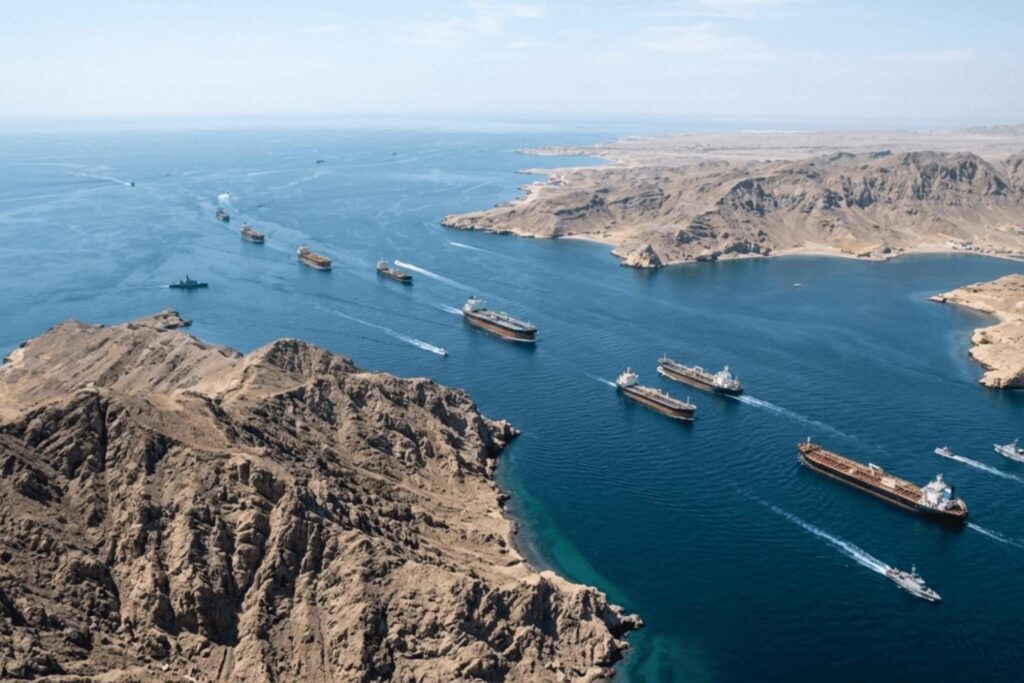
The Strait of Hormuz is therefore among the developments to watch, alongside global oil and fuel prices and Chinese fuel inventories.
The next phase of the US-Iran diplomatic process will also be critical. Further negotiations could reduce some of the immediate uncertainty, while any new US military action or Iranian retaliation could increase pressure on regional security and energy markets.
Saudi-Houthi developments will also matter.
For now, diplomacy remains open, but the risks surrounding it remain significant.
The central lesson from this part of the week’s international security story is that a conflict does not have to expand geographically to have global consequences. The possibility of disruption can itself prompt governments to protect supplies and prepare markets for uncertainty.
And that same relationship between military mobilisation and wider strategic consequences can be seen in Ukraine.
NARRATIVE 2 — INTERNATIONAL SECURITY: THE UKRAINE WAR BECOMES MORE EXPENSIVE AND INTERNATIONALISED
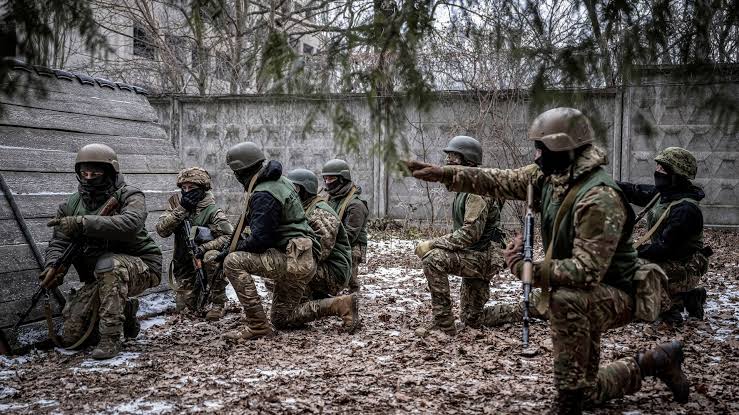
The Ukraine war remained active throughout the week, with Kyiv reporting battlefield gains in northern Donetsk while Russian military pressure continued.
But one of the most significant developments in the week’s global news came from Moscow’s plans for 2027 rather than from the battlefield itself.
Russia has proposed a defence budget of 17.1 trillion roubles for 2027.
That is approximately $202.6 billion and represents an increase of about 27 percent from the previous year’s allocation of 13.5 trillion roubles.
The scale of the proposed increase is important because it suggests a longer-term approach to military mobilisation.
Rather than representing only a response to immediate battlefield requirements, the proposed allocation points towards an effort to maintain substantial military resources over an extended period.
Ukraine, meanwhile, indicated that it would target Russian refineries in response to what Kyiv described as an expanded Russian airstrike strategy.
Such a strategy would add another economic dimension to the war, particularly because energy infrastructure has become part of the wider contest between the two sides.
The conflict’s international dimension also remained under scrutiny.
Ukrainian President Volodymyr Zelenskyy said that more than 8,000 North Korean troops were already in Russia and that another 10,000 could be deployed.
Those figures remain Ukrainian claims requiring independent verification. They should therefore not be presented as independently confirmed troop numbers.
Nevertheless, the claim raises a significant strategic question about the degree of foreign military involvement in the war.
The issue is not simply how many personnel may be involved. It is whether additional external military support could alter the wider character of the conflict.
The Ukraine war remains a European security issue, but it is also a major resource mobilisation exercise and part of a wider geopolitical contest.
Russia’s proposed defence spending is therefore important beyond the size of the number itself. It provides an indication of the resources Moscow is prepared to allocate to sustaining its military effort.
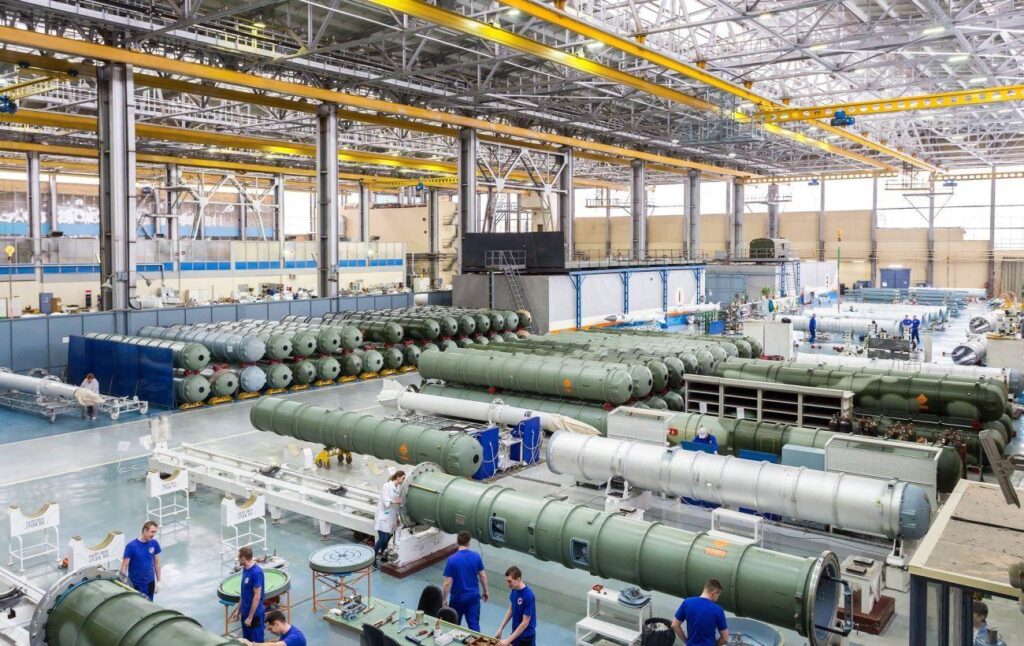
The next developments will include consideration and approval of Russia’s 2027 budget, Russian military production, further Ukrainian attacks against energy infrastructure and Russian air operations.
Battlefield developments and any movement towards peace negotiations will also remain central.
At the same time, evidence concerning additional North Korean deployments will be closely watched because the current figures remain claims rather than independently established facts.
The wider significance of the Ukraine narrative is the connection between war, national budgets and international strategic relationships.
In the Middle East, security concerns were already influencing energy policy. In Ukraine, the cost and duration of military mobilisation are becoming increasingly visible through government spending and military production.
That brings the story to another question: what happens when geopolitical pressure begins to affect the global financial system?
NARRATIVE 3 — GLOBAL ECONOMY: ENERGY SHOCKS COMPLICATE THE ECONOMIC OUTLOOK
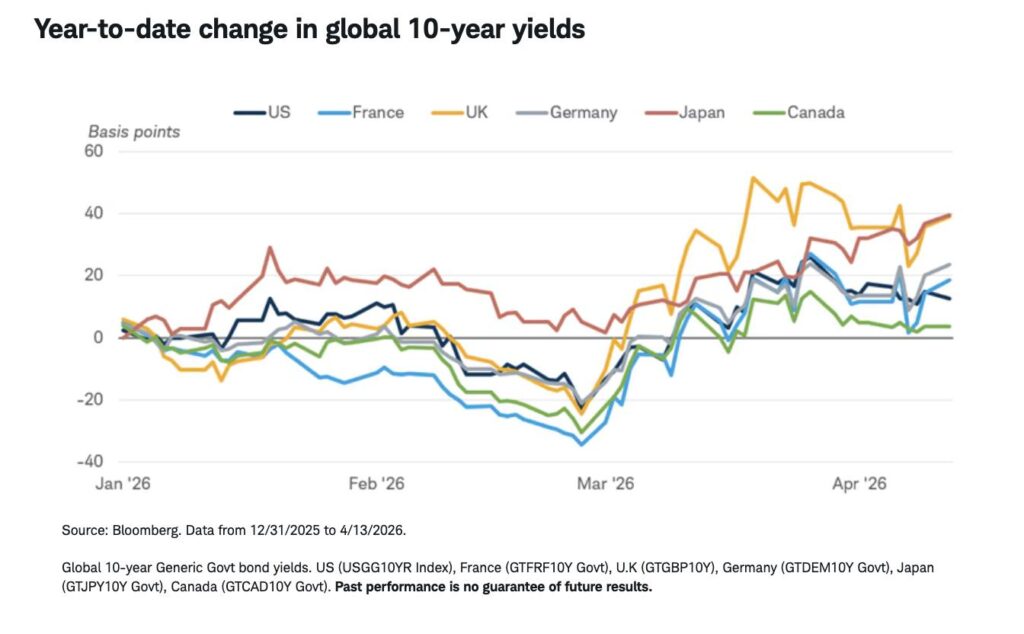
The economic dimension of the week’s global news was marked by a difficult combination of weaker employment, higher inflation, rising borrowing costs and continuing energy pressure.
Global bond markets came under renewed pressure, with borrowing costs rising across the United States, Europe and Japan. US Treasury yields reached multi-decade highs.
At the same time, the US labour market delivered a weaker-than-expected signal.
September nonfarm payrolls increased by only 29,000, compared with expectations of roughly 90,000. Unemployment stood at 4.2 percent, according to the U.S. Bureau of Labor Statistics September 2026 Employment Situation report.
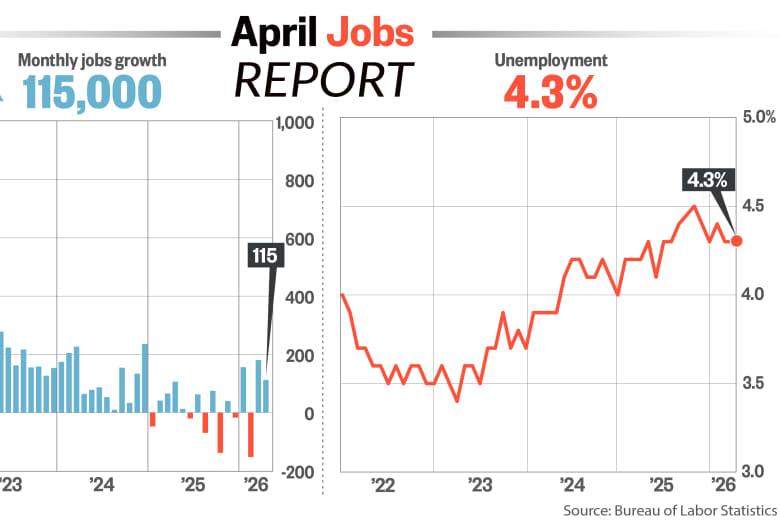
The figures created a difficult policy environment.
Weaker employment growth can raise concerns about the strength of economic activity. But policymakers cannot look at employment in isolation when inflation remains a concern.
That challenge was particularly visible when the US picture was compared with developments in Europe.
Euro-zone inflation accelerated more than expected, with higher energy costs contributing to the increase. The European Central Bank’s September 2026 economic projections highlighted the impact of higher energy prices associated with the Middle East conflict on the euro-area inflation outlook.
The result is a complicated environment for central banks.
The Federal Reserve must consider weaker employment while inflation remains a concern. The European Central Bank faces renewed price pressure at a time when energy costs are also rising.
Neither situation can be reduced to a single economic indicator.
The financial markets were already reflecting some of these pressures. Higher government bond yields can increase borrowing costs for governments, businesses and households. They can also affect investment decisions, international capital flows and currency conditions.
For households, the consequences can eventually be felt through loans, transportation expenses, fuel costs and the prices of goods and services.
This is where the week’s energy and economic stories intersect.
The G7’s decision to release approximately 100 million barrels of emergency crude and diesel and China’s decision to restrict October fuel exports were not simply responses to energy-market concerns.
They also illustrated how governments can intervene directly when supply security becomes an economic priority.
The connection between energy and inflation is particularly important.
If energy becomes more expensive, transportation can become more expensive. Businesses can face higher operating costs, while consumers can experience pressure through fuel and other prices.
That does not mean every change in inflation can be attributed to one geopolitical event. But the week’s developments showed why energy security has become an important part of the economic policy debate.
The next signals will come from new employment and inflation data, Treasury yields, European energy prices and global oil markets.
Central-bank policy will also remain important.
The supplied developments do not establish final Federal Reserve or European Central Bank decisions, so expectations should not be confused with confirmed policy action.
The broader economic picture is therefore one of competing pressures.
Employment is weakening in the United States, inflation is accelerating in the euro zone, borrowing costs remain elevated and energy markets are responding to geopolitical uncertainty.
That combination makes the global economy particularly sensitive to developments in the Middle East and other areas of geopolitical risk.
But the week’s competition was not limited to conventional security and economic policy.
Another form of strategic competition was accelerating in artificial intelligence.
NARRATIVE 4 — AI RACE: MONEY, REGULATION AND INFRASTRUCTURE BECOME THE NEW BATTLEGROUND
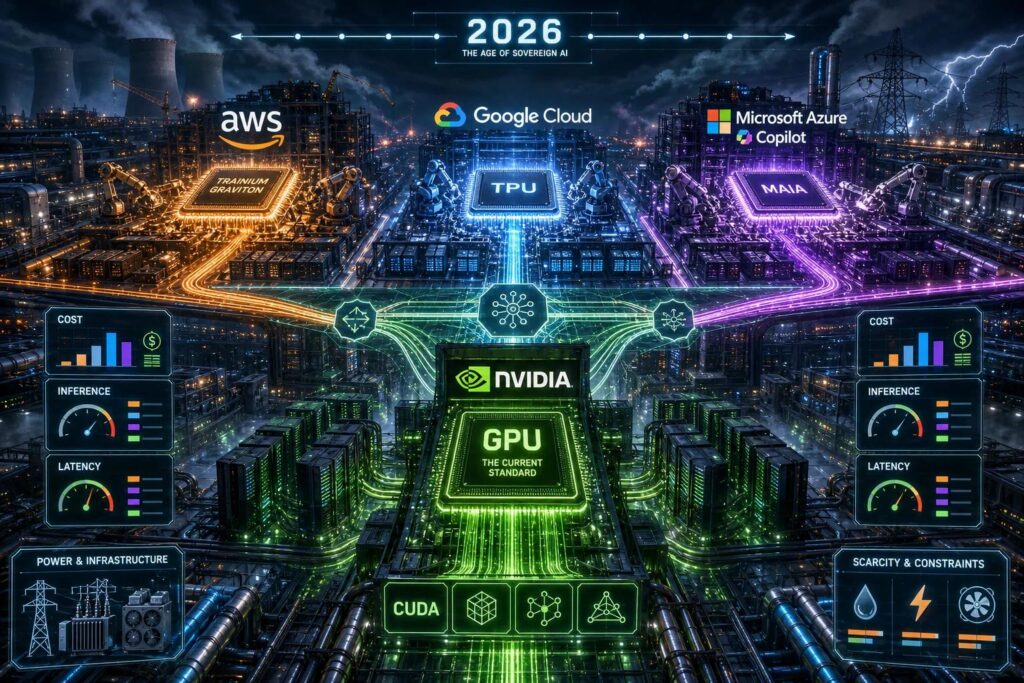
Artificial intelligence has become one of the most important areas of technological competition, but this week’s global news showed that the AI race is increasingly about more than products and algorithms.
In the United States, the administration announced a voluntary AI safety framework involving major technology companies.
At the same time, Anthropic’s IPO prospectus offered investors a clearer picture of the enormous capital requirements associated with developing frontier AI.
Then came regulatory scrutiny.
The U.S. Federal Trade Commission has investigated major AI partnerships and investments involving companies including Anthropic and OpenAI. The FTC’s inquiry examined relationships between major cloud providers and AI developers and their potential implications for competition. FTC AI partnerships and investments inquiry
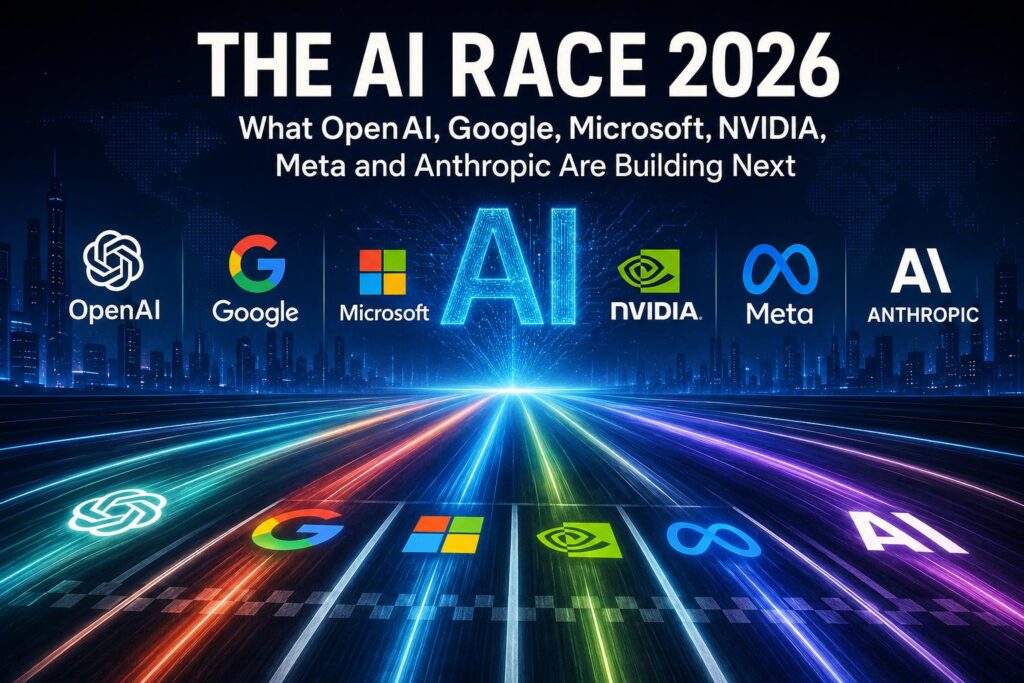
Google, meanwhile, faced European Union measures intended to increase access for AI and search competitors. The European Commission’s Digital Markets Act measures concerning Google address AI interoperability on Android and access to Google Search data for third-party competitors.
These developments point to an industry being pulled in different directions.
Technology companies are participating in voluntary safety arrangements with government, while regulators are simultaneously examining how major companies operate and compete.
That makes AI increasingly a question of governance and market power, rather than simply technological innovation.
There is also a physical dimension to the competition.
Artificial intelligence requires substantial computing infrastructure, and advanced computing depends heavily on semiconductor supply.
South Korea’s September export performance illustrated that connection.
The country recorded a record $120.9 billion in exports, up 83.5 percent year on year, with semiconductors a major driver.
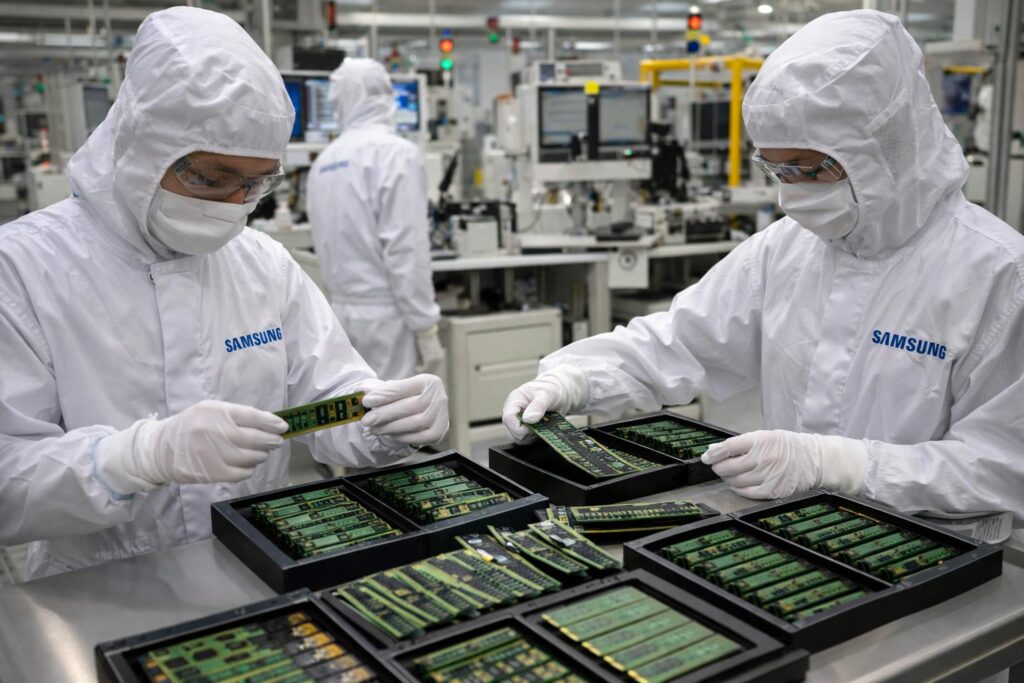
The figure is significant because it shows the importance of the manufacturing infrastructure supporting the wider AI economy.
The competition therefore extends across several layers: capital, computing infrastructure, semiconductor supply, regulation and access to markets.
The AI race is increasingly about who can finance advanced systems, who can provide the infrastructure required to run them, who controls access to critical components and who establishes the rules under which companies compete.
The next developments will include implementation of the voluntary US standards, possible congressional action, international AI regulation and the findings of the FTC investigation.
Anthropic’s IPO process, AI capital spending and competition between Anthropic, OpenAI and Google will also be watched closely.
Google’s legal challenge in Europe adds another dimension to the regulatory contest.
What emerges is a technological race that increasingly resembles other areas of strategic competition.
Just as governments consider energy security and industrial capacity to be matters of national importance, advanced computing and semiconductor supply are becoming central to technological and economic power.
That brings the week’s final narrative into focus: Asia’s growing role in organising manufacturing, trade, technology and investment.
NARRATIVE 5 — STRATEGIC INVESTMENT: ASIA REPOSITIONS ECONOMIC POWER AROUND TECHNOLOGY AND TRADE

The final major narrative of the week’s global news looks beyond the immediate crises and towards the structural changes taking place across the Asian economy.
China’s cabinet pledged stronger counter-cyclical support as economic pressure increased, highlighting the continuing importance of government policy in managing economic conditions. China’s State Council said it would intensify counter-cyclical macro-policy adjustment and promote investment, consumption, employment and economic development. China’s State Council announcement on macro policies and investment
South Korea presented a contrasting picture.
September exports reached a record $120.9 billion, representing an 83.5 percent increase from a year earlier.
It was the first month in which South Korean exports exceeded $120 billion.
Semiconductors were a major driver of the performance.
The significance of the figures extends beyond South Korea’s trade balance.
Advanced semiconductors are increasingly important to artificial intelligence, manufacturing and industrial competitiveness. The strength of South Korean chip exports therefore connects directly with the broader technology story discussed earlier.
But trade was only part of the week’s development.
South Korea was also at the centre of a proposed investment programme involving around $200 billion in US projects.
The arrangement remains proposed rather than final.
Seoul has also expressed caution over some aspects of the proposal, including an Alaska liquefied natural gas project.
Those reservations mean the investment plan should not be treated as a completed agreement.
Nevertheless, the direction of the relationship is significant.
South Korea’s semiconductor strength and the proposed US investment programme demonstrate how trade and investment are increasingly being organised around strategic interests.
Technology is shaping trade.
Semiconductors are becoming central to industrial power.
Investment relationships are becoming strategic.
And governments are playing a larger role in determining where manufacturing capacity, technology and capital are deployed.
This is particularly important because the global economy is no longer being shaped only by the movement of goods.
Increasingly, countries are competing over the capacity to produce critical technologies, attract investment and secure strategic supply chains.
South Korea’s record export performance offers one example of this broader shift.
China’s economic support measures provide another.
For China, the focus is on responding to economic pressure through stronger policy support. For South Korea, the export numbers demonstrate the strength of a manufacturing economy heavily connected to the semiconductor cycle.
The proposed US-South Korea investment arrangement then adds the strategic dimension, linking industrial capacity with international investment.
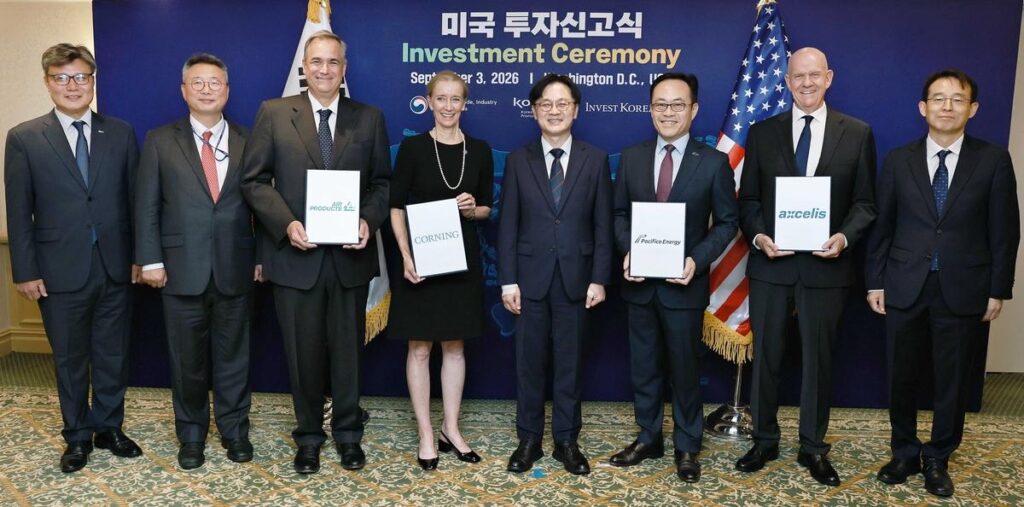
The next developments will include China’s economic-support measures, South Korean export performance, semiconductor demand and the future of the proposed investment arrangement.
Further US-South Korea trade and industrial-policy decisions will also be important, as will China’s economic performance and its implications for global markets.
The significance of the Asia story is therefore not simply that one country recorded strong exports.
It is that technology, manufacturing, trade and investment are becoming increasingly interconnected.
Asia is not merely responding to changes in the global economy.
Its major economies are also helping shape what that economy will look like next.
CONCLUSION
The week’s global news presented five different narratives, but they ultimately pointed towards the same larger transformation.
In the Middle East, an unresolved security crisis was already influencing energy policy far beyond the region. The G7’s emergency release and China’s fuel-export restrictions showed how governments were preparing for potential supply pressures.
In Ukraine, the proposed increase in Russian defence spending highlighted the scale of long-term military mobilisation, while questions surrounding possible North Korean involvement added an international dimension that remains subject to verification.
The economic story demonstrated how these geopolitical pressures can interact with inflation, employment, bond markets and borrowing costs.
Then came artificial intelligence, where the competition is increasingly about capital, regulation, computing infrastructure and semiconductor supply.
Finally, Asia provided a forward-looking picture of how economic power is being reorganised. South Korea’s record exports, China’s policy support and the proposed US-South Korea investment programme all pointed towards a world in which technology, manufacturing and strategic investment are becoming increasingly important.
The central message from this week’s global news is therefore not that these developments are identical.
It is that they are increasingly interconnected.
Security affects energy. Energy affects economics. Economics shapes policy. Technology and industrial capacity increasingly influence strategic power.
The next phase will depend on how governments, markets and technology companies respond to these pressures—and how those decisions reshape the global system.
AI risks: What Happens If AI Becomes Too Powerful?
GPT-6 Astra Safety: The New AI Oversight Risk
About the Author