Nigeria news cycle was dominated by a question that cuts across the economy, energy sector, security and politics: can government reforms, investments and political promises translate into measurable improvements in the lives of Nigerians?
During the week of September 28 to October 4, 2026, the country’s economic reforms faced a direct test from organised labour and households still dealing with cost-of-living pressures. At the same time, the oil and gas industry produced major financial, infrastructure and investment developments, including NNPCL’s reported ₦7.2 trillion profit and further progress on critical gas infrastructure.
The security situation provided another dimension to the week’s Nigeria news. Prospective National Youth Service Corps members were abducted in Imo State, while separate incidents in Borno, Niger, Zamfara, Abia and Anambra highlighted the continuing vulnerability of civilians.
Beyond individual policies and incidents, another theme emerged: delivery. Government programmes, budget implementation, infrastructure projects and regional initiatives are increasingly being judged not simply by what has been announced or funded, but by what citizens can actually see and experience.
That question is also becoming increasingly relevant to Nigeria politics. Although the 2027 election remains ahead, issues that could influence the political environment are already visible — from fuel prices and economic performance to voter information and political competition.
Here are the five major narratives that defined Nigeria news during the week.
Nigeria News: Economic Reforms Face the Reality of Cost of Living
Nigeria’s economic reform programme encountered one of its clearest tests this week when eight public-sector unions began a three-day nationwide warning strike.
The action began on October 2 after the unions said the Federal Government had not adequately responded to their demands. Among the issues raised were a call for petrol to sell at ₦500 per litre, an immediate wage award and negotiations toward a new minimum wage from 2027. The public-sector unions’ demands and planned warning strike were reported ahead of the October 2 action.
The industrial action came only days after President Bola Tinubu used his Independence Day address to argue that the country’s economic reforms had moved beyond the emergency phase and were entering what he described as an “age of prosperity.”
That contrast became one of the defining features of the week’s Nigerian economy debate.
For the government, the reform programme is being presented as a transition toward stronger economic conditions. For workers and households, however, the immediate question remains whether the sacrifices associated with reform are producing visible relief.
Transport is one of the clearest examples.
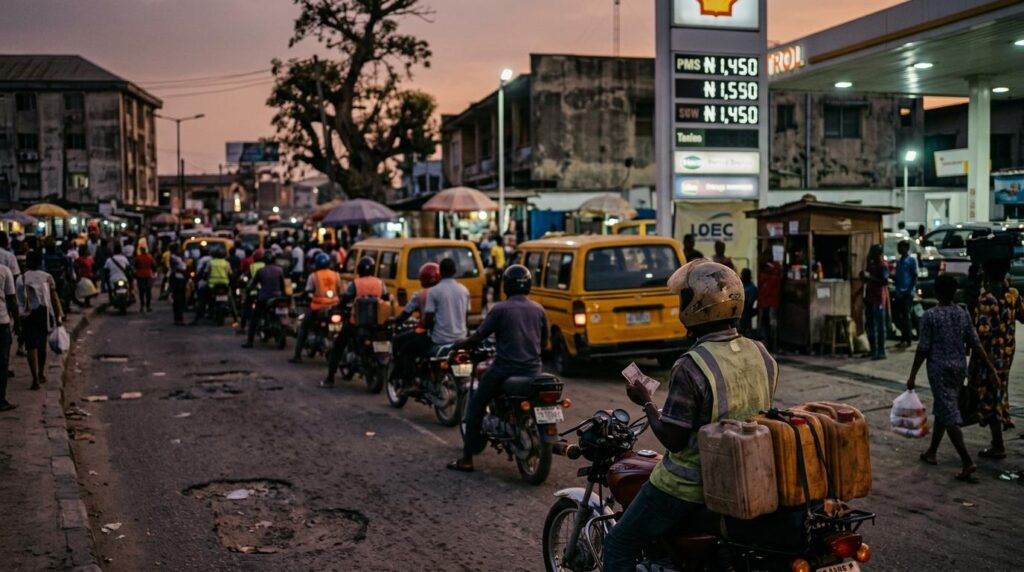
The government’s compressed natural gas, or CNG, programme was designed in part to reduce transportation costs. But the rollout has faced shortages of buses, refuelling facilities and conversion centres. As a result, broad reductions in transport fares have not yet materialised in many places.
That gap between policy intention and everyday experience is increasingly important.
A programme can be designed to reduce costs, but households ultimately experience it through the prices they pay. For commuters, the question is not simply whether CNG infrastructure exists; it is whether using public transport becomes more affordable.
The fuel-price debate has also become politically significant.
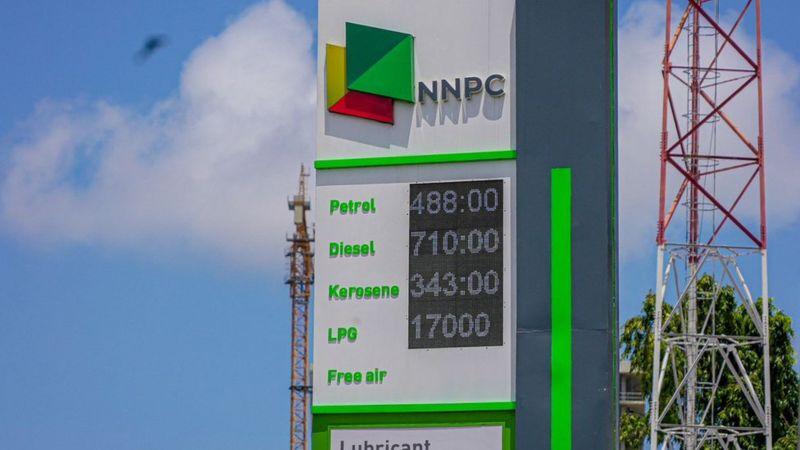
Opposition figures Peter Obi and Atiku Abubakar supported positions favouring the restoration of a petrol subsidy under specified conditions. Petroleum Minister Heineken Lokpobiri, however, maintained that the previous subsidy model was financially unsustainable.
The disagreement illustrates how closely economic policy and political debate are becoming connected.
Fuel prices affect transport. Transport affects workers and businesses. And household costs influence how citizens judge the broader reform programme.
The immediate question following the warning strike is whether the Federal Government and labour can reach an agreement and whether unions will consider further action. Another question is whether the CNG programme can eventually deliver the transport savings for which it was designed.
For the Nigerian economy, therefore, the next stage of reform will increasingly be measured against lived experience.
The central issue is no longer only whether reforms have been introduced. It is how quickly their promised benefits become visible to workers and households.
That same question — whether major economic changes can eventually produce tangible benefits — was also evident in the country’s energy sector.
Nigerian Economy and Energy: Oil, Gas and a Changing Petroleum Industry
Nigeria’s oil and gas industry produced a concentration of major developments during the week, reinforcing the sense that the petroleum sector is entering a new phase.
NNPCL reported a profit after tax of ₦7.2 trillion for 2025, compared with ₦5.4 trillion in 2024. That represented an increase of 33 percent. Yet the company’s revenue fell by 24 percent to ₦34.5 trillion. The official NNPC announcement on its 2025 financial results provides the company’s reported figures and production targets.
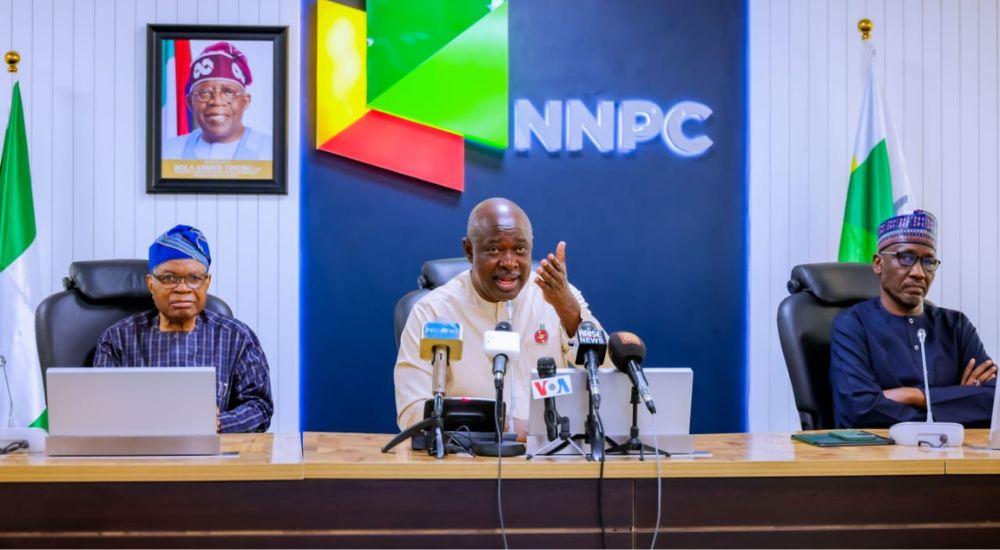
The company also reported average crude and condensate production of approximately 1.77 million barrels per day, with an ambition to reach 2 million barrels per day by 2027.
The numbers present an important picture of Nigeria’s petroleum industry. Stronger reported profitability exists alongside lower reported revenue, while crude production remains central to the sector’s performance.
But the week’s energy story was not limited to crude oil.
Domestic gas supply crossed 2 billion cubic feet per day, while the OB3 gas pipeline was reported complete and the Ajaokuta-Kaduna-Kano, or AKK, pipeline was about 95 percent complete. Reuters reported the domestic gas-supply milestone on October 2, describing the increase as part of efforts to expand gas availability to power plants and industrial facilities.
These developments are significant because gas has applications across several parts of the Nigerian economy. It is important for electricity generation, industrial activity, fertiliser production and petrochemicals.
The movement of these infrastructure projects therefore forms part of a broader attempt to expand the domestic role of gas.
Another major development came from the capital market.
The Dangote Refinery’s public offering involves 4.1 billion shares at ₦525 each, with potential proceeds of approximately ₦2.15 trillion. The refinery has a stated capacity of 700,000 barrels per day. The Nigerian Securities and Exchange Commission’s official Dangote Refinery IPO notice provides official information on the approved offering, while Reuters reported the 4.1 billion shares, ₦525 price and ₦2.15 trillion target.
Taken together, the developments suggest that Nigeria’s petroleum story is increasingly about more than crude production.
It is also about refining, gas infrastructure, investment and capital markets.
Yet the transformation remains contested.
A Federal High Court ruling allowed continued fuel-import licensing for three marketers, while Dangote’s separate legal challenge remains pending. Meanwhile, the Senate Public Accounts Committee examined petroleum-sector audit issues involving outstanding obligations and financial records.
This creates another layer to the sector’s transformation: alongside commercial expansion and infrastructure investment, questions of accountability, competition and regulation remain important.
For consumers, however, the ultimate test is simpler.
Will these developments eventually contribute to more reliable fuel supplies, better electricity and stronger energy security?
The supplied material does not establish that those benefits have already been achieved. Instead, it identifies several developments still to watch, including first gas through OB3, completion of AKK, further gas-to-power development, the Dangote Refinery IPO and continuing legal and regulatory proceedings.
The energy sector is therefore moving, but the final impact remains a question of delivery.
And while the energy industry was producing trillion-naira figures and major infrastructure milestones, another part of Nigeria’s story was being measured in missing people, deaths and communities living with fear.
Nigeria Security: Kidnapping and Violence Continue to Reach Civilians
For many Nigerians, the most consequential part of the week’s Nigeria news was not measured in financial statements or pipeline capacity.
It was measured in lives, missing relatives and the ability of ordinary people to carry out everyday activities safely.
In Imo State, prospective members of the National Youth Service Corps were abducted while travelling toward their orientation camps. Imo State Police confirmed the abduction, saying gunmen attacked two buses travelling from Ibadan toward orientation camps in the South-east and South-south.
Police later said they had located the suspected kidnappers’ camp, but the operation was complicated by intelligence indicating a possible improvised explosive device at the location.
The number of victims remained uncertain in the supplied reports, which put the figure at approximately 19 to 20 prospective corps members.

A ransom demand of ₦50 million per victim was also reported. Importantly, that should be understood as a reported demand, not evidence that any ransom was paid.
The Imo incident illustrated the difficulty that can arise during security operations. Locating a suspected hideout does not necessarily mean that an immediate rescue can safely take place.
But the incident was only one part of the country’s wider security picture during the week.
In Borno State, at least 18 villagers were killed after suspected Boko Haram militants attacked people who had entered the bush to collect firewood.
In Niger State, 47 farmers were reportedly abducted, while in Zamfara State, 40 women were reportedly kidnapped. Together, those two separate incidents accounted for 87 people reportedly missing.
There were further developments elsewhere.
In Abia State, police reported recovering 28 skulls and bones from suspected criminal camps. In Anambra State, a communal boundary dispute reportedly escalated into violence that killed five people and damaged homes, shops and a rice-processing facility.
These incidents should not be treated as one connected security event. Kidnapping networks, terrorism and communal violence are different problems.
But together, they illustrate a common concern: the extent to which insecurity is reaching into ordinary civilian life.
The victims and affected groups included people travelling for national service, farmers trying to work, women in their communities, villagers collecting firewood and traders and businesses caught up in communal violence.
That makes Nigeria security more than a question of individual attacks.
It is also a question of whether citizens can safely perform the everyday activities that sustain families, communities and the economy.
Security forces continue to operate across affected areas. In Imo, rescue efforts and investigations remain important. In Borno, military clearance operations are continuing, while police operations linked to suspected criminal camps and investigations into the Anambra killings are also expected to continue.
But the supplied material does not establish the final outcome of the Imo rescue operation, the exact final number of abductees or whether suspects were arrested.
That uncertainty matters.
The security narrative remains unresolved, reinforcing one of the larger questions of the week: whether institutions can convert operations, budgets and policies into security outcomes that ordinary Nigerians can actually experience.
That same distinction between activity and measurable outcomes also appeared across government programmes and infrastructure projects.
Nigerian Economy and Government Delivery: From Announcements to Results
Another defining theme of the week was the distance between announcing a policy and delivering its intended result.
The Federal Government extended implementation of the 2025 budget from September 30 to December 31, 2026, giving ministries and agencies an additional three months to execute projects and spending. President Tinubu formally signed the amendment extending the implementation period, according to the State House announcement.
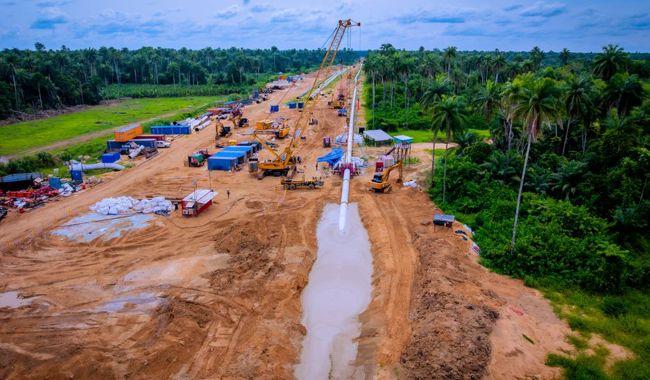
At the same time, domestic gas supply crossed 2 billion cubic feet per day, while the OB3 and AKK pipelines moved toward major operational milestones.
Nigeria’s digital economy also demonstrated rapidly increasing demand. Data consumption reached approximately 1.66 million terabytes in July 2026, compared with about 1.13 million terabytes in July 2025 — an increase of almost 47 percent. The Nigerian Communications Commission’s data statistics record July 2026 usage at 1,662,021.45 terabytes, compared with 1,131,255.90 terabytes in July 2025.
In the Northeast, the six states announced ₦10.8 billion in counterpart funding for a regional air-shuttle initiative intended to improve connectivity.
Meanwhile, the National Emergency Management Agency continued rescue, assessment and response operations as flooding affected communities, homes, roads, farms and infrastructure.
These developments demonstrate significant government activity across several sectors.
But the central issue is whether activity translates into results.
The CNG programme provides a useful example. Its policy objective is to reduce transport costs, but where buses, refuelling facilities and conversion centres remain insufficient, the expected reduction in fares does not automatically follow.
The same principle applies to infrastructure.
A pipeline reaching completion matters. A budget receiving additional implementation time matters. A regional transport initiative matters. Rising digital demand matters.
But citizens ultimately experience those developments through practical outcomes.
Do people get cheaper transport?
Do households receive more reliable energy?
Do businesses gain better connectivity?
Do communities become easier to reach?
And when disasters strike, do affected citizens receive assistance quickly enough?
Those questions turn government delivery into a measurable issue rather than simply an administrative one.
The next phase of several programmes is therefore particularly important. Budget implementation continues through December 31. The country is awaiting first gas through OB3 and completion of AKK. Further gas-to-power development is expected, digital infrastructure investment will continue and the Northeast air-shuttle project will move through its next stages.
The week’s developments therefore point toward an increasingly important distinction: government activity and government delivery are not the same thing.
That distinction is likely to matter beyond policy evaluation.
It is also becoming part of the political conversation.
Nigeria Politics: Economic Pressure and Electoral Questions Begin to Shape 2027
Nigeria’s 2027 election remains ahead, but the issues that could shape the political environment are already becoming visible.
One of the clearest developments involved electoral information.
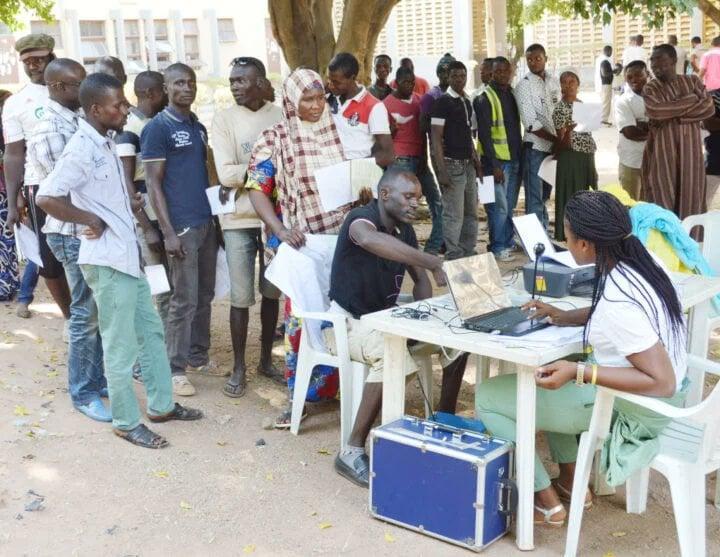
The Independent National Electoral Commission warned Nigerians about a fake voter-registration website that falsely claimed nationwide registration was open from September 28 to October 27.
INEC said nationwide registration had actually ended on July 26.
The warning is significant because false electoral information can mislead citizens and potentially expose personal information.
The development also highlights the importance of accurate voter information as Nigeria moves toward another election cycle.
The political calendar itself produced other developments during the week.
President Bola Tinubu returned to Nigeria on September 29 after a four-week stay in Europe, which the Presidency described as a working vacation.
In Plateau State, a Federal High Court restrained Jonathan Akuns from presenting himself as the NDC governorship candidate, leaving the nomination dispute before the courts. Reporting on the Plateau court order provides coverage of the case.
At the same time, the fuel subsidy debate once again connected economic policy with politics.
Peter Obi and Atiku Abubakar backed positions favouring subsidy restoration under specified conditions, while Petroleum Minister Heineken Lokpobiri continued to argue that the previous subsidy model was financially unsustainable.
These positions should be understood as political positions rather than predictions of what will happen in 2027.
But they reveal an important feature of the emerging Nigeria politics landscape: economic policy is increasingly becoming part of political positioning.
Fuel prices affect household budgets.
Transport costs affect workers.
Government performance affects public confidence.
And the integrity of electoral information affects voters.
The political environment is therefore beginning to form around issues Nigerians are already experiencing.
That does not mean the 2027 election campaign has begun. The supplied material specifically does not establish such a conclusion.
What it does show is that the questions likely to matter to voters are already becoming visible: the economy, fuel prices, government performance, electoral information and political competition.
The Plateau case will continue through the courts. INEC will continue its voter-information activity. The fuel-pricing debate will continue, and the government’s economic programme will remain under pressure to demonstrate results.
In that sense, Nigeria politics is already intersecting with the everyday economic and security experiences of citizens, even though the election itself remains in the future.
Conclusion: Nigeria’s Week Was Ultimately About the Test of Delivery
The five major narratives from September 28 to October 4 point to one broad theme across Nigeria news: delivery is becoming the central test of government policy.
Economic reforms are being tested by workers and households demanding tangible relief. The oil and gas industry is undergoing major changes in refining, gas infrastructure, investment and capital markets. Yet the consumer benefits of those developments have not been established in the supplied material.
At the same time, Nigeria security remains a major concern as kidnapping, terrorism and communal violence continue to affect civilians carrying out ordinary activities.
Government programmes and budgets are moving through new deadlines and infrastructure milestones, but the distinction between activity and actual delivery is becoming increasingly important.
And those outcomes are beginning to influence the political environment ahead of 2027.
The broader question is no longer simply what Nigeria’s government has promised, announced or invested.
It is what Nigerians can actually see, afford, access and safely experience.
That is likely to be the defining test of the country’s next phase of reform — and an increasingly important theme in Nigeria news as the country moves toward the next political cycle.
Africa News: Five Stories Defining a Continent Under Pressure
About the Author



