Nigeria Oil Production: Why Billions Aren’t Enough
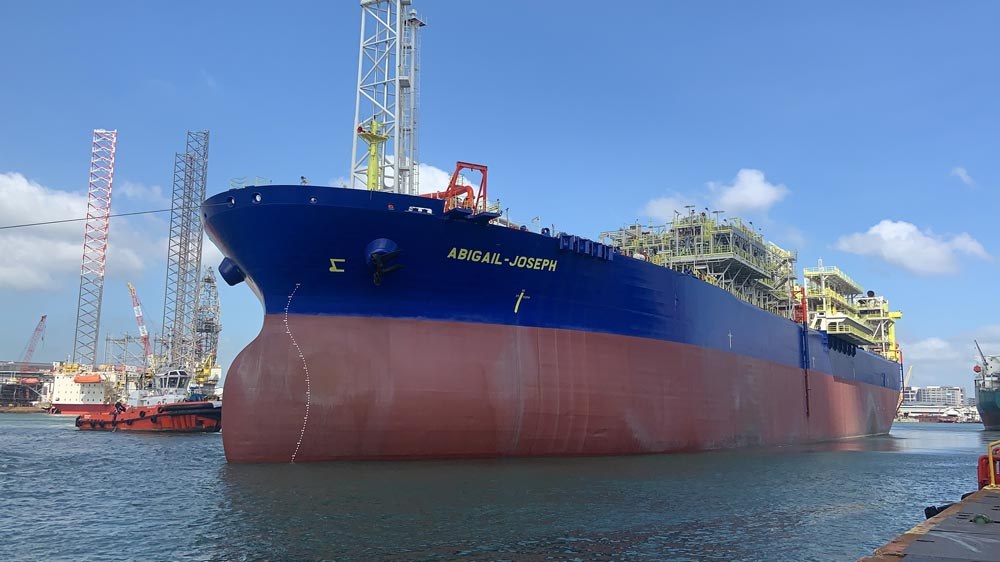
Nigeria is attracting billions of dollars back into its upstream petroleum industry, with more than $57 billion in Field Development Plans approved since 2024 and 22 major offshore projects expected to attract between $30 billion and $50 billion from 2026 to 2030. Yet the country’s crude oil production remains vulnerable to operational disruptions, exposing a deeper challenge: converting investment commitments into sustained barrels, reliable infrastructure and stronger economic returns.
The contradiction became visible again in July 2026. Nigeria’s crude oil production averaged 1.505 million barrels per day, about 4 per cent lower than the previous month, although the country remained marginally above its 1.5 million barrels per day Organisation of the Petroleum Exporting Countries quota for the third consecutive month. When condensates were included, total crude and condensate production averaged 1.67 million barrels per day. The Nigerian Upstream Petroleum Regulatory Commission attributed the decline principally to operational challenges at the Erha and Akpo fields.
The July decline does not erase the improvement recorded earlier in the year. Combined crude and condensate production had climbed from 1.459 million barrels per day in January to 1.735 million barrels per day in June before falling back in July. The problem, therefore, is not simply that Nigeria cannot increase production. It is whether the country can make those gains durable enough to support the much larger production ambitions now being pursued.
That distinction is becoming increasingly important as Nigeria attempts to revive an oil sector that has struggled for years with production losses, infrastructure constraints, investment delays and operational disruptions.
Nigeria Oil Production Is Entering a New Investment Phase
There is considerable evidence that the investment environment in Nigeria’s upstream sector is changing.
NUPRC said in August that it had approved more than $57 billion in Field Development Plans since 2024, although only some of those plans had already translated into Final Investment Decisions. The regulator also identified 22 major offshore projects expected between 2026 and 2030, with estimated investment potential of $30 billion to $50 billion.
The distinction between an approved development plan and actual investment is critical.
A Field Development Plan represents an important step in taking an oil resource toward development, but it does not mean that the entire financial commitment has already been deployed, that drilling has been completed or that production has begun. A Final Investment Decision represents a further step toward capital deployment, while first oil comes later still.
That means the headline investment figures should not be interpreted as an immediate addition of tens of billions of dollars to Nigeria’s economy or an instant increase in crude production.
They represent something potentially more important for the future: a pipeline of projects that could eventually generate new production if the projects move successfully through financing, drilling, construction, commissioning and operation.
NUPRC’s own language captures the challenge. At the July 2026 commercial bid conference for Nigeria’s licensing round, Commission Chief Executive Oritsemeyiwa Eyesan said investor confidence now needed to be matched by investment decisions, capital deployment, movement of rigs and the delivery of new production.
That is effectively the test facing Nigeria’s oil industry.
The country has acreage. It has reserves. It has investors showing renewed interest. It has regulatory reforms. The next question is whether those ingredients can be converted into actual barrels.
Investment Is Not the Same as Production
The oil industry operates on a much longer timetable than the announcement cycle surrounding major investments.
A company can announce a multibillion-dollar project today and still require years to complete engineering, secure financing, drill development wells, install subsea equipment, construct or modify floating production facilities, connect pipelines and begin commercial production.
This is especially relevant to Nigeria’s offshore sector, where large developments can involve technically complex and capital-intensive infrastructure.
The investment-to-production chain therefore looks more like this:
Investment approval → Final Investment Decision → Capital deployment → Rig mobilisation → Drilling → Infrastructure → Commissioning → First oil → Ramp-up → Sustained production
A weakness at any point can delay the arrival of new barrels.
That is why Nigeria’s current oil investment story cannot be judged simply by the number of projects announced or the dollar value attached to them.
The more meaningful measure is whether those projects are reaching construction and drilling stages, whether rigs are moving, whether wells are being completed and, ultimately, whether new production is entering the market.
This is also why the July production figures matter.
The disruption at Erha and Akpo showed that even existing production can be affected by operational problems. New investment may increase future capacity, but maintaining today’s capacity remains equally important.
The Production Bottleneck Is Bigger Than New Rigs
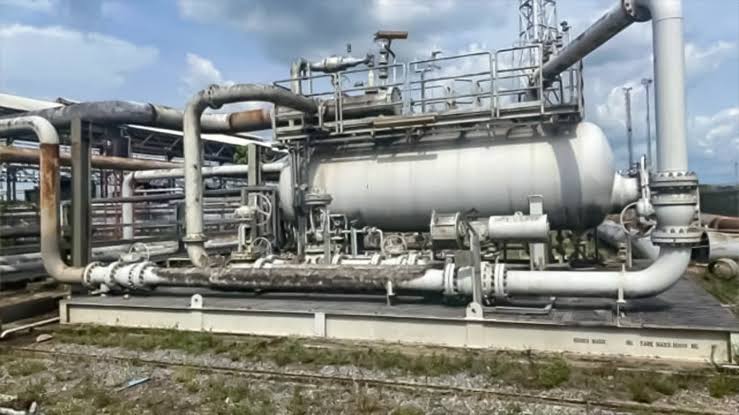
Nigeria’s oil production problem has never been solely about finding more oil.
The country possesses substantial petroleum resources. NUPRC’s official reserves position as of January 1, 2026 placed total oil and condensate reserves at 37.01 billion barrels, alongside 215.19 trillion cubic feet of gas reserves.
The challenge has been turning that resource base into consistent economic output.
Infrastructure is one part of the problem.
NUPRC has acknowledged that infrastructure deficits continue to constrain Africa’s petroleum potential and said Nigeria is expanding gas gathering systems, processing facilities, pipelines and export infrastructure while promoting shared facilities, open access, third-party access and field tiebacks.
Those measures matter because production does not end at the wellhead.
Crude has to be gathered, transported, processed where necessary and evacuated to export terminals or domestic refineries. A producing field can therefore face limitations if the infrastructure needed to move its crude is unavailable, unreliable or too expensive.
This creates another important distinction in the Nigeria oil production debate.
A country can have petroleum reserves underground and even have productive wells, but still fail to realise their full economic value if the supporting infrastructure cannot consistently handle the volumes.
Security Remains Part of the Production Equation
Nigeria’s upstream industry also continues to operate within a security environment in which crude theft, attacks and interference with energy infrastructure can affect production and investment decisions.
NUPRC has been working with security agencies on measures to protect oil and gas infrastructure. In June, the regulator said stronger collaboration with the Federal Ministry of Defence was aimed at improving production stability and safeguarding critical energy assets.
The importance of security extends beyond the immediate loss of stolen crude.
Repeated disruptions can increase operating costs, reduce production uptime and complicate investment planning. For companies deciding whether to commit billions of dollars to long-term projects, the ability to operate infrastructure safely and predictably is part of the investment calculation.
This makes security an economic issue as much as a law-enforcement issue.
The same principle applies to host communities.
NUPRC has linked collaboration among government, security agencies, operators, host communities and private partners to improved protection of critical energy assets. The Host Community Development Trust framework is also part of the broader architecture created under the Petroleum Industry Act.
For Nigeria, sustained oil production therefore depends on more than drilling technology. It requires a production environment in which facilities can operate reliably and communities, regulators, operators and security agencies can coexist around long-term economic activity.
The Offshore Sector Could Define Nigeria’s Next Oil Cycle
If there is one part of the Nigerian oil industry that could significantly alter the country’s production outlook, it is deepwater development.
NUPRC expects 22 major offshore projects between 2026 and 2030, with estimated investment potential of $30 billion to $50 billion. The regulator says these projects are expected to increase production, create jobs, expand infrastructure and strengthen energy security.
The attraction of deepwater projects is not difficult to understand.
Nigeria has significant offshore resources, while several international oil companies have maintained or renewed interest in developing them.
ExxonMobil, for example, told NUPRC in April that it was considering new investments in Usan and the Owowo deepwater project. The company said Owowo could involve a project worth between $7 billion and $8 billion, while the Bosi field could potentially attract $15 billion to $16 billion if developed with a new floating production, storage and offloading facility and new pipelines.
In July, NUPRC also announced a $1 billion ExxonMobil investment in the Usan field. The regulator described the project as a short-cycle investment expected to sustain and increase production, with first production expected within 18 months after the investment opportunity was identified through seismic data.
These projects demonstrate why offshore development has become central to the Nigeria oil investment story.
But they also illustrate the timing problem.
Even when a project has a clear commercial case, capital still has to move into wells, subsea systems, floating production facilities, pipelines and other infrastructure before production can rise.
The economic benefit is therefore dependent not merely on the size of the investment but on the speed and effectiveness of execution.
Can the Petroleum Industry Act Deliver the Production Gains?
The investment revival is also a test of Nigeria’s Petroleum Industry Act.
The PIA was designed to overhaul the legal and regulatory structure governing the petroleum industry, improve governance, clarify institutional responsibilities and create a more attractive framework for investment.
Several years after its enactment, one of the most important tests is whether the new framework can help move projects from opportunity to production faster.
NUPRC has placed regulatory predictability and speed at the centre of its upstream strategy. The regulator has also highlighted measures designed to reduce bottlenecks and accelerate development.
The 2026 licensing process provides one example.
At the commercial bid conference, NUPRC said assets offered in the licensing round had the potential to add about 500 million barrels to Nigeria’s reserves. The regulator projected that, once successfully developed, the assets could contribute a minimum of 300,000 barrels per day of crude oil and condensate production over the following three years.
But the wording matters.
“Once successfully developed” is the crucial condition.
The acreage itself does not produce oil.
Investment must follow. Wells must be drilled. Facilities must be built. Production must begin.
The licensing round therefore illustrates both the opportunity and the challenge facing Nigeria.
The country can make more acreage available and create clearer investment rules, but the ultimate measure of success is whether those measures produce additional, sustainable barrels.
Nigeria’s Oil Production Target Is Getting Harder to Ignore
The Federal Government and NUPRC have set ambitious production objectives.
NUPRC has repeatedly referred to a target of 2 million barrels per day by 2027 and 3 million barrels per day by 2030.
Those targets are significant when measured against July’s 1.505 million barrels per day of crude production.
Reaching 2 million barrels per day would require a substantial increase from current crude output. Reaching 3 million barrels per day would require an even larger expansion of sustainable production capacity.
The question is therefore not whether Nigeria possesses enough petroleum resources to make higher production possible.
The question is whether the country can deliver the infrastructure, investment, security, project execution and operational reliability required to reach those levels.
NUPRC has itself emphasised that achieving the targets requires more than new acreage. Its strategy includes recovering shut-in volumes, arresting production decline, reducing losses and accelerating time-to-first-oil.
That approach is significant because it recognises that Nigeria does not have to wait for every new offshore project to come on stream before increasing production.
Some additional barrels can potentially come from existing assets.
That means the country’s oil strategy has two simultaneous tasks: bring new projects into production and protect the barrels Nigeria already has.
The Missing Link: From Investment to Sustainable Barrels
This is where the central contradiction in Nigeria’s oil industry becomes clearest.
The country is not short of investment announcements.
It is not short of petroleum reserves.
It is not short of proposed projects.
It is not short of production targets.
The harder question is whether these elements can be connected.
Nigeria needs a system in which an approved project moves efficiently toward a Final Investment Decision; a committed investment becomes deployed capital; deployed capital becomes drilling activity; drilling becomes infrastructure; infrastructure becomes first oil; and first oil becomes sustained production.
The difference between those stages is where billions of dollars can remain tied up for years without immediately producing barrels.
This is why the movement of rigs and the delivery of new production matter more than the announcement of another investment figure.
The country does not ultimately earn revenue from an investment announcement.
It earns from petroleum that is actually produced, evacuated, sold and accounted for.
What Higher Nigeria Oil Production Could Mean for the Economy
The stakes extend beyond the oil industry.
Higher and more stable crude production could increase the volume of oil available for export and potentially improve government petroleum revenues. It could also strengthen foreign-exchange inflows, although the ultimate effect would depend on international oil prices, production costs, fiscal arrangements and the amount of crude available for export.
Oil remains deeply connected to Nigeria’s public finances and foreign-exchange position.
That means production reliability matters even when prices are favourable.
A temporary price increase can improve earnings, but if production is unstable, the country cannot fully benefit from higher prices across its available capacity.
Conversely, higher production does not automatically guarantee a stronger naira.
The exchange rate is influenced by many variables, including foreign-exchange demand, imports, capital flows, monetary policy, debt obligations and global market conditions.
The more defensible conclusion is that sustained oil production can strengthen one of the channels through which foreign exchange enters the Nigerian economy.
Whether that ultimately improves the value of the naira depends on what happens across the wider economy.
More Oil Does Not Automatically Mean More Prosperity
This is where the Nigerian oil debate must move beyond production statistics.
Suppose Nigeria successfully increases output to 2 million barrels per day and eventually moves toward 3 million barrels per day.
The critical question would then become:
What happens to the additional revenue?
More production can generate more economic value, but the distribution of that value depends on government revenue collection, production costs, contractual terms, debt obligations, public spending and the broader management of petroleum income.
NUPRC’s economic regulation mandate includes monitoring royalties, rentals and fees and overseeing commercial aspects of petroleum development under the Petroleum Industry Act.
That makes revenue assurance part of the production story.
If Nigeria produces more crude but loses significant value through operational inefficiencies, weak measurement, theft or poor revenue collection, the headline production increase may not translate into a proportionate improvement in public finances.
The same applies to local economic benefits.
Higher production can support jobs, contracting opportunities, logistics, engineering services and government revenues. But the size of those benefits depends on how effectively the wider economy captures value from the petroleum sector.
That is why the real measure of success should not simply be more barrels.
It should be more productive barrels generating more measurable value.
The Refinery Question Adds Another Layer
Nigeria’s oil story is also changing because more crude is now expected to interact with a growing domestic refining system.
NUPRC reported that 53.7 million barrels of crude were supplied to local refineries between April and June 2026, representing an overall Domestic Crude Supply Obligation performance of 97.4 per cent for the second quarter.
That development adds another dimension to the investment-to-barrels debate.
The economic value of crude does not end with export earnings.
If more domestic crude can reliably reach Nigerian refineries and be processed into petroleum products, a larger share of the value chain can potentially remain within the country.
But again, production is only one part of the equation.
Nigeria needs crude production, reliable evacuation, refinery capacity, commercially sustainable operations and functioning distribution networks to work together.
The country’s oil challenge is therefore becoming increasingly integrated: upstream production affects crude availability; crude availability affects refining; refining affects fuel supply; and the entire chain affects foreign exchange and economic activity.
The Test for NNPC and the Wider Industry
Nigeria’s national oil company, NNPC Limited, remains central to this transition because of its interests and partnerships across the upstream sector.
But the production challenge cannot be placed on NNPC alone.
International oil companies, indigenous producers, regulators, service companies, security agencies, host communities and investors all have roles in determining how quickly Nigeria’s production capacity can expand.
The relevant question is therefore not simply whether NNPC is producing enough.
It is whether the entire upstream system is working efficiently enough to convert Nigeria’s reserves and investment opportunities into dependable output.
That requires coordination.
It requires projects to move through regulatory processes without unnecessary delay. It requires operators to maintain asset integrity. It requires security agencies and communities to protect infrastructure. It requires investors to deploy capital. And it requires regulators to measure production accurately and enforce performance.
The industry is ultimately only as strong as its weakest link.
Nigeria’s Oil Problem Is Becoming an Execution Test
For years, Nigeria’s oil debate has centred on attracting investment.
That remains important.
But the current evidence suggests the conversation is moving to a different stage.
Investment interest is returning. NUPRC says more than $57 billion in Field Development Plans have been approved since 2024. The licensing rounds are generating new acreage opportunities. Offshore projects are being lined up. ExxonMobil has announced and considered new deepwater investments. The Federal Government has introduced a new deepwater fiscal and regulatory framework aimed at attracting as much as $50 billion in additional investment.
The next question is execution.
The new deepwater framework announced in August was specifically designed to make offshore projects more attractive and help revive developments that had been delayed by regulatory and commercial uncertainties. Reuters reported that the initiative could unlock up to $50 billion in investment.
If those reforms work, Nigeria could see a deeper pipeline of offshore developments.
But the country will still have to deliver them.
The July production decline is a reminder of why that matters.
Even as investment prospects improve, existing production remains exposed to operational disruption. That means Nigeria must simultaneously repair and maintain today’s production base while building tomorrow’s.
The Real Question Is No Longer Whether Investors Will Come
Nigeria’s oil industry has entered a potentially important period.
There is renewed investor interest, a more active licensing regime, a growing pipeline of offshore projects and a regulatory system seeking to reduce uncertainty.
But the investment figures alone do not settle the country’s production problem.
The real measure will be visible in the physical activity that follows: rigs moving into fields, wells being drilled, infrastructure being installed, projects reaching Final Investment Decisions, first oil arriving and production remaining stable after the headlines have moved on.
That is the difference between investment potential and production reality.
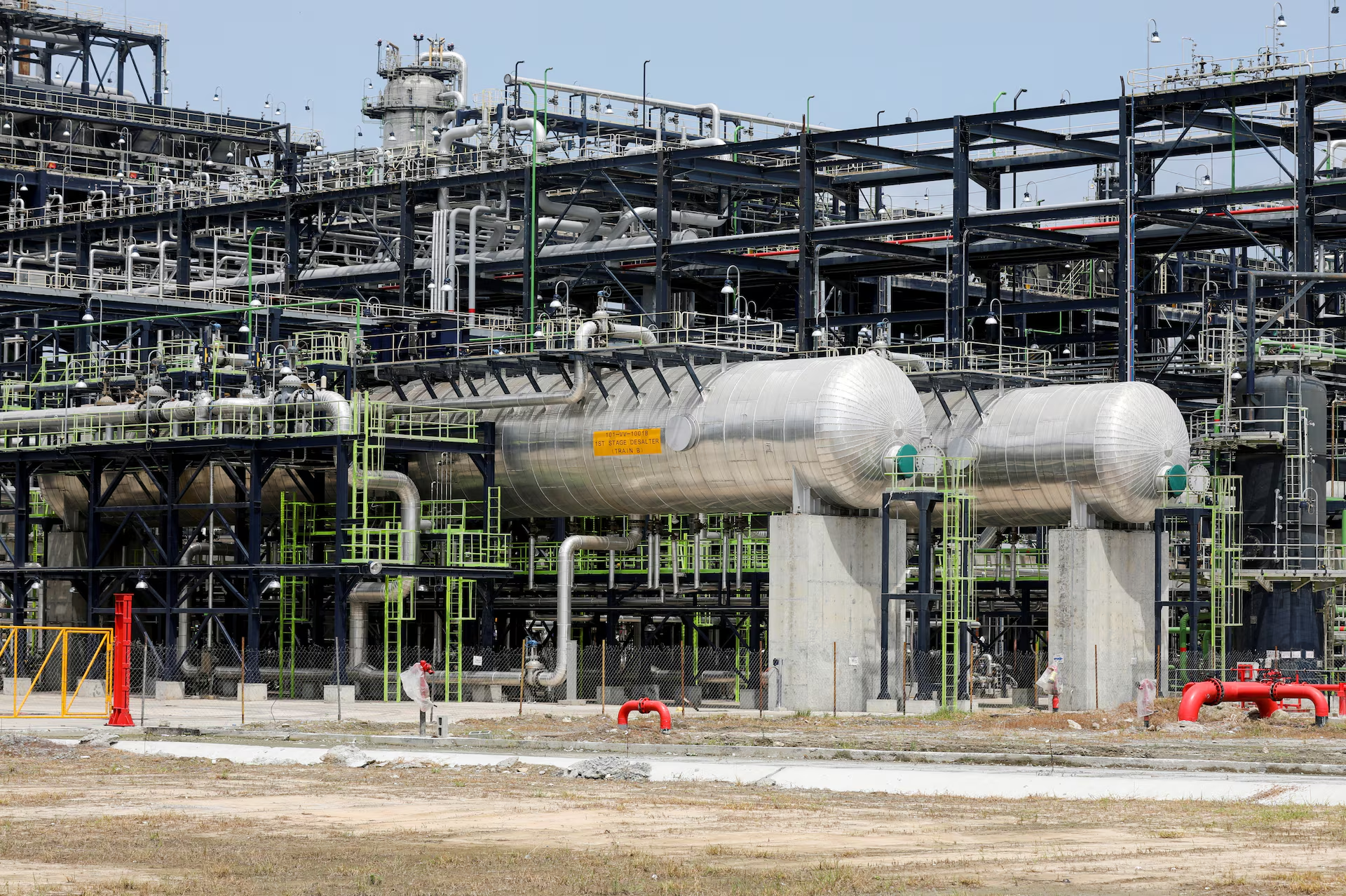
Nigeria’s crude oil production has recovered significantly from the lower levels recorded in earlier years, and July’s output remained above the country’s OPEC quota. Yet the month-on-month decline also demonstrated how quickly operational problems can interrupt that progress.
The country’s next phase will therefore depend on whether recent gains can become a sustained trajectory rather than a series of temporary improvements.
The ambition is clear: 2 million barrels per day by 2027 and 3 million by 2030.
The resources exist.
The investment pipeline is growing.
The regulatory reforms are underway.
The offshore opportunities are expanding.
But Nigeria still has to connect all of those pieces.
The country’s oil challenge is no longer simply about attracting billions of dollars. It is about turning those billions into wells, infrastructure, reliable production and revenue — and ensuring that the value created by those additional barrels reaches the wider Nigerian economy.
For an economy still heavily exposed to petroleum, that may be the most important test of all.
Recommended Coverage
Oil Prices Surge as War Threatens Trade
https://dsgheraldnews.com/oil-prices-surge-as-war-threatens-trade/
Nigeria’s Economy and the Search for More Oil Revenue
https://dsgheraldnews.com/nigeria-budget-spending/
About the Author