Nigeria Opposition Unity Faces 2027 Test
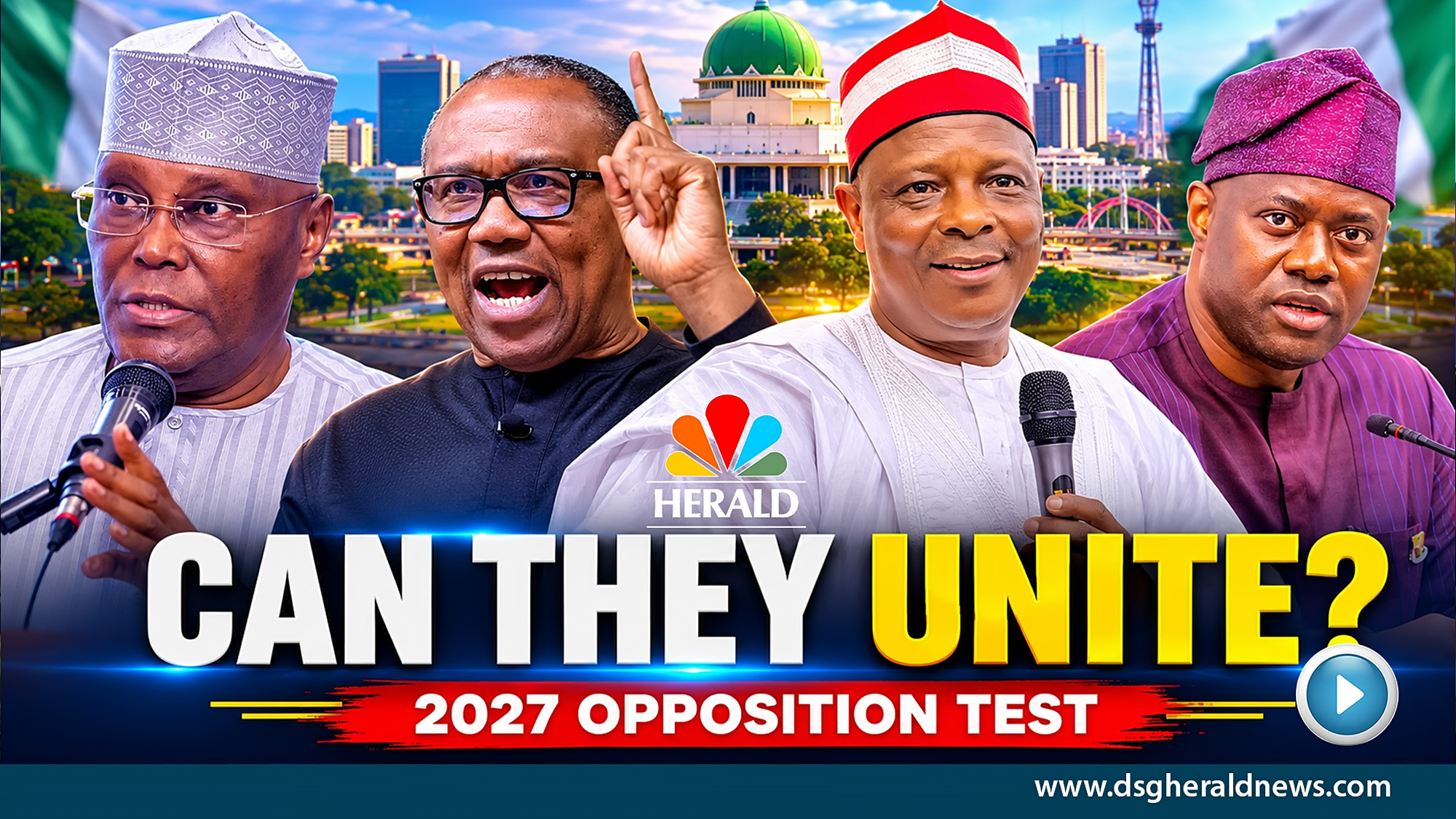
Nigeria’s opposition is entering a potentially decisive phase ahead of the 2027 presidential election, with the G100 saying it has completed an initial round of consultations with six opposition parties and is preparing for a Summit of Opposition Parties in Abuja on August 18, 2026. The consultations involve major political figures and party leaders, including Atiku Abubakar, Peter Obi, Rabiu Kwankwaso and Seyi Makinde, as opposition actors explore whether greater cooperation can produce a credible alternative to the ruling All Progressives Congress (APC). But with no common candidate or final alliance structure agreed, the bigger test may be whether politicians with competing ambitions can turn the language of unity into a workable electoral arrangement.
Nigeria opposition unity moves from talk to negotiation
The latest consultations represent an important shift in the opposition’s 2027 calculations.
For months, Nigeria’s political landscape has featured competing opposition ambitions, separate party structures and different political platforms. The new initiative seeks to address one of the central strategic problems facing those groups: how to avoid a fragmented contest in which several opposition candidates compete against one another while the ruling party benefits from the division.
The G100, led by Salihu Moh. Lukman, says it has engaged the leadership of six opposition parties — the African Democratic Congress (ADC), Allied Peoples Movement (APM), Nigeria Democratic Congress (NDC), Peoples Democratic Party (PDP), Peoples Redemption Party (PRP) and Social Democratic Party (SDP).
According to the group, its discussions have involved national chairmen, presidential candidates and running mates and have been described as frank, constructive and encouraging.
The consultations followed an August 2, 2026 open letter in which the G100 presented what it calls the “Doctrine of Necessary Democratic Opposition.”
The central idea is straightforward: Nigeria’s democracy, the group argues, benefits when voters have a credible alternative capable of competing effectively for political power.
But transforming that principle into an electoral coalition is considerably more complicated.
Political parties have structures to protect. Presidential aspirants have ambitions to pursue. Supporters have expectations. Regional interests have to be considered. And every major participant would have to determine what it is prepared to sacrifice for a larger political arrangement.
That is where Nigeria opposition unity faces its first serious test.
The August 18 summit could change the conversation
The next major step is scheduled for Tuesday, August 18, 2026, in Abuja, when the G100 says it will convene a broader Summit of Opposition Parties.
The meeting is expected to provide a more structured setting for discussions on how the opposition can cooperate ahead of the 2027 presidential election.
The significance of the summit is not necessarily that it will produce an immediate presidential candidate.
The G100 has expressly said it does not intend to dictate the outcome or impose a preferred candidate or political structure.
Instead, it says its role is to facilitate dialogue, build confidence and create conditions in which the parties can consider difficult questions around cooperation, accommodation and collective action.
That distinction matters.
The August 18 meeting should therefore be viewed as a negotiating platform, rather than proof that a final opposition coalition has already been created.
Several possible arrangements remain open, according to the supplied reports. These could include a coalition, a negotiated presidential ticket, a single-party platform or another form of electoral cooperation.
For Nigerian voters, the more important question will be what happens after the summit.
Will the parties establish a mechanism for selecting a candidate?
Will they agree on a common policy framework?
Will the major political figures accept an outcome that does not personally favour them?
And can supporters of different political movements be persuaded to accept compromises made by their leaders?
Those questions could ultimately determine whether the current consultations become a meaningful political realignment or remain another attempt at opposition cooperation that fails to survive competing interests.
Why Atiku, Obi, Kwankwaso and Makinde matter
The prominence of Atiku Abubakar, Peter Obi, Rabiu Kwankwaso and Seyi Makinde gives the current consultations additional political weight.
Atiku and Obi were among the major contenders in the 2023 presidential election, while Kwankwaso was also a significant presidential candidate. Makinde, meanwhile, is one of the prominent political figures associated with the opposition discussions.
Their participation, or the participation of political blocs associated with them, creates the possibility of bringing together constituencies that have previously operated separately.
But it also illustrates the difficulty of achieving unity.
A successful coalition involving several heavyweight politicians would inevitably have to answer the question of leadership.
Presidential politics is ultimately about choosing one person to occupy the highest elective office in the country. A coalition can accommodate several parties, but a presidential election normally produces one candidate for each ticket.
That means Nigeria opposition unity cannot be measured simply by the number of politicians attending meetings.
The harder test is whether those politicians can agree on who should lead, what platform should be used and what happens to those who do not receive the presidential ticket.
The source reports make clear that no such final arrangement has yet been reached.
The lesson from Nigeria’s 2023 presidential election
The current push for opposition cooperation also has its roots in the experience of the 2023 election.
Atiku and Obi contested the presidency on separate platforms, while Kwankwaso also ran independently. Their separate campaigns reflected the fragmented nature of Nigeria’s opposition landscape.
That fragmentation meant voters who wanted an alternative to the APC had several major choices.
The political significance of the current discussions lies partly in the attempt to address that fragmentation before 2027.
The G100’s argument is that a divided opposition risks weakening its collective ability to compete effectively.
But the lesson is not simply that opposition parties need to merge.
A credible coalition would have to establish why voters should support it beyond the objective of defeating the APC.
This is particularly important because the G100 itself says the purpose of the initiative should not be limited to defeating the ruling party. Its stated objective also includes presenting Nigerians with a government capable of strengthening democratic accountability and improving governance.
That distinction could become central to the 2027 campaign.
An alliance built solely around opposition to one incumbent may bring politicians together temporarily, but a durable electoral coalition would need a common programme that gives voters a reason to support it.
The biggest obstacle may be the presidential ticket
The most difficult issue in the Nigeria opposition unity negotiations is likely to be candidate selection.
A coalition can agree on the need for political change and still collapse over who should lead it.
The major figures involved have their own political histories, constituencies and supporters. Each has a different claim to political relevance, and their supporters may have different expectations about the 2027 contest.
The G100 acknowledges that negotiations involving presidential aspirants, party structures and competing political blocs will be difficult.
It specifically identifies issues such as candidate emergence, power-sharing, campaign coordination and political concessions as areas likely to dominate discussions.
This is where political compromise becomes unavoidable.
If one politician is selected as the presidential candidate, others would have to determine whether to accept the decision and support the ticket.
If the parties attempt a rotation or negotiated arrangement, they would have to determine how responsibilities and future political opportunities are distributed.
If they retain separate candidates, the very fragmentation the initiative seeks to address could remain.
There is therefore a basic strategic dilemma:
Unity requires sacrifice, but presidential politics rewards ambition.
The ability of the opposition leaders to resolve that contradiction could determine the future of the coalition effort.
A coalition needs more than political arithmetic
There is another challenge that goes beyond the personalities involved.
A coalition is not automatically credible simply because it brings together several established politicians.
Voters will want to know what the coalition represents.
Questions about economic policy, security, unemployment, institutional reform, education, healthcare, corruption and democratic accountability will eventually have to be addressed.
The political arithmetic may determine whether an alliance can compete, but its policy credibility will determine whether voters trust it.
This is particularly important in a country where political alliances can change rapidly.
For Nigeria opposition unity to become electorally meaningful, voters would need to see a coherent political programme rather than a collection of politicians temporarily united by opposition to the APC.
That could make the period following the August summit more important than the summit itself.
The meeting can open negotiations.
It cannot, by itself, settle them.
What Nigerian voters should watch after August 18
The most useful way to assess the opposition initiative will be to watch for concrete outcomes rather than declarations of unity.
Five indicators will be particularly important.
1. Whether the parties agree on a framework
The first sign of progress would be an agreed mechanism for continuing negotiations.
Without such a framework, consultations could remain informal and vulnerable to political disagreements.
2. Whether presidential ambitions are addressed
The parties will eventually have to confront the question of who leads.
Avoiding the issue may preserve temporary harmony, but it will not solve the underlying problem.
3. Whether the parties develop a common programme
A serious alliance would need to articulate what it wants to change in Nigeria and how it intends to govern.
4. Whether party structures accept compromise
Political leaders can reach agreements that grassroots supporters and party structures may not accept.
A sustainable coalition would therefore require more than agreement among a small group of senior politicians.
5. Whether the alliance survives pressure
The most revealing test may come when difficult decisions are made.
Unity is easy to proclaim when nobody has been asked to give something up.
It becomes real when politicians accept compromises that affect their individual ambitions.
Nigeria opposition unity and the wider democratic question
The debate surrounding the current consultations is larger than the 2027 presidential race.
Opposition parties are an essential part of democratic competition. Their role is not simply to defeat the governing party but to scrutinise government, offer alternative policies and give voters meaningful choices.
The G100’s “Doctrine of Necessary Democratic Opposition” places this broader democratic argument at the centre of its initiative. The group says fragmentation among those seeking to provide an alternative does not serve either the opposition or Nigerian citizens.
That argument deserves attention regardless of which party a voter supports.
A competitive democracy depends on credible alternatives.
At the same time, opposition unity should not mean that political differences disappear.
Different parties can have different ideological positions and policy priorities. A coalition that suppresses those differences without resolving them could simply postpone internal conflict until after an election.
The challenge is therefore to create enough common ground to compete effectively while maintaining sufficient policy clarity for voters to understand what the coalition represents.
The economic significance is indirect but important
The immediate story is political, but the consequences of the 2027 contest will extend into Nigeria’s economy.
Political uncertainty can influence how businesses, investors and households assess the future policy environment.
A serious opposition coalition could therefore affect expectations about the direction of economic policy, especially if the parties eventually publish a clear programme on taxation, investment, energy, jobs, public spending and institutional reform.
At this stage, however, the G100 consultations have not produced such a detailed economic programme.
It would therefore be premature to attribute specific economic policies to the emerging opposition initiative.
What can be said is that the credibility of any eventual coalition will depend partly on whether it can convince Nigerians that political change would translate into better governance and economic management.
The G100 itself frames the objective in broader terms, arguing that the process should ultimately be about presenting Nigerians with a government capable of improving governance and democratic accountability.
The media will also shape the coalition battle
The G100 has deliberately kept its consultations away from extensive media coverage, arguing that sensitive negotiations require space for frank discussions without the pressure of premature public commentary.
That approach reflects a familiar tension in modern political negotiations.
Secrecy can create room for compromise.
But too much secrecy can also create suspicion among voters and supporters.
The challenge for the participants will therefore be finding a balance between confidential negotiations and public accountability.
Once decisions begin to emerge, Nigerians will need to know not only what has been agreed but also why it was agreed.
That will be particularly important if a major political figure is expected to step aside in favour of another candidate.
The political communication surrounding such a decision could be almost as important as the decision itself.
What the August summit does — and does not — mean
The August 18 summit should not be interpreted as confirmation that Nigeria’s opposition has already united.
The supplied reports make clear that the process remains at an early stage.
There is growing recognition among participating opposition actors that cooperation may be necessary, but there is no confirmed common candidate or final alliance structure.
That distinction is crucial.
Nigeria has witnessed political negotiations before that generated significant expectations but ultimately produced different outcomes.
The current initiative therefore needs to be judged by what it produces after the meetings.
If the parties establish a transparent method for candidate selection, agree on a common political programme and demonstrate willingness to compromise, the August summit could become an important milestone in the 2027 race.
If they fail to resolve those questions, the opposition could return to the same fragmented contest that has characterised previous elections.
The real question is whether ambition can give way to strategy
Nigeria opposition unity is ultimately a question of political strategy.
Every major participant has something to gain from a successful coalition, but every participant may also have something to lose.
A politician who believes he or she can win independently may have little incentive to surrender that opportunity.
A party that controls an established political structure may be reluctant to abandon its identity.
Supporters who have invested emotionally in individual candidates may resist compromise.
And regional calculations could further complicate the negotiations.
That is why the G100’s emphasis on patience, courage and sacrifice is significant.
The group itself recognises that unity cannot be created simply by calling a meeting.
It requires trust.
It requires compromise.
And ultimately, it requires political actors to accept that their individual ambitions may sometimes have to be subordinated to a larger objective.
What happens next
For now, the immediate political marker is clear: August 18, 2026, in Abuja.
The Summit of Opposition Parties is expected to move the discussions from preliminary consultations towards more structured negotiations.
The outcome will be closely watched because the participants are not simply discussing cooperation between political parties. They are confronting one of the central strategic questions of Nigeria’s 2027 election: whether the country’s major opposition forces can find enough common ground to present voters with a credible and competitive alternative.
The process will not be determined by photographs from meetings or statements about unity.
It will be determined by decisions.
Who will lead?
Which platform will carry the ticket?
What compromises will the parties accept?
What policies will unite them?
And, perhaps most importantly, will supporters accept the compromises their leaders eventually make?
Those questions remain unanswered.
For now, the opposition has opened the door to cooperation. Whether it can walk through that door together is the real test.
Recommended Coverage
Nigeria’s Political Realignment Deepens as NDC Rises
Nigeria’s political realignment deepens as NDC rises
This provides useful background on the emerging political realignment and helps readers understand the broader forces behind the current opposition discussions.
FG Budgets N135bn for Election Lawsuits Ahead of 2027
FG budgets N135bn for election lawsuits ahead of 2027
The report adds institutional context to the preparations already surrounding the next general election.
Nigeria’s Economic Reforms Boost Growth but Poverty Deepens
Nigeria’s economic reforms boost growth but poverty deepens
The article provides economic context for understanding the governance and policy challenges that will shape the 2027 political debate.
Source Context
The immediate development was reported by The Guardian Nigeria and Vanguard Nigeria. The reports form the factual basis for the consultations, participating parties and scheduled August 18 summit described above.
Conclusion
The 2027 election may eventually be remembered not only for the candidates who contest it, but also for the political negotiations that determine who gets to contest on a united opposition platform.
The G100’s consultations have created an opening for greater cooperation among Nigeria’s opposition forces. But an opening is not an alliance.
The August 18 summit in Abuja will therefore be an important checkpoint, not a guaranteed turning point.
For Atiku Abubakar, Peter Obi, Rabiu Kwankwaso, Seyi Makinde and the wider collection of opposition actors involved, the hardest decision may be accepting that defeating a stronger political rival requires more than individual popularity.
It may require compromise.
And for Nigerian voters, the question is ultimately bigger than whether the opposition can defeat the APC.
It is whether the emerging political alternative can convince the country that it is united enough to govern, coherent enough to offer credible policies and prepared enough to turn political ambition into effective public leadership.
That is the real test of Nigeria opposition unity before 2027.
About the Author