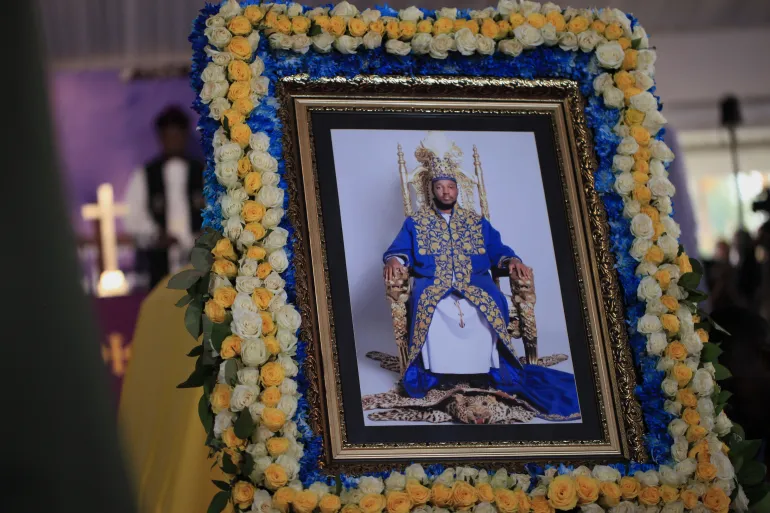
Edward Rukidi Kijanangoma has moved from Uganda’s television newsroom to one of the country’s oldest traditional institutions, becoming the new Uganda Tooro King after his coronation in Fort Portal on September 29, 2026.
The 56-year-old former news anchor and editor at Uganda Broadcasting Corporation (UBC) was selected by a 21-member committee of the Babiito royal clan to succeed King Oyo Nyimba Kabamba Iguru Rukidi IV, who died in August at the age of 34. Kijanangoma took the royal name Edward Rukidi Nyabongo I.
His accession is notable not only because a journalist has entered the royal palace, but because he is taking charge of the Tooro Kingdom after weeks of disagreement over who had the customary and familial right to inherit the throne.
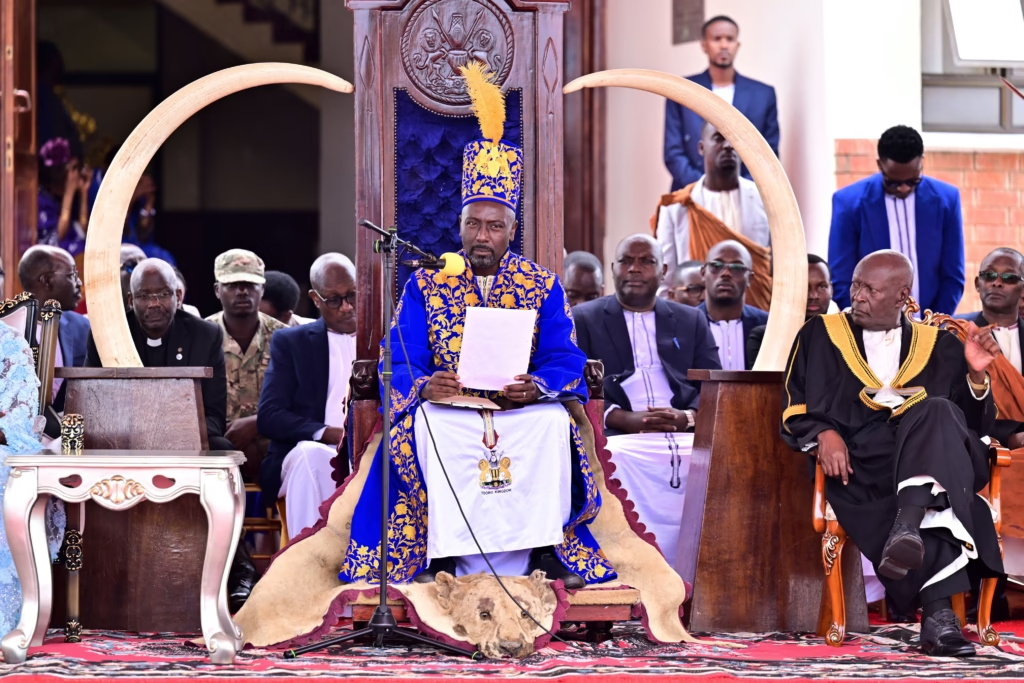
The coronation brought together traditional ceremony, royal lineage and modern Ugandan state authority. President Yoweri Museveni attended the ceremony, while thousands gathered in Fort Portal and followed the event through broadcasts.
From Uganda’s Newsroom to the Tooro Throne
Before becoming King Edward Rukidi Nyabongo I, Kijanangoma was known professionally as a journalist.
His career included work as a news anchor and editor at Uganda Broadcasting Corporation (UBC), giving him a public profile built not around hereditary rule but around journalism and broadcasting.
That background makes his transition to the throne one of the defining features of the new reign.
The supplied reporting describes former colleagues as remembering Kijanangoma as humble and down to earth. He is also a cousin of the late King Oyo.
The journey from newsroom to palace also illustrates a central feature of traditional monarchies in contemporary Africa: royal institutions can retain cultural importance even after losing the formal political authority once associated with kingship.
In Uganda, the distinction is particularly clear.
The country is a constitutional republic, while its traditional and cultural leaders operate within a framework that separates their institutions from the administrative, legislative and executive powers of the state. Uganda’s Constitution, particularly Article 246, provides for traditional and cultural leaders while denying them governmental powers.
How Edward Rukidi Kijanangoma Was Chosen
Kijanangoma’s path to the throne was determined by the Babiito royal clan.
A 21-member committee selected him as successor to Oyo, despite the fact that he was not in the direct line of succession.
That distinction became important because the late king’s family challenged the selection.
The dispute centred on an alleged son of Oyo whose identity had not been publicly disclosed.
Oyo never married and was not publicly known to have children. Following his death, however, Tooro’s Prime Minister Calvin Armstrong Rwomiire Akiiki said the late king had left a son whose identity would be revealed at an appropriate time.
That child has not been publicly identified.
The late king’s mother, Queen Mother Best Kemigisa, and his sister, Princess Ruth Komuntale, opposed Kijanangoma’s selection.
According to the family, a 2022 will identified a son as Oyo’s lawfully recognised biological child and named him as heir.
The Babiito elders took a different position.
They argued that Oyo had not introduced the alleged child through the customary process required by the kingdom’s succession traditions. The elders therefore supported Kijanangoma’s selection.
The disagreement means the arrival of the new Uganda Tooro King cannot be understood simply as a ceremonial change of monarch. It is also the latest chapter in a debate about how hereditary succession works when traditional custom, family claims and written documents point in different directions.
A Will Versus Customary Succession
One of the most significant elements of the dispute is the different weight assigned to the alleged will.
A Babiito clan elder, Reverend Father Charles Oyo, said a will expresses a person’s wishes but does not itself determine who becomes king.
The position of the elders is that the Musuuga, or Babiito clan leader, holds authority above the will when determining the succession.
The late king’s family has challenged the process from another perspective.
Princess Komuntale accused the elders of attempting to take control of the throne, while continuing to support her brother’s alleged heir.
These competing positions help explain why the transition became contentious even before Kijanangoma’s coronation.
The dispute is therefore not simply about whether a document exists. It concerns the question of which institution has the final authority to determine succession within the Tooro royal system.
The Journey to Karuziika Palace
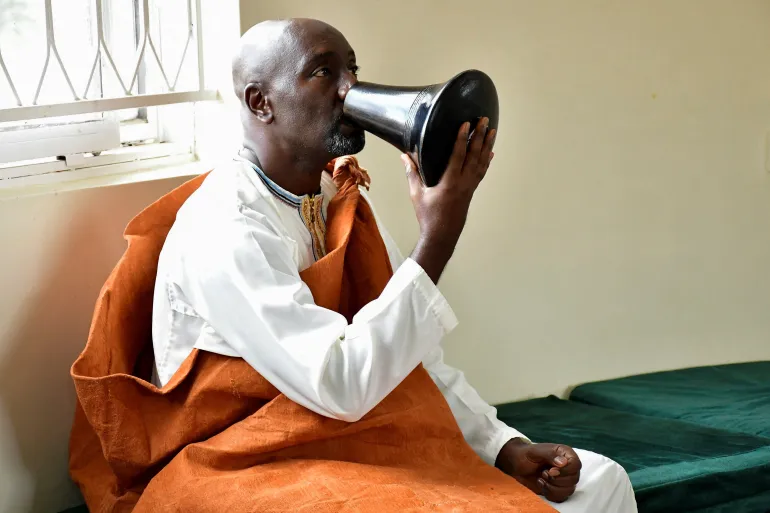
The coronation itself followed traditional rituals that are far removed from the procedures used to transfer political power in Uganda’s elected government.
According to the supplied report, Nyabongo I walked to Karuziika Palace between midnight and 3am before participating in a mock battle for the crown. The ceremony also involved the slaughter of a bull and the sprinkling of a hen’s blood.
The ritual illustrates why the institution remains primarily cultural rather than governmental.
The throne does not give Uganda’s new king executive authority over the country. Instead, it places him at the centre of the cultural and traditional life of the Batooro people.
Uganda’s Constitution allows traditional and cultural institutions to exist according to the customs and traditions of the communities they represent, while expressly preventing traditional leaders from exercising the administrative, legislative or executive powers of government. The Institution of Traditional or Cultural Leaders Act, 2011 also provides a legal framework for traditional and cultural leaders in Uganda.
Why Uganda Still Has Kings
Uganda’s modern political system and its traditional kingdoms emerged from different historical trajectories.
Traditional kingdoms were abolished in 1967, before being restored in 1993. The restoration allowed institutions such as Tooro and Buganda to resume their cultural roles within a constitutional republic.
The arrangement is therefore not a return to pre-independence monarchy.
The Constitution recognises traditional and cultural leaders but places clear limits on their governmental authority. Under Article 246, traditional leaders cannot exercise administrative, legislative or executive powers of the national or local government and cannot participate in partisan politics.
The result is a dual institutional landscape: Uganda has an elected national government while traditional kingdoms continue to function as cultural institutions.
For Tooro, the throne remains important because it represents history, lineage, identity and continuity.
Readers looking for official information about the kingdom can also visit the Tooro Kingdom’s official website.
The Legacy of King Oyo
Kijanangoma’s accession also follows the sudden death of a monarch whose own life was deeply unusual.
King Oyo became king in 1995 at just three years old following the death of his father, Patrick David Matthew Kaboyo Olimi III. He was recognised as the world’s youngest reigning monarch.
He grew into the role under regents before assuming the full responsibilities of the monarchy as an adult.
His public role extended beyond ceremonial duties.
He promoted environmental causes, including a 2020 climb of the Rwenzori Mountains to highlight climate change and glacier retreat. He also supported a campaign to plant 10 million trees across Tooro over five years.
Before his death, he had also allocated land and begun fundraising for a paediatric hospital in Kyenjojo district.
The official Tooro Kingdom announcement on King Oyo’s death provides additional background on the kingdom’s account of the succession situation.
His death at 34 therefore created not only a succession problem but also a question of how his unfinished initiatives would continue.
A New Reign Begins
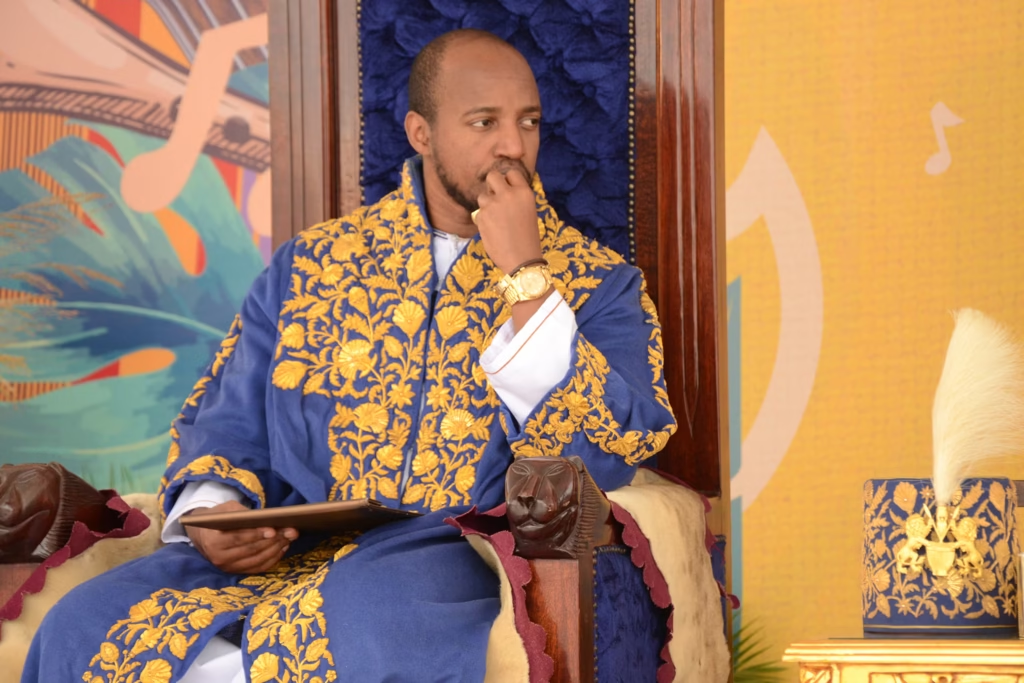
Edward Rukidi Nyabongo I now inherits an institution carrying both historical expectations and contemporary responsibilities.
His first challenge is not governmental administration. Uganda’s constitutional system leaves that authority with elected institutions.
His challenge is instead one of cultural leadership: maintaining the relevance of the Tooro monarchy, managing relationships within the royal family and clan structure, and navigating the unresolved questions surrounding the succession.
The controversy surrounding the alleged heir means the new reign begins under unusual scrutiny.
At the same time, the former journalist’s background could give the monarchy a leader with experience in communication and public life.
That combination — professional journalism, royal lineage and traditional authority — makes Kijanangoma’s accession unusual even within Africa’s surviving monarchies.
What the Tooro Succession Means
The immediate succession has been settled in practice with Kijanangoma’s coronation, but the competing claims that preceded it remain an important part of the story.
The family says a son exists and was named in a will. The Babiito elders maintain that customary procedures were not followed and backed Kijanangoma instead. The child’s identity has not been publicly disclosed in the supplied reporting.
That leaves the new monarch facing an institution where legitimacy depends not on electoral victory but on a complex interaction of royal lineage, clan authority and custom.
The wider Ugandan constitutional framework provides the national boundaries within which that traditional system operates.
The new king therefore does not inherit the political powers of a national president. He inherits something different: the responsibility of representing a historical institution whose influence rests primarily on cultural identity and the allegiance of its community.
For a man who spent much of his career behind a microphone and television camera, the transformation is striking.
At 56, Edward Rukidi Kijanangoma has moved from reporting Uganda’s news to becoming part of its history.
And his reign begins with one of the oldest questions surrounding any monarchy: who has the authority to decide who wears the crown?
Recommended Coverage
King Oyo Nyimba: 31-Year Reign Ends With Death at 34
This provides DSG Herald News readers with background on the monarch Kijanangoma has succeeded.
Uganda’s “Pearl Sweet” Oil Story
The article provides another window into Uganda’s evolving economic and regional significance.
Uganda Media Shutdown Alarm and Press Freedom
This is particularly relevant to Kijanangoma’s unusual transition from journalism into traditional leadership.
About the Author



