Africa News Roundup: Ebola, Renewed Conflicts, Economic Pressures and Tunisia’s Protests
Introduction
Africa’s news agenda during the week of 12–18 October 2026 reflected the complex challenges facing governments and institutions across the continent. Public-health authorities continued responding to the Ebola outbreak in the Democratic Republic of the Congo (DRC), while reports of new developments in Kenya raised further questions about disease surveillance and cross-border coordination. In eastern Africa, Ethiopia’s decision to establish a caretaker administration for Tigray and renewed political-military activity in the DRC brought the prospects for stability and lasting peace into focus.
The economic outlook offered a more encouraging signal. On 15 October, the International Monetary Fund (IMF) raised its 2026 growth forecast for sub-Saharan Africa from 4.3 per cent to 4.5 per cent. However, the improved projection did not eliminate concerns about inflation, debt servicing or the difficulty of translating economic growth into tangible benefits for households and businesses. Tanzania’s proposed liquefied natural gas project also illustrated the scale of investment ambitions and the importance of distinguishing advanced negotiations from completed agreements.
In Tunisia, a major demonstration against President Kais Saied brought economic hardship and political freedoms into public view. Elsewhere, Ghana reviewed its digital-health strategy with the intention of incorporating artificial intelligence, while Ethiopia prepared to host an international emergency medical teams meeting. The Africa Credit Rating Agency, launched in Mauritius earlier in October, also became part of the continent’s evolving financial landscape.
This Africa news roundup examines five major narratives: public-health concerns surrounding Ebola, renewed conflict and political uncertainty, growth and investment challenges, Tunisia’s protests, and institutional initiatives whose practical results remain to be demonstrated.
1. Ebola Outbreak in the DRC: The Emergency Expands Geographically
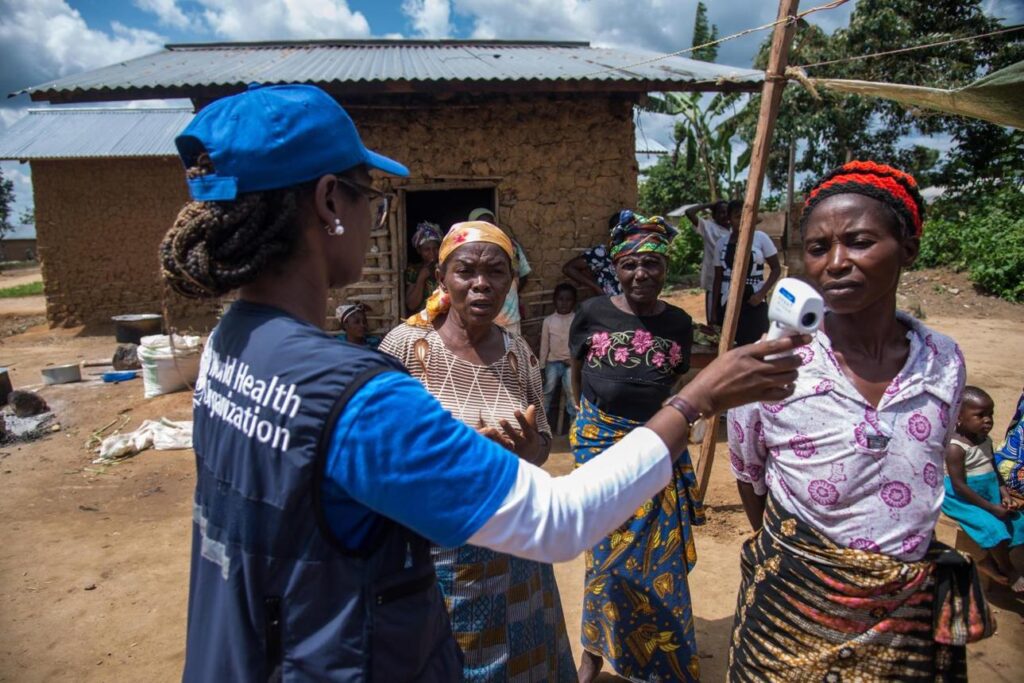
The Ebola outbreak in the Democratic Republic of the Congo continued to demand attention as its geographical footprint expanded and neighbouring countries strengthened their public-health responses. The central challenge for authorities was to identify infections quickly, trace contacts and prevent further transmission without overstating what the reported figures established about the outbreak’s future direction.
The World Health Organization has documented the outbreak of Bundibugyo virus disease and the public-health response in the DRC and neighbouring countries. Its 8 October disease-outbreak update described the first laboratory-confirmed imported case in Kenya and the continuing spread of the outbreak within the DRC.
North Ubangi adds a new area of concern
North Ubangi, a province in north-western DRC bordering the Central African Republic, was reported as the eighth province affected by the outbreak. The reporting supplied for this review recorded two cases in the province, including one death.
The expansion matters because each newly affected area creates additional demands on public-health surveillance, case identification and contact tracing. Health authorities must establish where infections occurred, determine who may have been exposed and assess whether further transmission is taking place.
However, geographical expansion does not automatically establish that the outbreak will spread internationally. The appropriate conclusion is that authorities face a wider surveillance challenge and must continue monitoring affected communities.
The cumulative DRC figures cited in the source stood at 9,415 cases and 4,536 deaths as of 16 October. These totals describe the outbreak over its course; they should not be interpreted as cases and deaths recorded during the week of 12–18 October alone.
Cumulative statistics and newly reported cases serve different purposes. The former indicate the overall scale of an outbreak, while the latter help show how the situation is changing over time. Maintaining this distinction is essential when communicating the severity of a public-health emergency.
Kenya’s response and the importance of contact tracing
Kenya’s response also highlighted the importance of early detection and monitoring people who may have been exposed. The supplied reporting recorded eight confirmed cases and said that 128 of 130 identified contacts had been quarantined, with no community transmission detected at the time of that report.
That assessment was time-specific. It did not guarantee that further transmission would not occur, nor did it establish what later surveillance might reveal.
The WHO update on the DRC outbreak and Kenya’s imported case provides institutional context for the regional response. The central tasks include identifying infections, monitoring contacts, isolating suspected cases where appropriate and coordinating information among public-health authorities.
The outbreak involves the Bundibugyo virus. The reporting reviewed for this article indicated that no licensed vaccine or specific approved treatment was available for this virus at the time. Consequently, early detection, infection prevention, supportive care and cooperation with affected communities remain important elements of the response.
What the developments mean
The reported developments in the DRC and Kenya represent distinct aspects of the public-health challenge. In the DRC, the outbreak’s geographical reach increased. In Kenya, authorities were monitoring confirmed cases and identified contacts.
Neither development alone provides a complete picture of the outbreak’s future trajectory. Updated case figures, contact-tracing results and evidence of any further affected areas will be important in determining whether containment efforts are succeeding.
For governments and health workers, the priority is to sustain surveillance, provide reliable information and respond quickly when infections are detected. For the public, accurate communication is equally important: the expansion of an outbreak deserves serious attention, but it should not be presented as proof that further international spread is inevitable.
2. Africa Security: Renewed Conflict Challenges Political Stability
Political developments in Ethiopia and the Democratic Republic of the Congo brought renewed attention to the difficulty of translating political announcements into lasting security. In Ethiopia, the federal government announced a caretaker administration for Tigray. In the DRC, former president Joseph Kabila announced a new political-military coalition opposing President Félix Tshisekedi’s government. Tensions between Ethiopia and Eritrea also remained contested.
These developments involve separate conflicts, different actors and distinct political circumstances. They should not be treated as parts of one coordinated crisis. Their shared significance lies in the questions they raise about civilian protection, political legitimacy and the prospects for lasting peace.
Ethiopia establishes a caretaker administration for Tigray
On 16 October, Ethiopian Prime Minister Abiy Ahmed announced a caretaker administration for the Tigray region. The stated objective was to stabilise the region and prepare for elections within six months.
The announcement followed renewed fighting that had undermined the stability associated with the 2022 peace agreement. The reporting cited approximately 750,000 people displaced in Tigray. That figure describes the reported displacement situation; it is not the number of people newly displaced during the review week.
The Ethiopian News Agency’s report on the caretaker administration said the administration was tasked with restoring peace and stability, rebuilding damaged infrastructure, restoring public services and preparing for elections.
The announcement established the government’s intended direction, but it did not prove that the region had become stable or that elections would necessarily take place on schedule. Those outcomes depend on the administration’s ability to operate, the security situation and progress towards the stated electoral objective.
The situation also raises questions about regional governance and the implementation of the existing peace arrangements. The practical test will be whether the new administration can help restore public services, improve security and create conditions for a credible political process.
Joseph Kabila announces the FRN coalition in the DRC
In the Democratic Republic of the Congo, former president Joseph Kabila announced the Front for the Refoundation of the Nation, known as the FRN, a political-military coalition opposing the government of President Félix Tshisekedi.
The coalition includes figures associated with the AFC-M23 movement. The announcement adds another political dimension to the conflict in eastern DRC, where armed groups, political actors and regional interests have complicated efforts to achieve lasting peace.
The Associated Press report on Kabila’s new coalition described the FRN as a new front involving rebel groups, including M23. Reuters also examined the implications of the rebranding and Kabila’s leadership in its report, “Will a new leader and a new name boost the rebellion in eastern Congo?”.
The coalition’s announcement does not, by itself, establish its operational strength, the extent of its activities or its likely effect on peace negotiations. Those questions require evidence from subsequent developments.
The emergence of a new political-military structure matters because it may affect the actors involved in negotiations and the balance of political influence. But its actual significance will depend on what it does, how it interacts with other parties and whether it changes conditions on the ground.
Ethiopia–Eritrea tensions remain disputed
Tensions between Ethiopia and Eritrea also featured in the week’s security picture. Ethiopian authorities accused Eritrea of supporting rebel forces, while Eritrea denied the allegation.
The accusation and denial must remain distinct in reporting. Without independent verification, the allegation should not be presented as an established fact.
The Reuters report on Ethiopia’s caretaker administration described the renewed fighting and the dispute between the two governments. The broader regional implications depend on developments that can be independently confirmed, rather than on accusations alone.
Renewed conflict can threaten lives, displace families, disrupt public services and complicate humanitarian access. Political arrangements may offer a route towards stability, but announcements do not demonstrate that civilian security has improved.
Developments to watch include the caretaker administration’s activities in Tigray, verified progress towards elections, confirmed FRN activities and further steps in peace efforts in eastern DRC. These will help establish whether the week’s announcements contribute to stability or leave the underlying challenges unresolved.
3. African Economy: Growth Forecast Improves Amid Debt and Investment Challenges
Sub-Saharan Africa received a more positive economic projection during the review period, but concerns about inflation, debt servicing and the implementation of major investment projects remained. The week’s developments highlighted the difference between an improving economic forecast and the practical outcomes experienced by governments, businesses and households.
On 15 October, the International Monetary Fund raised its 2026 growth forecast for sub-Saharan Africa from 4.3 per cent to 4.5 per cent. The revision offered a more optimistic outlook, but it remained a projection rather than a final measurement of economic performance for the year.
The Reuters report on the IMF’s updated outlook also highlighted inflation risks and pressure on public finances.
Inflation and debt remain important concerns
The IMF figures cited in the review projected median inflation rising from 3.4 per cent in 2025 to 5 per cent in 2027. Debt servicing was also reported to consume around 12 per cent of government revenue as a regional measure.
These figures describe different but related challenges. Inflation can raise the cost of goods and services for households and businesses. Debt servicing can leave governments with fewer resources for other priorities, depending on their revenue, borrowing arrangements and spending obligations.
The regional debt-servicing measure should not be interpreted as a figure that applies equally to every African country. Individual governments face different revenue positions, financing conditions and development needs.
An improved growth forecast is encouraging, but its practical significance depends on actual economic performance and how the benefits of growth are distributed. The projection alone does not establish that household financial pressure has eased, employment has increased or public services have improved.
Tanzania’s proposed LNG project moves towards final agreements
Tanzania’s proposed liquefied natural gas project illustrated the scale of investment ambitions in the region.
On 13 October, the country’s finance minister said negotiations on the project, valued at approximately US$42 billion, were nearing final agreements with international partners, including Equinor and Shell.
Reuters reported the development in its article, “Tanzania close to finalising $42 billion LNG deal, finance minister says”.
The proposed value indicates the scale of the project under discussion. However, negotiations nearing final agreements do not mean that every agreement or financing arrangement has been completed. Nor does the announcement establish that construction or production has begun.
This distinction is important when evaluating major infrastructure and energy projects. A proposal, advanced negotiation, signed agreement, secured financing and operational facility are different stages of development.
The next indicators to watch include confirmation of final agreements, financing decisions and subsequent implementation steps. Until those developments are established, the project should be described according to its reported status rather than presented as a completed investment achievement.

AfCRA enters Africa’s financial landscape
The Africa Credit Rating Agency, or AfCRA, was launched in Mauritius on 7 October. Its intended role is to provide an additional African-focused perspective on credit assessment.
The African Union’s announcement of the agency’s launch describes its intended role in strengthening Africa’s financial architecture and providing assessments grounded in African data, expertise and economic conditions. The United Nations Economic Commission for Africa also reported on the launch and the agency’s intended contribution to the assessment of African economies in its 8 October report.
The launch represents an institutional milestone, but its long-term impact remains to be assessed. The agency will need to demonstrate independence, sound methodology, credible governance and consistent performance before its contribution to financial markets can be evaluated.
Kenya has reportedly expressed interest in participating and potentially hosting a secondary jurisdiction. That interest should not be confused with a completed arrangement.
The larger question is whether these developments can translate into sustainable economic benefits. Improved forecasts, investment proposals and financial institutions may create opportunities, but their practical value depends on implementation and measurable results.
For the African economy, key indicators include updated economic data, inflation developments, Tanzania’s final LNG agreements and financing decisions, and AfCRA’s governance and operating record. These will help show whether the more positive outlook is accompanied by progress in addressing the pressures that continue to affect public finances and economic activity.
4. Tunisia’s Protests Highlight Economic and Political Grievances
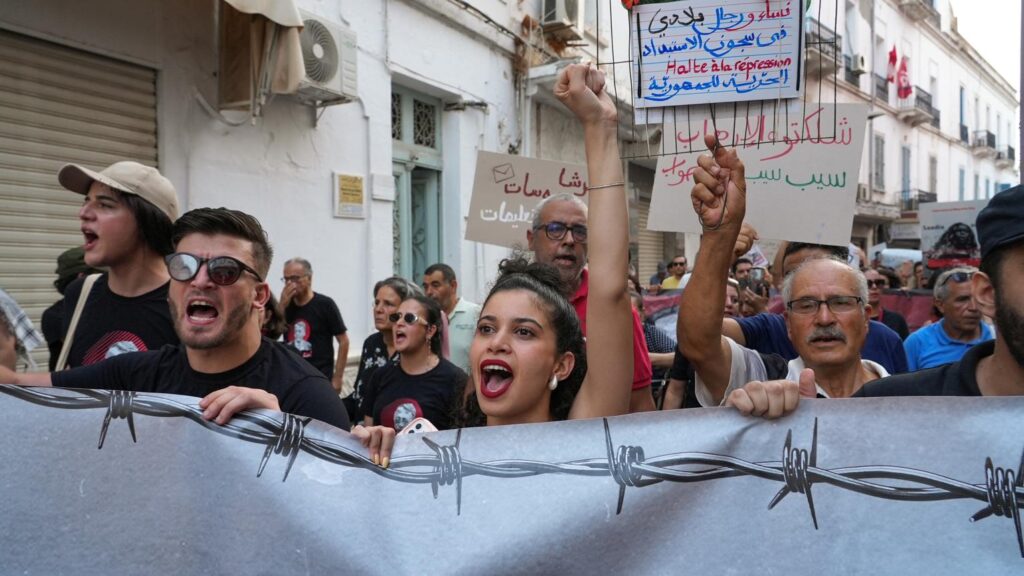
Thousands of Tunisians took to the streets of the capital, Tunis, on 17 October to protest against President Kais Saied. Reuters described the demonstration as the largest against him in years.
The protest brought together participants from the Tunisian General Labour Union, known as the UGTT, civil-society organisations, opposition groups and other sections of the public. Their grievances covered economic hardship as well as concerns about political freedoms.
Reuters reported on the demonstration in “Tunisians stage biggest protest in years against President Saied”.
The participation of different organisations does not mean every demonstrator shared identical objectives. Nor does the size of the crowd establish that the protest represented the views of every Tunisian. The demonstration nevertheless brought a range of grievances into one public event.
Cost of living, unemployment and political freedoms
The concerns reported during the demonstration included living costs, unemployment, shortages of essential goods, interruptions to water and electricity supplies, and restrictions on political activity. Participants also called for political and economic reforms.
These issues span daily living conditions and the political environment. Rising living costs and unreliable public services can affect household security, while concerns about political freedoms relate to how people can express opposition, organise and hold authorities accountable.
The demonstration also took place against a wider backdrop of debate about the concentration of political power in Tunisia. Reuters’ reporting on the country’s media environment before the protest described concerns among journalists about restrictions and legal pressure on critical reporting. Its 14 October report on press freedom in Tunisia provides further context for the political grievances raised by demonstrators.
An attendance estimate attributed to AFP placed the number of participants at more than 3,000. This should be understood as a reported estimate rather than an uncontested count.
The scale of a demonstration can provide an indication of public mobilisation, but it does not by itself determine the government’s response or the eventual outcome. Participants may share certain concerns while differing over priorities, political objectives or the solutions they support.
What happens after the demonstration?
The protest placed renewed attention on the relationship between economic grievances and political freedoms in Tunisia. However, the demonstration alone did not establish that the government would change its policies or that the demands raised would be met.
At the reporting cutoff for this review, no confirmed change of government, formal policy reversal or concession had been established in the account reviewed.
The next developments to watch include the government’s response, any further demonstrations or trade-union action, and verified decisions affecting public services, economic conditions and political freedoms.
These developments will help establish whether the issues raised during the protest lead to any formal response or policy change. Until such changes are confirmed, it would be premature to describe the demonstration as having achieved a particular political outcome.
Tunisia’s protests also add an important dimension to the week’s wider economic discussion. The economic outlook for sub-Saharan Africa improved in the IMF’s forecast, but regional projections and the experiences of individual households measure different things. The protest does not establish a direct connection between Tunisia’s grievances and the IMF’s regional forecast.
For Tunisia, the next stage of the story will depend on verified developments following the protest. The government’s response, further public mobilisation and any formal decisions affecting the reported grievances will be important indicators of what follows.
5. African Institutions Pursue Health and Financial Initiatives
Alongside the week’s public-health, security, economic and political developments, several institutions pursued initiatives intended to strengthen capacity in healthcare, emergency response and financial assessment. These included Ghana’s review of its digital-health policy, preparations for an international emergency medical teams meeting in Ethiopia, and the establishment of the Africa Credit Rating Agency.
These are separate developments rather than parts of a demonstrated, coordinated continental programme. Their significance will depend on what happens after the announcements and preparatory work. A policy review does not establish improved health outcomes, a scheduled meeting does not demonstrate stronger emergency preparedness, and the launch of a financial institution does not by itself establish market credibility.
Ghana reviews its digital-health policy
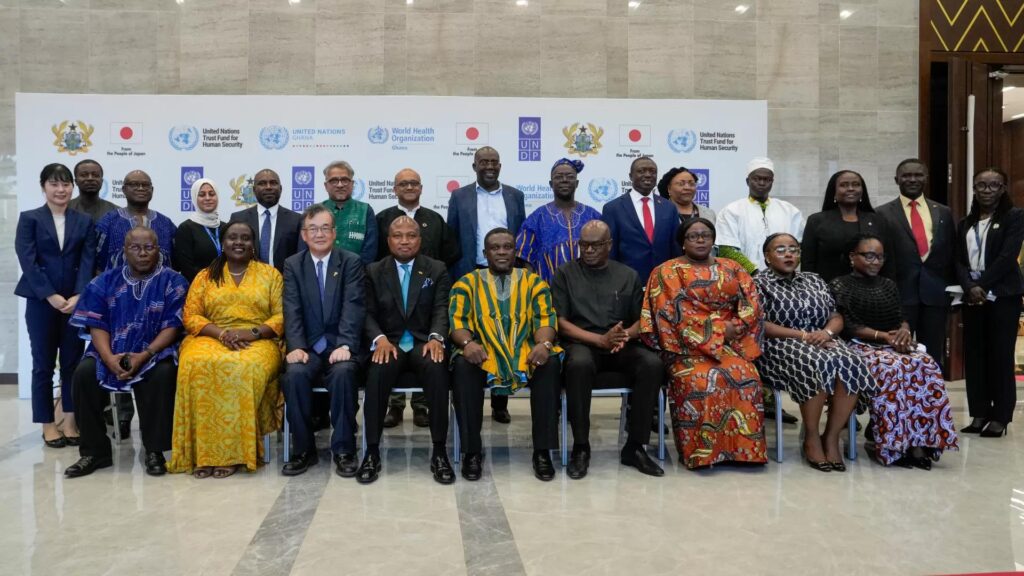
Ghana’s Ministry of Health and the Ghana Health Service, with support from the World Health Organization and the United Nations Development Programme, began reviewing the country’s 2023–2027 Digital Health Policy and Strategy. The review is intended to incorporate artificial intelligence into Ghana’s digital-health framework.
The WHO Regional Office for Africa’s announcement of 12 October says the work aims to strengthen Ghana’s digital-health ecosystem and explore AI-supported disease surveillance, health-system planning and decision-making.
The initiative raises questions about how digital technologies can be incorporated into healthcare planning and service delivery. Its practical value will depend on implementation, available resources, safeguards and evidence supporting the use of AI in healthcare settings.
Responsible deployment will also require attention to data quality, cybersecurity, privacy, governance and the skills of health workers. These are not simply technical matters: weaknesses in them can limit the reliability and fairness of digital health services.
The policy review itself does not establish that health outcomes have improved. Its eventual significance will need to be assessed through implementation and demonstrable results.
Ethiopia prepares to host an international emergency medical meeting
Addis Ababa was scheduled to host the WHO Emergency Medical Teams Global Meeting from 3 to 5 November 2026. The event was expected to bring together health professionals, government representatives, emergency responders and international partners.
The WHO Regional Office for Africa’s announcement confirmed the dates and described the meeting as the first time the global gathering would be held in the WHO African Region.
The meeting is intended to encourage cooperation and knowledge-sharing among emergency medical teams, which can be deployed to provide care during disasters, disease outbreaks, conflicts and other emergencies.
Its practical impact will depend on what participants achieve and how any resulting commitments are implemented. The scheduled event represents an upcoming institutional activity, not a completed outcome. Before its impact can be assessed, the meeting must take place and any relevant results or commitments must be established.
The broader objective of cooperation among emergency medical teams is relevant to preparedness, but the meeting’s eventual value should be judged by concrete outcomes rather than the announcement alone.
AfCRA’s credibility remains a longer-term test
The Africa Credit Rating Agency was launched in Mauritius on 7 October. Its intended role is to provide an additional African-focused perspective on credit assessment and complement existing rating institutions.
As outlined by the African Union, the agency is intended to strengthen how African sovereigns, sub-sovereigns and businesses are assessed in international financial markets.
Kenya has reportedly expressed interest in participating and potentially hosting a secondary jurisdiction, but the arrangement should not be described as completed unless that status is confirmed.
AfCRA’s long-term significance will depend on its ability to demonstrate independence, sound methodology and credible governance. Its launch is an institutional milestone, but its effects on financial assessment and markets remain to be established.
The same principle applies across the other initiatives. Ghana’s digital-health policy review must be followed by implementation and evidence of practical value. Ethiopia’s scheduled meeting must be assessed through its outcomes and any commitments that follow. AfCRA must establish a credible operating record before its influence can be evaluated.
These developments should not be overstated or treated as evidence of a unified continental programme. They represent separate efforts in different areas, with different objectives and timelines. Their common feature is that the intended benefits remain dependent on what happens next.
For the public and the institutions involved, the important measures will be demonstrated improvements in healthcare planning and delivery, stronger emergency-response cooperation and credible financial assessment.
Conclusion
The Africa news developments reported during the review period highlighted the range of challenges facing governments and institutions across the continent. The Ebola outbreak’s expansion within the Democratic Republic of the Congo and the reported cases in Kenya underlined the importance of sustained public-health surveillance. In Ethiopia and the DRC, renewed conflict and political announcements kept civilian security, governance and lasting peace in focus.
The economic outlook offered a more positive signal, with the IMF raising its 2026 growth forecast for sub-Saharan Africa. Yet inflation, debt servicing and the status of major investment plans remained important qualifications. Tanzania’s proposed LNG project and the launch of AfCRA illustrated investment and financial ambitions whose eventual value will depend on confirmed agreements, credible governance and implementation.
In Tunisia, the 17 October demonstration brought economic hardship and political freedoms into public view, although its eventual political consequences remained uncertain. Meanwhile, Ghana’s digital-health policy review and Ethiopia’s scheduled emergency medical teams meeting represented initiatives whose results had yet to be demonstrated.
These developments do not form one connected crisis. They do, however, highlight a recurring question for governments and institutions: whether announcements, forecasts and policy initiatives can be translated into measurable results. Subsequent developments will show how effectively authorities address the pressures on public safety, stability, essential services and economic resilience.
For readers across Africa, the task is to follow both the announcements and the evidence of what follows. The difference between a stated objective and an achieved outcome remains central to understanding the continent’s changing political, economic and public-health landscape.
Recommended Articles from DSG Herald News
Explore more in-depth reporting on the major developments shaping Nigeria, Africa and the wider world in these related editions of the DSG HERALD NEWS Weekend News Roundup.
1. Nigeria Weekend News Roundup: Economy, Security and Politics
Read our review of Nigeria’s major developments from 4–10 October 2026, covering economic expectations, security challenges, the reported military aviation disaster, preparations for the 2027 general elections and public-sector accountability.
2. Africa News Roundup: Security Tensions, Flooding and Debt Pressures
Explore the developments shaping Africa during the week of 4–10 October 2026, including regional security concerns, anti-migrant violence in South Africa, a reported Ebola case in Kenya, flooding in Senegal and economic financing challenges.
3. Global News Roundup: Security Risks, Financial Pressure and Institutional Resilience
Examine the international developments of 4–10 October 2026, including Middle East security concerns, global financial pressures, major reported AI financing plans, Germany’s support for Ukraine and severe weather threats across the Americas.
Stay informed with DSG HERALD NEWS for comprehensive reporting and context on the stories shaping Nigeria, Africa and the world.
About the Author