The Presidency has rejected claims that Nigerians hate Tinubu, reopening a broader debate over how the president’s performance should be measured as Nigeria moves closer to the 2027 general elections. Rather than settling the argument through competing political statements, the more useful question is what the available evidence says about public sentiment, economic performance and the daily experience of Nigerians.
🎧 Listen – Prefer listening rather than reading? Press play [▶] to hear this DSG Herald News commentary. Stay informed on the go, listen, reflect, and share your thoughts with DSG Herald News! Leave a Comment Below, Follow us on all Social Media platforms – 🔔Subscribe on YouTube.
The controversy followed a report attributed to The Economist, which the Presidency criticised for portraying Nigerians as broadly hostile to Tinubu. In a statement signed by Special Adviser to the President on Media and Public Communications, Sunday Dare, the Presidency defended the administration’s economic reforms and argued that the president inherited serious fiscal and structural problems.
But the central issue goes beyond the disagreement between the Presidency and an international publication.
It is whether Nigerians’ views of Tinubu can be understood through a single measure.
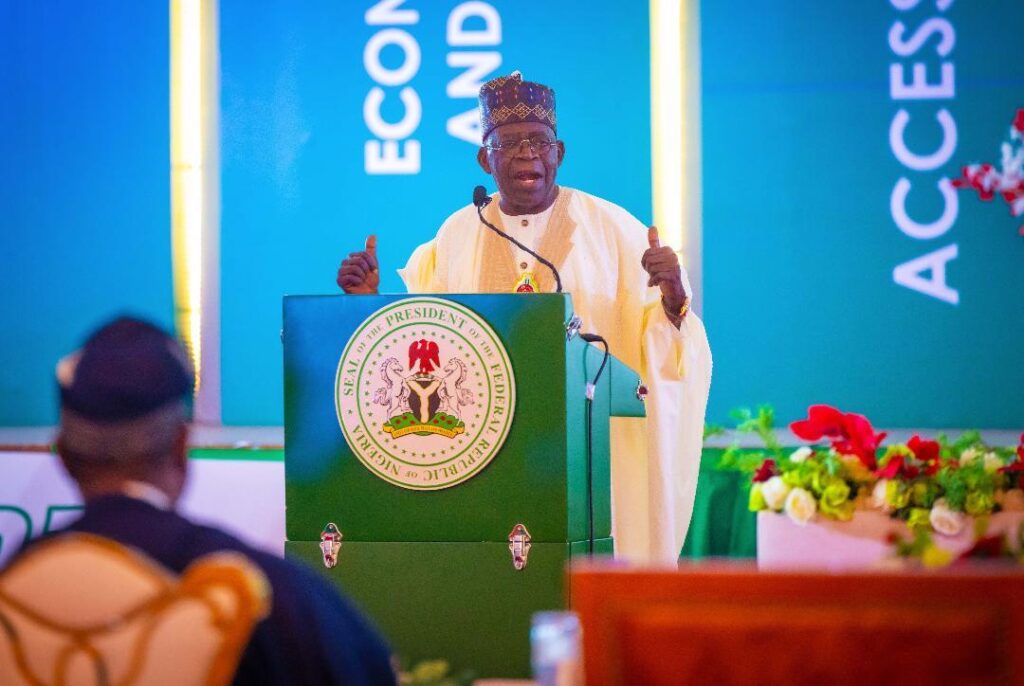
The ‘Nigerians Hate Tinubu’ Debate
The Presidency’s position is straightforward: it rejects the idea that Nigerians broadly dislike Tinubu and argues that his reforms should be assessed against the condition of the Nigerian economy when he assumed office in May 2023. The administration points to fuel subsidy removal, foreign-exchange reforms, NELFUND, minimum-wage increases, local-government financial autonomy and agricultural interventions as evidence of structural change. Pasted text
Those are claims that can be examined individually.
But public sentiment is not determined only by government policy announcements or macroeconomic statistics. It is also shaped by what people experience when they buy food, pay rent, commute to work, operate businesses or receive their monthly salaries.
That distinction is important because economic reform can produce improvements in some indicators while creating significant short-term pressures for households.
This is where the question of whether Nigerians hate Tinubu becomes more complicated.
What the Approval Ratings Say
One of the clearest ways of examining public sentiment is through opinion polling.
A May 2026 EBDA survey reported by BusinessDay placed Tinubu’s approval rating at 30.2 percent, while 47.5 percent of respondents disapproved of his performance. The survey therefore provides evidence of substantial dissatisfaction, although a single survey should not be treated as a definitive measurement of the views of every Nigerian.

That matters because the Presidency’s argument is not simply competing with The Economist. It is also competing with evidence from public-opinion research.
At the same time, approval ratings have limitations.
Poll results depend on methodology, sample size, timing, geographical coverage and the questions respondents are asked. A survey conducted during a period of high food prices may produce a different result from one conducted after economic conditions improve.
Public opinion is also not static.
A person’s assessment of Tinubu can change depending on employment, income, inflation, fuel prices, security and expectations about the future.
Consequently, approval figures should be read as evidence of public sentiment at a particular moment rather than as a permanent verdict.
What the Economy Shows
The economic side of the argument is equally complicated.
Nigeria’s economy recorded 3.89 percent real GDP growth in the first quarter of 2026, according to the National Bureau of Statistics. That represented an improvement from the 3.13 percent growth recorded in the first quarter of 2025.
The figure provides evidence that economic activity has continued to expand.
But GDP growth does not automatically mean that every household is better off.
An economy can grow while households continue to struggle with the cost of food, transportation, housing and other essential expenses.

This distinction is particularly important in Nigeria, where the effects of inflation can be felt directly by consumers.
The NBS currently reports headline inflation at 15.39 percent, while food inflation stands at 19.57 percent.
Those figures also need context. A decline in the inflation rate means prices are increasing more slowly; it does not mean that prices have returned to their earlier levels.
For households, that distinction can be crucial.
If the price of a basic food item increased substantially over previous years and inflation subsequently slows, consumers may still be paying much more than they previously did.
That helps explain why macroeconomic improvement and public dissatisfaction can exist at the same time.
The Cost of Living Remains Central
For many Nigerians, the most immediate measure of economic performance is not GDP.
It is the weekly shopping bill.
It is the cost of getting to work.
It is the amount left after rent, food, school expenses, electricity and transportation have been paid.
The Presidency itself acknowledges that Nigeria’s economic environment remains difficult, although it argues that the pain is part of the transition created by structural reforms. Pasted text
That acknowledgement is significant because it shows that the debate is not really about whether economic pressure exists.
The disagreement is over why it exists, whether the reforms are producing sufficient benefits and how quickly ordinary Nigerians should expect those benefits to become visible.
The administration argues that policies such as fuel subsidy removal and foreign-exchange reform were necessary to correct long-standing distortions.
Critics, meanwhile, focus heavily on the immediate cost of those changes.
Both dimensions are important to understanding the political debate.

What Has Changed Under Tinubu?
The Tinubu administration has introduced some of the most consequential economic policy changes Nigeria has seen in years.
The removal of the petrol subsidy fundamentally altered the country’s fuel-pricing system.
The administration also pursued foreign-exchange reforms intended to reduce distortions between different exchange-rate windows.
The Presidency says these measures have improved fiscal sustainability and helped strengthen external balances. Pasted text
The government has also highlighted the Nigerian Education Loan Fund, minimum-wage increases, local-government financial autonomy, agricultural support and CNG-powered mass transportation as measures intended to cushion citizens and restructure the economy.
These policies therefore form an important part of the administration’s case that its record should not be judged solely by the hardships associated with the transition.
But implementation and outcomes matter as much as policy announcements.
A reform becomes politically meaningful when citizens can see its effect in their own lives.
What Has Not Been Resolved?
The most difficult part of evaluating Tinubu’s presidency is separating structural economic indicators from household welfare.
Economic growth can improve without immediately translating into higher disposable income.
Inflation can decline while food remains expensive.
The currency market can become more stable while imported goods remain costly.
Government revenues can improve while families continue to struggle with household expenses.
This is why a serious assessment of Tinubu’s presidency requires more than one number.
It requires looking simultaneously at economic growth, inflation, wages, employment, investment, government revenue, food prices and household purchasing power.
It also requires recognising that Nigerians do not experience the economy uniformly.
A salaried worker, farmer, trader, student, manufacturer, civil servant and unemployed graduate can experience the same economic policy very differently.
Why the Debate Matters Before 2027
The argument over Tinubu’s approval is increasingly significant because the political environment is moving toward the 2027 elections.
But approval ratings should not be treated as predictions of electoral outcomes.
Instead, they provide a snapshot of how citizens assess the government at a particular point.
The more important question is whether economic improvements become sufficiently visible in everyday life before Nigerians make their next political decisions.
That makes the period between now and 2027 particularly important for measuring the relationship between reform and public confidence.
If economic indicators continue improving while household conditions also improve, public perceptions could change.
If macroeconomic improvements fail to translate into noticeable gains for households, dissatisfaction may remain despite stronger headline economic numbers.
Neither outcome should be assumed in advance.
The evidence will have to determine the direction.
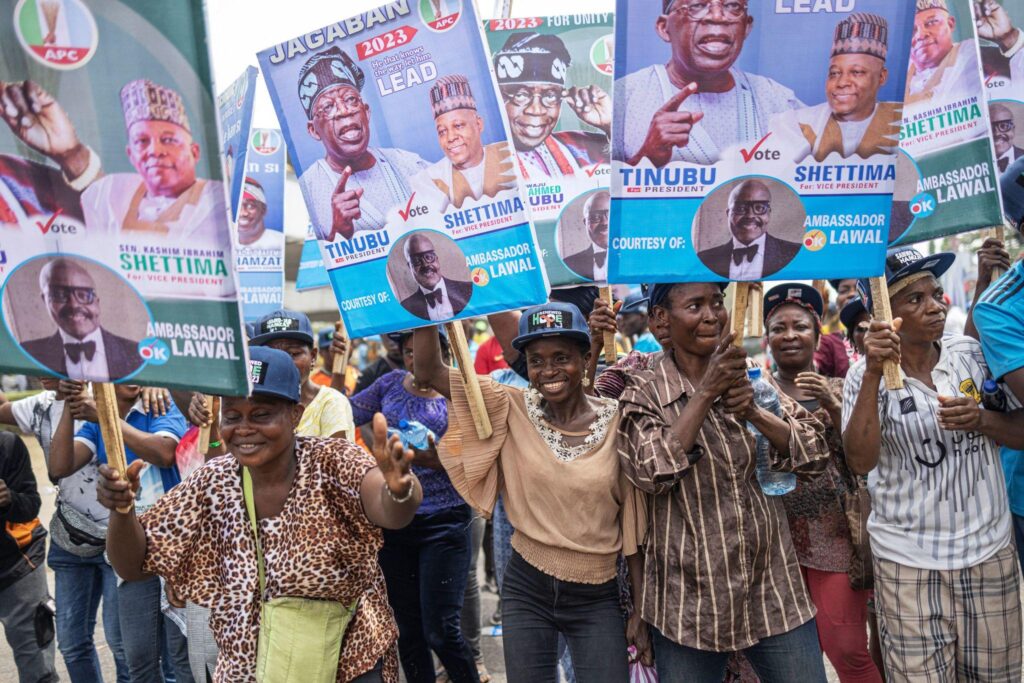
The Bigger Question: Numbers or Experience?
The debate over whether Nigerians hate Tinubu may ultimately be asking the wrong question.
Public sentiment is rarely that simple.
A Nigerian can acknowledge that the economy is improving and still believe the government has not done enough.
Another citizen can experience financial hardship while supporting the direction of the reforms.
Someone else may oppose the reforms themselves.
Others may judge the administration primarily on security, employment, infrastructure or political leadership.
That means public opinion cannot be reduced to a simple binary of love or hate.
The available evidence instead points toward a more complicated political landscape: measurable economic changes, significant household pressures and divided public assessments of the administration.
The Presidency is therefore correct to insist that the story cannot be understood solely through a single external characterization. But public dissatisfaction, where demonstrated by polling or other evidence, also cannot simply be dismissed.
Both questions have to be examined.
What the Evidence Currently Shows
The evidence available today supports several conclusions without requiring a political verdict.
Nigeria’s economy is growing.
Inflation has fallen considerably from its earlier peak, although food-price pressure remains substantial.
The Tinubu administration has implemented major structural reforms.
Those reforms have produced significant economic and social consequences, including both intended changes and difficult transitional effects.
Public opinion remains contested, and available polling has recorded significant dissatisfaction.
The Presidency strongly rejects the characterization that Nigerians broadly dislike Tinubu and argues that citizens are beginning to benefit from its reforms. Pasted text
The strongest conclusion, therefore, is not that Nigerians either love or hate Tinubu.
It is that Nigeria is experiencing a period of major economic and political transition, and public sentiment is being shaped by the tension between promised long-term reform and immediate household realities.
That tension will remain one of the most important questions in Nigerian politics as the country moves toward 2027.
RECOMMENDED COVERAGE
Nigeria’s Economic Recovery
A useful companion story examining GDP, inflation, foreign exchange and government revenue provides the economic context needed to understand the public debate.
https://dsgheraldnews.com/nigerias-economy-is-recovering-what-the-numbers-really-show/
Tinubu’s Economic Reforms
A separate explainer can examine the major reforms introduced since May 2023, what they were designed to achieve and their measurable outcomes.
https://dsgheraldnews.com/tinubus-economic-reforms-what-has-changed-since-2023/
Nigeria’s Cost-of-Living Crisis
This provides the household perspective—food prices, transport, wages and purchasing power—that macroeconomic indicators alone cannot capture.
https://dsgheraldnews.com/nigerias-cost-of-living-crisis-why-recovery-isnt-reaching-every-household/
Tinubu Approval Rating
A dedicated polling explainer could compare available surveys over time, clearly identifying their dates, methodologies and limitations.
https://dsgheraldnews.com/tinubus-approval-rating-what-nigerians-think-about-his-presidency/
About the Author



