Ondo NAF Crash: NGR 931 and the Questions Behind the Wreckage
Twenty-five people are dead. But the full story of what happened to NGR 931 has not yet been told.
On the morning of the crash, a Nigerian Air Force aircraft was travelling from Benin towards Lagos when air traffic controllers lost contact with it at about 9:13 a.m.
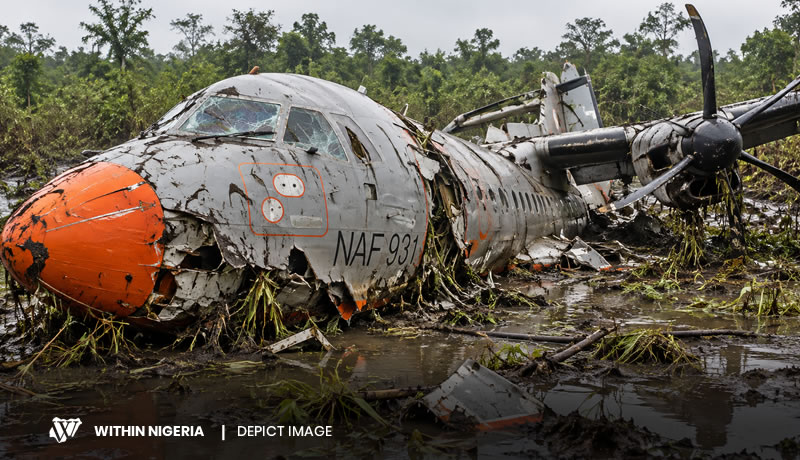
The aircraft was later found in the difficult, swampy terrain around Igbokoda in Ondo State.
There were no survivors.
The Nigerian Air Force subsequently identified 25 victims — five crew members and 20 passengers.
But almost immediately, another question emerged alongside the grief: why did the casualty figure change?
The first public account put the number at 32 — 25 passengers and seven crew. The later Nigerian Air Force statement identified 25 people — five crew and 20 passengers.
Was the first figure simply preliminary? Was there confusion over the passenger manifest? Did different authorities have different information while the search operation was still unfolding?
Those questions require an explanation.
And they are only the beginning.
Because beyond the wreckage of NGR 931 lies a much larger question:
What exactly happened during the aircraft’s final minutes?
The Flight That Never Reached Lagos
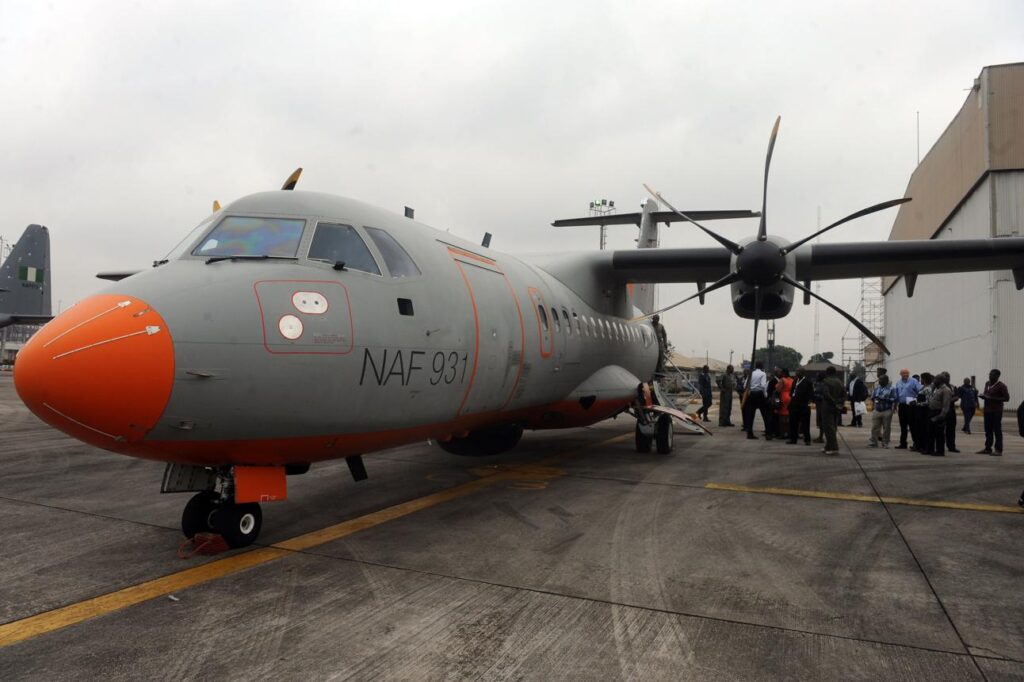
According to the initial official account, NGR 931 was conducting a routine mission from Benin towards Lagos when contact with air traffic control was lost.
Aviation Minister Festus Keyamo initially said the aircraft was carrying 25 passengers and seven crew members. He identified its registration as NGR 931 and said air traffic control lost contact with the aircraft at approximately 9:13 a.m., after attempts to establish radio communication failed.
The disappearance triggered a search-and-rescue operation.
The wreckage was eventually located near the Naval Base at Igbokoda.
The location immediately complicated the response.
The crash site was in swampy, waterlogged terrain, making access difficult. Residents described hearing a loud sound before aircraft debris was discovered in the area.
Local resident Oluboyo Olusola reported seeing aircraft parts, body parts and clothing around the crash site. The Olu of Igbokoda, Oba Afolabi Odidiomo, said the aircraft had gone into a river or swamp and that a substantial portion of it was submerged.
The first hours therefore carried several uncertainties: exactly how many people were aboard, the condition of the aircraft and whether anyone had survived.
The uncertainty was eventually resolved on the most devastating point.
There were no survivors.
The People Behind NGR 931
An aircraft accident can initially appear as a story about metal, machinery, coordinates and flight paths.
The release of the victims’ names changed that.
NGR 931 was carrying people.
The Nigerian Air Force identified five crew members:
- Squadron Leader MI Aburime, Flight Captain
- Squadron Leader AP Man-Ugwueje, Co-pilot
- Flight Lieutenant IS Bako, Co-pilot
- Warrant Officer Abubakar A, Aircraft Technician
- Corporal Uguru HC, Aircraft Technician
The 20 passengers identified were:
- Flight Lieutenant TL Lazarus
- Flight Lieutenant M Akinloye
- Flying Officer IM Adeshina
- Master Warrant Officer Onwuka F
- Master Warrant Officer Matini BA
- Warrant Officer Nuhu FS
- Flight Sergeant James RB
- Flight Sergeant Mohammed AI
- Sergeant Ani AE
- Sergeant Izibenikien SI
- Sergeant Alafuka C
- Sergeant Mbadugha AN
- Lance Corporal Ugwuba FC
- Lance Corporal Eledan GE
- Mrs Ezeh Nneka
- Godstmine Tarabina
- Joy Micheal
- Sunday Micheal
- Ukeme David
- Gideon Omotola.
Behind those 25 names were families, colleagues, friends and communities.
Some were military personnel.
Others were civilians.
And that civilian presence raises one of the important questions surrounding the flight.
Why Were Civilians Aboard a Military Aircraft?
Initial reports indicated that some passengers were family members of military personnel.
Among those reportedly aboard were children returning to school and relatives who had visited service personnel serving in Edo and Delta states. The initial reporting also indicated that the aircraft was undertaking a logistics mission towards Lagos.
Their presence does not, by itself, establish wrongdoing.
But it is relevant to understanding the flight, its purpose and its passenger manifest.
What was the precise purpose of the mission?
What procedures governed the transportation of civilian family members?
Who was officially listed on the manifest?
Under what arrangement were they travelling?
And why did the initial casualty information differ from the final list released by the Nigerian Air Force?
These are not accusations.
They are questions of reconstruction.
A complete investigation should establish the circumstances under which every person came to be aboard the aircraft and reconcile the passenger manifest with the final casualty record.
For families, accuracy matters.
For the military, accountability matters.
And for the public, transparency matters.
Igbokoda: The Community That Heard the Crash

For residents of Igbokoda, the Ondo NAF crash was not first experienced as a national aviation story.
It was a sound.
A sudden and disturbing event in a community surrounded by water, wetlands and difficult terrain.
Residents reported hearing the aircraft crash and later encountering debris in the swamp.
The geography of the site became an immediate challenge. Access was difficult, while parts of the aircraft were submerged.
Local authorities and community leaders became part of the immediate response.
Ilaje Local Government chairman Maurice Oripelaye said poor weather affected the pilot and that the aircraft crashed into a swamp near the Naval Base.
That account is important as part of the early local response, but it should not be treated as a confirmed cause of the accident.
In aviation investigations, eyewitness accounts can provide valuable information.
They cannot, on their own, establish causation.
That distinction is particularly important in the aftermath of a disaster, when incomplete information can quickly become accepted as fact.
What Caused the Ondo NAF Crash?
This is the central question.
At present, the available material does not establish a definitive cause.
Weather has been mentioned.
But weather being present at the time of an accident does not automatically mean weather caused it.
Investigators will need to establish what conditions existed along the aircraft’s flight path, what the crew encountered, what the aircraft was doing and whether those conditions affected either aircraft performance or crew decision-making.
That requires evidence.
The investigation will need to examine the aircraft’s systems, engines and structural condition.
It will need to reconstruct the aircraft’s route and final movements.
Available flight and communication records will be important.
Maintenance records will need to be examined.
Investigators will also need to consider human factors.
Were there operational pressures?
What decisions were being made in the cockpit?
Were there indications of a problem before contact was lost?
Was any warning transmitted?
Did air traffic control receive an indication that the crew was experiencing difficulty?
At this stage, the responsible position is not to choose an answer.
It is to identify the questions and allow the evidence to answer them.
The 32-to-25 Question
The difference between the initial figure of 32 and the later official figure of 25 deserves particular attention.
The first public account identified 32 people — 25 passengers and seven crew.
The subsequent Nigerian Air Force statement identified 25 people — five crew and 20 passengers — and released their names.
There are circumstances in which casualty figures change during the early stages of an aviation disaster.
Search teams may not immediately know who was aboard.
Information may come from different agencies.
Passenger manifests may require verification.
Bodies may be difficult to recover and identify, particularly in challenging terrain.
But once an official record has been established, a significant discrepancy should be explained.
This is not merely a statistical issue.
The difference affects families waiting for information.
It affects public confidence.
And it becomes part of the historical record of the disaster.
A transparent account should therefore establish how the first figure emerged, why it differed from the final figure and which records were ultimately used to establish the confirmed list.
The Military Aviation Question
NGR 931 also raises a broader question about military aviation in Nigeria.
Military aircraft perform duties that differ from conventional commercial aviation. Logistics, troop movement, operational support, training and other missions can require aircraft to operate under circumstances unlike those faced by scheduled passenger airlines.
That makes maintenance, operational planning, crew training, risk assessment and oversight particularly important.
But one accident should not automatically become evidence that the entire Nigerian military aviation system is unsafe.
The evidence must determine whether this was an isolated event or whether the accident exposed a broader weakness.
The investigation should therefore examine the wider chain of circumstances surrounding NGR 931.
Was the aircraft properly maintained?
Were required inspections completed?
Were known defects addressed?
Was the aircraft appropriate for the mission?
Was the crew properly constituted?
Were weather and route conditions adequately assessed?
Were operational decisions consistent with established procedures?
And did any institutional factor contribute to the accident?
These are questions for evidence-based investigation, not premature judgment.
What We Know About the Aircraft — And What We Do Not
The available reporting establishes that NGR 931 was a Nigerian Air Force aircraft travelling from Benin towards Lagos.
It does not provide enough information for this feature to make a definitive claim about the aircraft’s age, complete maintenance history, mechanical condition immediately before departure or any particular technical failure.
That distinction must remain clear.
It would be easy after an aircraft accident to ask whether the aircraft was too old, poorly maintained or mechanically defective.
But without evidence, such claims remain speculation.
A professional investigation must establish those facts before conclusions are drawn.
What Happened Before Contact Was Lost?
Perhaps the most important investigative window is the aircraft’s final minutes.
At approximately 9:13 a.m., air traffic controllers lost contact with NGR 931. Attempts to establish radio communication failed before the wreckage was located near Igbokoda.
That creates a narrow but crucial period for investigators to reconstruct.
What was happening immediately before contact was lost?
Was the aircraft following its expected route?
Did its altitude or heading change?
Was there an abnormal system indication?
Did the crew communicate any difficulty?
Was there a sudden event?
Or did several smaller factors combine to create an emergency?
The answers will depend on the evidence available from the aircraft and from the systems around it.
Flight data, communications, radar information, wreckage patterns, component condition and other evidence can help investigators reconstruct the sequence.
The objective should be to move from the fact of disappearance to a precise understanding of what happened between the last known normal phase of the flight and the crash.
The Investigation Must Answer More Than “What Happened?”
President Bola Tinubu ordered a thorough investigation and declared three days of national mourning, with flags to be flown at half-mast. He also expressed condolences to the families of the victims and commended the Nigerian Air Force response.
The Nigerian Air Force activated search-and-rescue efforts, later released the names of the 25 people killed and directed a comprehensive investigation while urging the public to avoid speculation.
In Ondo State, Governor Lucky Aiyedatiwa mobilised the State Emergency Management Agency, the Ministry of Health and security agencies, while the crash area was cordoned off.
Those actions addressed the immediate crisis.
But aviation safety is ultimately measured by what happens after the emergency.
An investigation must establish not only what happened, but why it happened.
If the evidence identifies a technical failure, that must be documented.
If it identifies an operational issue, the relevant procedures must be examined.
If environmental conditions contributed, investigators must establish precisely how.
If human factors played a role, that must be understood within the circumstances confronting the crew.
And if multiple factors interacted, the investigation must explain the chain.
That is how an accident investigation becomes more than a report.
It becomes a mechanism for preventing another tragedy.
The Questions Families Will Want Answered
For the families of the victims, the investigation is not an abstract technical exercise.
They will want to know what happened to the people they loved.
They will want to understand what happened inside and around the aircraft during its final minutes.
Among the questions that will inevitably matter are:
What happened to NGR 931?
What happened during the final minutes?
Did the crew know there was a problem?
Was any warning issued?
What were the actual weather conditions?
Was the aircraft technically sound?
What does its maintenance record show?
Why did the initial casualty figure differ from the final figure?
Why were civilian passengers aboard the military aircraft?
What procedures governed their transportation?
And perhaps the most difficult question:
Could the crash have been prevented?
Not every aviation accident produces a simple answer.
Sometimes several factors combine.
Sometimes there is no single failure.
Sometimes the evidence reveals a chain of events in which each individual factor might have appeared manageable, but together produced catastrophe.
Whatever the eventual findings, families and the public deserve an investigation capable of explaining its conclusions clearly and supporting them with evidence.
A National Tragedy Beyond the Numbers
It is easy for an aviation disaster to become a story dominated by numbers.
Twenty-five dead.
One aircraft.
One crash site.
One investigation.
But the human reality is larger.
The victims were not simply passengers and crew listed on a manifest.
They were people with families, careers, responsibilities and relationships.
The five crew members had been entrusted with an aircraft and a mission.
The passengers had their own reasons for being aboard.
Among them were military personnel and civilians, including family members according to the initial reports.
Every name released by the Nigerian Air Force represents a separate story of loss.
For those closest to the victims, the crash did not end when the aircraft was located.
That was when another reality began — identification, mourning, funeral arrangements and the search for answers.
National mourning can acknowledge the scale of a tragedy.
But for individual families, grief is personal.
That is why the quality and transparency of the investigation matter.
What We Know — And What We Still Do Not Know
At this stage, several facts are established.
NGR 931 was travelling from Benin towards Lagos.
Air traffic controllers lost contact with the aircraft at approximately 9:13 a.m.
The wreckage was subsequently located near Igbokoda in Ondo State.
There were no survivors.
The Nigerian Air Force later identified 25 victims — five crew and 20 passengers.
The President ordered an investigation and declared three days of national mourning.
The Nigerian Air Force directed a comprehensive investigation and released the names of those who died.
But several critical questions remain unresolved.
The precise cause of the crash has not been established in the material available for this feature.
The role, if any, of weather remains to be determined.
The aircraft’s complete technical and maintenance history has not been established in the reporting used here.
The circumstances surrounding the transportation of civilian family members require further clarification.
And the discrepancy between the initial figure of 32 and the later confirmed figure of 25 requires an explanation.
Those gaps are not invitations to speculate.
They are the reason an investigation is necessary.
The Test Now Is What Nigeria Learns
Every aviation accident carries two stories.
There is the immediate story — the crash itself, the search operation, the victims and the national response.
Then there is the longer story — what investigators discover and what authorities do with those findings.
The second story may ultimately be the more important one for aviation safety.
If the investigation identifies a technical weakness, it should be addressed.
If it identifies a maintenance problem, the relevant systems should be reviewed.
If it identifies an operational failure, procedures should be examined.
If human factors played a role, appropriate training, supervision or operational safeguards should be considered.
And if institutional weaknesses contributed, those weaknesses should not be shielded from scrutiny simply because the findings may be uncomfortable.
That is not about assigning blame before the evidence is available.
It is about ensuring that the investigation serves a purpose beyond documenting tragedy.
A serious accident investigation should reduce the possibility of recurrence.
That is the obligation owed not only to the families of those who died on NGR 931, but also to everyone who will board a military aircraft in the future.
The Questions Behind the Wreckage
NGR 931 disappeared from air traffic control at about 9:13 a.m.
What followed was a search through difficult terrain, a devastating confirmation and the release of 25 names.
But the most important part of the story may still be ahead.
Nigeria now needs an investigation rigorous enough to reconstruct the aircraft’s final journey and transparent enough to explain its findings.
It must establish what happened.
It must determine why.
And where the evidence identifies a preventable weakness, the appropriate lessons must be implemented.
The wreckage of NGR 931 may eventually be removed from the wetlands of Igbokoda.
The emergency response will end.
The headlines will fade.
But the responsibility to understand what happened must remain.
Because 25 people did not simply disappear from a passenger manifest.
They were pilots, technicians, military personnel and civilians.
They were colleagues, relatives, parents, children and friends.
Their names have been released.
Now the country awaits the answers.
The true measure of the NGR 931 investigation will not simply be whether Nigeria explains how the aircraft crashed.
It will be whether Nigeria learns enough from the tragedy to make the next flight safer.
And that is why the story of NGR 931 does not end with the wreckage.
It begins with the questions behind it.
Twenty-five people are dead. But the full story of what happened to NGR 931 has not yet been told.
On the morning of the crash, a Nigerian Air Force aircraft was travelling from Benin towards Lagos when air traffic controllers lost contact with it at about 9:13 a.m.
The aircraft was later found in the difficult, swampy terrain around Igbokoda in Ondo State.
There were no survivors.
The Nigerian Air Force subsequently identified 25 victims — five crew members and 20 passengers.
But almost immediately, another question emerged alongside the grief: why did the casualty figure change?
The first public account put the number at 32 — 25 passengers and seven crew. The later Nigerian Air Force statement identified 25 people — five crew and 20 passengers.
Was the first figure simply preliminary? Was there confusion over the passenger manifest? Did different authorities have different information while the search operation was still unfolding?
Those questions require an explanation.
And they are only the beginning.
Because beyond the wreckage of NGR 931 lies a much larger question:
What exactly happened during the aircraft’s final minutes?
The Flight That Never Reached Lagos
According to the initial official account, NGR 931 was conducting a routine mission from Benin towards Lagos when contact with air traffic control was lost.
Aviation Minister Festus Keyamo initially said the aircraft was carrying 25 passengers and seven crew members. He identified its registration as NGR 931 and said air traffic control lost contact with the aircraft at approximately 9:13 a.m., after attempts to establish radio communication failed.
The disappearance triggered a search-and-rescue operation.
The wreckage was eventually located near the Naval Base at Igbokoda.
The location immediately complicated the response.
The crash site was in swampy, waterlogged terrain, making access difficult. Residents described hearing a loud sound before aircraft debris was discovered in the area.
Local resident Oluboyo Olusola reported seeing aircraft parts, body parts and clothing around the crash site. The Olu of Igbokoda, Oba Afolabi Odidiomo, said the aircraft had gone into a river or swamp and that a substantial portion of it was submerged.
The first hours therefore carried several uncertainties: exactly how many people were aboard, the condition of the aircraft and whether anyone had survived.
The uncertainty was eventually resolved on the most devastating point.
There were no survivors.
The People Behind NGR 931
An aircraft accident can initially appear as a story about metal, machinery, coordinates and flight paths.
The release of the victims’ names changed that.
NGR 931 was carrying people.
The Nigerian Air Force identified five crew members:
- Squadron Leader MI Aburime, Flight Captain
- Squadron Leader AP Man-Ugwueje, Co-pilot
- Flight Lieutenant IS Bako, Co-pilot
- Warrant Officer Abubakar A, Aircraft Technician
- Corporal Uguru HC, Aircraft Technician
The 20 passengers identified were:
- Flight Lieutenant TL Lazarus
- Flight Lieutenant M Akinloye
- Flying Officer IM Adeshina
- Master Warrant Officer Onwuka F
- Master Warrant Officer Matini BA
- Warrant Officer Nuhu FS
- Flight Sergeant James RB
- Flight Sergeant Mohammed AI
- Sergeant Ani AE
- Sergeant Izibenikien SI
- Sergeant Alafuka C
- Sergeant Mbadugha AN
- Lance Corporal Ugwuba FC
- Lance Corporal Eledan GE
- Mrs Ezeh Nneka
- Godstmine Tarabina
- Joy Micheal
- Sunday Micheal
- Ukeme David
- Gideon Omotola.
Behind those 25 names were families, colleagues, friends and communities.
Some were military personnel.
Others were civilians.
And that civilian presence raises one of the important questions surrounding the flight.
Why Were Civilians Aboard a Military Aircraft?
Initial reports indicated that some passengers were family members of military personnel.
Among those reportedly aboard were children returning to school and relatives who had visited service personnel serving in Edo and Delta states. The initial reporting also indicated that the aircraft was undertaking a logistics mission towards Lagos.
Their presence does not, by itself, establish wrongdoing.
But it is relevant to understanding the flight, its purpose and its passenger manifest.
What was the precise purpose of the mission?
What procedures governed the transportation of civilian family members?
Who was officially listed on the manifest?
Under what arrangement were they travelling?
And why did the initial casualty information differ from the final list released by the Nigerian Air Force?
These are not accusations.
They are questions of reconstruction.
A complete investigation should establish the circumstances under which every person came to be aboard the aircraft and reconcile the passenger manifest with the final casualty record.
For families, accuracy matters.
For the military, accountability matters.
And for the public, transparency matters.
Igbokoda: The Community That Heard the Crash
For residents of Igbokoda, the Ondo NAF crash was not first experienced as a national aviation story.
It was a sound.
A sudden and disturbing event in a community surrounded by water, wetlands and difficult terrain.
Residents reported hearing the aircraft crash and later encountering debris in the swamp.
The geography of the site became an immediate challenge. Access was difficult, while parts of the aircraft were submerged.
Local authorities and community leaders became part of the immediate response.
Ilaje Local Government chairman Maurice Oripelaye said poor weather affected the pilot and that the aircraft crashed into a swamp near the Naval Base.
That account is important as part of the early local response, but it should not be treated as a confirmed cause of the accident.
In aviation investigations, eyewitness accounts can provide valuable information.
They cannot, on their own, establish causation.
That distinction is particularly important in the aftermath of a disaster, when incomplete information can quickly become accepted as fact.
What Caused the Ondo NAF Crash?
This is the central question.
At present, the available material does not establish a definitive cause.
Weather has been mentioned.
But weather being present at the time of an accident does not automatically mean weather caused it.
Investigators will need to establish what conditions existed along the aircraft’s flight path, what the crew encountered, what the aircraft was doing and whether those conditions affected either aircraft performance or crew decision-making.
That requires evidence.
The investigation will need to examine the aircraft’s systems, engines and structural condition.
It will need to reconstruct the aircraft’s route and final movements.
Available flight and communication records will be important.
Maintenance records will need to be examined.
Investigators will also need to consider human factors.
Were there operational pressures?
What decisions were being made in the cockpit?
Were there indications of a problem before contact was lost?
Was any warning transmitted?
Did air traffic control receive an indication that the crew was experiencing difficulty?
At this stage, the responsible position is not to choose an answer.
It is to identify the questions and allow the evidence to answer them.
The 32-to-25 Question
The difference between the initial figure of 32 and the later official figure of 25 deserves particular attention.
The first public account identified 32 people — 25 passengers and seven crew.
The subsequent Nigerian Air Force statement identified 25 people — five crew and 20 passengers — and released their names.
There are circumstances in which casualty figures change during the early stages of an aviation disaster.
Search teams may not immediately know who was aboard.
Information may come from different agencies.
Passenger manifests may require verification.
Bodies may be difficult to recover and identify, particularly in challenging terrain.
But once an official record has been established, a significant discrepancy should be explained.
This is not merely a statistical issue.
The difference affects families waiting for information.
It affects public confidence.
And it becomes part of the historical record of the disaster.
A transparent account should therefore establish how the first figure emerged, why it differed from the final figure and which records were ultimately used to establish the confirmed list.
The Military Aviation Question
NGR 931 also raises a broader question about military aviation in Nigeria.
Military aircraft perform duties that differ from conventional commercial aviation. Logistics, troop movement, operational support, training and other missions can require aircraft to operate under circumstances unlike those faced by scheduled passenger airlines.
That makes maintenance, operational planning, crew training, risk assessment and oversight particularly important.
But one accident should not automatically become evidence that the entire Nigerian military aviation system is unsafe.
The evidence must determine whether this was an isolated event or whether the accident exposed a broader weakness.
The investigation should therefore examine the wider chain of circumstances surrounding NGR 931.
Was the aircraft properly maintained?
Were required inspections completed?
Were known defects addressed?
Was the aircraft appropriate for the mission?
Was the crew properly constituted?
Were weather and route conditions adequately assessed?
Were operational decisions consistent with established procedures?
And did any institutional factor contribute to the accident?
These are questions for evidence-based investigation, not premature judgment.
What We Know About the Aircraft — And What We Do Not
The available reporting establishes that NGR 931 was a Nigerian Air Force aircraft travelling from Benin towards Lagos.
It does not provide enough information for this feature to make a definitive claim about the aircraft’s age, complete maintenance history, mechanical condition immediately before departure or any particular technical failure.
That distinction must remain clear.
It would be easy after an aircraft accident to ask whether the aircraft was too old, poorly maintained or mechanically defective.
But without evidence, such claims remain speculation.
A professional investigation must establish those facts before conclusions are drawn.
What Happened Before Contact Was Lost?
Perhaps the most important investigative window is the aircraft’s final minutes.
At approximately 9:13 a.m., air traffic controllers lost contact with NGR 931. Attempts to establish radio communication failed before the wreckage was located near Igbokoda.
That creates a narrow but crucial period for investigators to reconstruct.
What was happening immediately before contact was lost?
Was the aircraft following its expected route?
Did its altitude or heading change?
Was there an abnormal system indication?
Did the crew communicate any difficulty?
Was there a sudden event?
Or did several smaller factors combine to create an emergency?
The answers will depend on the evidence available from the aircraft and from the systems around it.
Flight data, communications, radar information, wreckage patterns, component condition and other evidence can help investigators reconstruct the sequence.
The objective should be to move from the fact of disappearance to a precise understanding of what happened between the last known normal phase of the flight and the crash.
The Investigation Must Answer More Than “What Happened?”
President Bola Tinubu ordered a thorough investigation and declared three days of national mourning, with flags to be flown at half-mast. He also expressed condolences to the families of the victims and commended the Nigerian Air Force response.
The Nigerian Air Force activated search-and-rescue efforts, later released the names of the 25 people killed and directed a comprehensive investigation while urging the public to avoid speculation.
In Ondo State, Governor Lucky Aiyedatiwa mobilised the State Emergency Management Agency, the Ministry of Health and security agencies, while the crash area was cordoned off.
Those actions addressed the immediate crisis.
But aviation safety is ultimately measured by what happens after the emergency.
An investigation must establish not only what happened, but why it happened.
If the evidence identifies a technical failure, that must be documented.
If it identifies an operational issue, the relevant procedures must be examined.
If environmental conditions contributed, investigators must establish precisely how.
If human factors played a role, that must be understood within the circumstances confronting the crew.
And if multiple factors interacted, the investigation must explain the chain.
That is how an accident investigation becomes more than a report.
It becomes a mechanism for preventing another tragedy.
The Questions Families Will Want Answered
For the families of the victims, the investigation is not an abstract technical exercise.
They will want to know what happened to the people they loved.
They will want to understand what happened inside and around the aircraft during its final minutes.
Among the questions that will inevitably matter are:
What happened to NGR 931?
What happened during the final minutes?
Did the crew know there was a problem?
Was any warning issued?
What were the actual weather conditions?
Was the aircraft technically sound?
What does its maintenance record show?
Why did the initial casualty figure differ from the final figure?
Why were civilian passengers aboard the military aircraft?
What procedures governed their transportation?
And perhaps the most difficult question:
Could the crash have been prevented?
Not every aviation accident produces a simple answer.
Sometimes several factors combine.
Sometimes there is no single failure.
Sometimes the evidence reveals a chain of events in which each individual factor might have appeared manageable, but together produced catastrophe.
Whatever the eventual findings, families and the public deserve an investigation capable of explaining its conclusions clearly and supporting them with evidence.
A National Tragedy Beyond the Numbers
It is easy for an aviation disaster to become a story dominated by numbers.
Twenty-five dead.
One aircraft.
One crash site.
One investigation.
But the human reality is larger.
The victims were not simply passengers and crew listed on a manifest.
They were people with families, careers, responsibilities and relationships.
The five crew members had been entrusted with an aircraft and a mission.
The passengers had their own reasons for being aboard.
Among them were military personnel and civilians, including family members according to the initial reports.
Every name released by the Nigerian Air Force represents a separate story of loss.
For those closest to the victims, the crash did not end when the aircraft was located.
That was when another reality began — identification, mourning, funeral arrangements and the search for answers.
National mourning can acknowledge the scale of a tragedy.
But for individual families, grief is personal.
That is why the quality and transparency of the investigation matter.
What We Know — And What We Still Do Not Know
At this stage, several facts are established.
NGR 931 was travelling from Benin towards Lagos.
Air traffic controllers lost contact with the aircraft at approximately 9:13 a.m.
The wreckage was subsequently located near Igbokoda in Ondo State.
There were no survivors.
The Nigerian Air Force later identified 25 victims — five crew and 20 passengers.
The President ordered an investigation and declared three days of national mourning.
The Nigerian Air Force directed a comprehensive investigation and released the names of those who died.
But several critical questions remain unresolved.
The precise cause of the crash has not been established in the material available for this feature.
The role, if any, of weather remains to be determined.
The aircraft’s complete technical and maintenance history has not been established in the reporting used here.
The circumstances surrounding the transportation of civilian family members require further clarification.
And the discrepancy between the initial figure of 32 and the later confirmed figure of 25 requires an explanation.
Those gaps are not invitations to speculate.
They are the reason an investigation is necessary.
The Test Now Is What Nigeria Learns
Every aviation accident carries two stories.
There is the immediate story — the crash itself, the search operation, the victims and the national response.
Then there is the longer story — what investigators discover and what authorities do with those findings.
The second story may ultimately be the more important one for aviation safety.
If the investigation identifies a technical weakness, it should be addressed.
If it identifies a maintenance problem, the relevant systems should be reviewed.
If it identifies an operational failure, procedures should be examined.
If human factors played a role, appropriate training, supervision or operational safeguards should be considered.
And if institutional weaknesses contributed, those weaknesses should not be shielded from scrutiny simply because the findings may be uncomfortable.
That is not about assigning blame before the evidence is available.
It is about ensuring that the investigation serves a purpose beyond documenting tragedy.
A serious accident investigation should reduce the possibility of recurrence.
That is the obligation owed not only to the families of those who died on NGR 931, but also to everyone who will board a military aircraft in the future.
The Questions Behind the Wreckage
NGR 931 disappeared from air traffic control at about 9:13 a.m.
What followed was a search through difficult terrain, a devastating confirmation and the release of 25 names.
But the most important part of the story may still be ahead.
Nigeria now needs an investigation rigorous enough to reconstruct the aircraft’s final journey and transparent enough to explain its findings.
It must establish what happened.
It must determine why.
And where the evidence identifies a preventable weakness, the appropriate lessons must be implemented.
The wreckage of NGR 931 may eventually be removed from the wetlands of Igbokoda.
The emergency response will end.
The headlines will fade.
But the responsibility to understand what happened must remain.
Because 25 people did not simply disappear from a passenger manifest.
They were pilots, technicians, military personnel and civilians.
They were colleagues, relatives, parents, children and friends.
Their names have been released.
Now the country awaits the answers.
The true measure of the NGR 931 investigation will not simply be whether Nigeria explains how the aircraft crashed.
It will be whether Nigeria learns enough from the tragedy to make the next flight safer.
And that is why the story of NGR 931 does not end with the wreckage.
It begins with the questions behind it.
About the Author



