RABAT, Morocco — Fatima Ezzahra El Mansouri has made history as Morocco’s first female prime minister, but the parliamentary arithmetic behind her appointment has immediately placed coalition-building at the centre of her new government.
Her Authenticity and Modernity Party (PAM) emerged as the largest party in the September 23 election with 97 seats in the 395-member House of Representatives, leaving it 101 seats short of the 198 required for a majority.
King Mohammed VI appointed El Mansouri on September 29 and tasked her with forming a new government after PAM finished ahead of its rivals. Under Morocco’s 2011 Constitution, the king appoints the head of government from the party that wins the most seats in the House of Representatives.
The appointment gives Morocco its first woman at the head of government, but it does not give PAM the parliamentary numbers to govern alone. That distinction is central to understanding what comes next for Morocco’s first female PM.
The 97 Seats That Define El Mansouri’s First Test
The headline figure from Morocco’s election is 97.
PAM secured 97 seats in the House of Representatives, placing it first in the September 23 parliamentary election. The National Rally of Independents (RNI) won 66 seats, Istiqlal took 65, while the Justice and Development Party (PJD) won 54.
Reuters’ report on the election and appointment provides the key election figures and confirms El Mansouri’s appointment.
The House has 395 seats, meaning 198 are needed to constitute a majority.
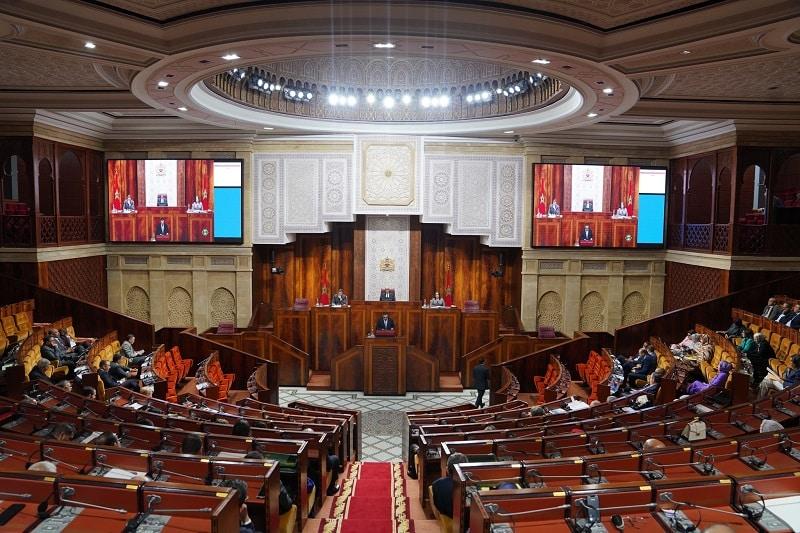
For PAM, that creates a straightforward parliamentary calculation:
- PAM: 97 seats
- Majority threshold: 198 seats
- Seats required beyond PAM’s total: 101
That 101-seat difference is why coalition negotiations are now one of the most important immediate tasks facing El Mansouri.
The numbers also show that the election did not produce a single-party majority. Instead, the result left the largest party dependent on cooperation with other political forces to assemble a governing majority.
According to Anadolu Agency, PAM’s final result remained at 97 seats, ahead of RNI with 66 and Istiqlal with 65.
Morocco’s Coalition Mathematics
The parliamentary figures provide several possible mathematical combinations for reaching the 198-seat threshold.
PAM and RNI together would have 163 seats. PAM and Istiqlal would have 162. But a combination of PAM, RNI and Istiqlal would total 228 seats, which is above the majority threshold.
That arithmetic does not establish which parties will ultimately enter government. Coalition negotiations depend on political agreements, cabinet arrangements and policy priorities.
El Mansouri has nevertheless been given the responsibility of conducting those discussions.
Reuters reported on El Mansouri’s coalition negotiations, including her indication that there would be no red lines in the talks. The report identified RNI and Istiqlal among the parties with which discussions could take place, while the PJD was expected to remain in opposition.
For Morocco’s coalition government, therefore, the next stage is not simply about adding numbers. It is about converting the election result into a functioning administration.
Why 198 Seats Matter
The significance of 198 seats extends beyond a simple election statistic.
Morocco’s 2011 Constitution provides the constitutional framework governing the appointment of the Head of Government and the relationship between the monarchy, government and Parliament.
The constitution gives the king the authority to appoint the head of government from the party that arrives first in the House of Representatives election, while the government operates within a parliamentary system and is accountable to Parliament.
This means El Mansouri’s appointment followed the constitutional mechanism associated with the election result, but the formation of the government remains a separate political process.
Her task is therefore unfolding in two stages.
First came the appointment after PAM emerged as the largest party.
The second stage is the formation of a government capable of commanding sufficient parliamentary support.
That makes the 101-seat gap one of the clearest ways to understand the political challenge facing the new prime minister.
Who Is Fatima Ezzahra El Mansouri?
El Mansouri’s rise to the premiership did not begin with the September election.
Born in Marrakesh in 1976, she studied law and later obtained qualifications from the University of Montpellier in France and New York University in the United States, according to Al Jazeera’s profile of El Mansouri.
Her political career gained national attention after she became Marrakesh’s first female mayor in 2009.
She later returned to lead the city’s municipal council after the 2021 elections and accumulated parliamentary experience through successive terms in the House of Representatives. In October 2021, she entered national government as minister responsible for national spatial planning, urban development, housing and urban policy.
Her ministerial responsibilities included issues such as the direct housing support programme, urban planning reforms and the rehousing of people affected by the 2023 Al Haouz earthquake, according to Al Jazeera’s account of her political career.
Her trajectory therefore spans local government, Parliament, national administration and party leadership before reaching the premiership.
That background is now being tested at a much larger scale.
The Youth Question Behind the Election
Coalition arithmetic is only one part of the challenge facing Morocco’s first female PM.
Youth concerns featured prominently in the election campaign and in the political environment surrounding the vote.
Reuters’ election coverage reported that youth unemployment stood at 27%, while political parties were seeking to address widespread disenchantment among young Moroccans.
The report linked the issue to recent protests and broader frustration over limited economic opportunities despite growth in parts of Morocco’s economy.
El Mansouri herself placed young people at the centre of her political message.
The supplied Africa News report quoted her saying that young Moroccans were experiencing a crisis and that the government needed to provide concrete solutions rather than speeches.
That puts employment and living costs among the issues likely to shape public expectations of the incoming government.
It also means the political significance of the election cannot be measured only through the number of parliamentary seats.
The new government will also be judged against the problems that voters expect it to address.
A 38% Turnout Adds Another Dimension
Official election results reported by Anadolu put nationwide voter turnout at about 38%.
That figure provides additional context for the political environment in which El Mansouri begins her tenure.
The election involved a 395-member House, but participation was considerably below a majority of registered voters. Reuters separately reported concerns about youth disenchantment and limited political engagement ahead of the election.
Turnout itself does not explain why individual voters participated or stayed away, and it should not be treated as a single measure of public sentiment.
But it forms part of the broader political context surrounding the new administration: the government must assemble parliamentary support while also responding to demands from a population in which youth economic concerns remain prominent.
The 2030 World Cup Adds a Major Economic Assignment
El Mansouri’s government will also inherit responsibility for Morocco’s preparations for the 2030 FIFA World Cup.
FIFA has confirmed that Morocco, Portugal and Spain will host the 2030 World Cup, while Argentina, Paraguay and Uruguay will stage three centenary celebration matches.
Morocco’s preparations are already tied to a broader programme of major infrastructure and urban development, including the Mohammed VI Tower project in Salé
Reuters has reported that Morocco’s preparations involve major infrastructure investment, with an estimated $20 billion associated with the country’s World Cup preparations.
The scale of that programme gives the incoming government an important economic and infrastructure agenda.
World Cup preparation extends beyond football stadiums. It involves transport, accommodation, urban development, tourism and related infrastructure.
Morocco’s preparations have already generated international attention. Reuters reported earlier in September that FIFA had not yet decided on a venue for the 2030 World Cup final, despite statements from Morocco’s football federation leadership about a Casablanca-area venue.
That means some major World Cup decisions remain separate from the formation of El Mansouri’s government.
Her administration will nevertheless inherit responsibility for continuing Morocco’s preparations.
For further background, FIFA’s official 2030 World Cup overview provides the tournament-hosting framework, including the roles of Morocco, Portugal, Spain, Argentina, Paraguay and Uruguay.
The King’s Role Remains Central
The appointment of a woman as prime minister should also be understood within Morocco’s constitutional monarchy.
The 2011 Constitution of Morocco sets out the respective roles of the King, Head of Government, Council of Ministers and Parliament.
The king retains important constitutional powers, including the appointment of the head of government from the party that wins the most seats in the House of Representatives.
The King also presides over the Council of Ministers, which deals with strategic questions of state policy.
Consequently, El Mansouri’s new role does not represent a transfer of all state authority to the prime minister’s office.
Instead, her government operates within a political system in which the monarchy remains a central institution.
That context matters when assessing what the new prime minister can be expected to control directly and what responsibilities remain within the wider constitutional structure.
The Western Sahara File Remains on the Agenda
Another major issue awaiting the new administration is Western Sahara.
The supplied Africa News report says El Mansouri will continue the government’s autonomy plan for the disputed territory.
The issue has long been one of Morocco’s major foreign-policy priorities.
However, the constitutional division of responsibilities means that foreign policy and other strategic state matters also sit within the broader authority of the monarchy.
The 2011 constitutional framework gives the king important responsibilities in areas including foreign relations, defence and strategic state policy. These provisions are set out in Articles 47–55 of Morocco’s Constitution.
For the new prime minister, therefore, the Western Sahara file forms part of a wider national policy environment in which the government and monarchy operate alongside one another.
What Happens After the Historic Appointment?
The immediate sequence is clear.
El Mansouri must conduct consultations aimed at forming a government. She will need to work within the parliamentary numbers produced by the September 23 election and establish sufficient support for the governing programme.
The arithmetic gives her party 97 seats against a 198-seat majority threshold.
The political task is to translate that result into a functioning governing coalition.
At the same time, the new administration inherits a policy agenda that includes youth employment, living costs, housing, social disparities and preparations for the 2030 World Cup.
Reuters’ report on the new government’s challenges also identified economic reforms and youth dissatisfaction as important issues facing the incoming administration.
The scale of the agenda means coalition formation will be only the beginning of the government’s work.
A Historic Appointment Meets Hard Political Numbers
Fatima Ezzahra El Mansouri’s appointment changes an important chapter in Morocco’s political history: she is the country’s first woman prime minister.
But the election result places a numerical constraint on the government she is now trying to build.
PAM has 97 seats.
A majority requires 198.
The difference is 101.
Those figures explain why coalition negotiations will be central to the opening phase of El Mansouri’s premiership.
Her political record gives her experience in municipal administration, Parliament, national government and party leadership. Her new position, however, places those experiences against a broader national agenda involving young people, economic pressures, major infrastructure projects and strategic state priorities.
For Morocco’s first female PM, the historic appointment is therefore the beginning of a new phase rather than the conclusion of the political process.
The next chapter will be defined by the government she forms, the parliamentary support it secures and the policies it puts forward.mentary arithmetic behind her appointment has immediately placed coalition-building at the centre of her new government. Her Authenticity and Modernity Party (PAM) emerged as the largest party in the September 23 election with 97 seats in the 395-member House of Representatives, leaving it 101 seats short of the 198 required for a majority.
King Mohammed VI appointed El Mansouri on September 29 and tasked her with forming a new government after PAM finished ahead of its rivals. Under Morocco’s constitutional system, the king appoints the head of government from the party that wins the most seats in the House of Representatives.
The appointment gives Morocco its first woman at the head of government, but it does not give PAM the parliamentary numbers to govern alone. That distinction is central to understanding what comes next for Morocco’s first female PM.
The 97 Seats That Define El Mansouri’s First Test
The headline figure from Morocco’s election is 97.
PAM secured 97 seats in the House of Representatives, placing it first in the September 23 parliamentary election. The National Rally of Independents (RNI) won 66 seats, Istiqlal took 65, while the Justice and Development Party (PJD) won 54. Other parties divided the remaining seats.
The House has 395 seats, meaning 198 are needed to constitute a majority.
For PAM, that creates a straightforward parliamentary calculation:
- PAM: 97 seats
- Majority threshold: 198 seats
- Seats required beyond PAM’s total: 101
That 101-seat difference is why coalition negotiations are now one of the most important immediate tasks facing El Mansouri.
The numbers also show that the election did not produce a single-party majority. Instead, the result left the largest party dependent on cooperation with other political forces to assemble a governing majority.
According to Anadolu Agency, PAM’s final result remained at 97 seats, ahead of RNI with 66 and Istiqlal with 65.
Morocco’s Coalition Mathematics
The parliamentary figures provide several possible mathematical combinations for reaching the 198-seat threshold.
PAM and RNI together would have 163 seats. PAM and Istiqlal would have 162. But a combination of PAM, RNI and Istiqlal would total 228 seats, which is above the majority threshold.
That arithmetic does not establish which parties will ultimately enter government. Coalition negotiations depend on political agreements, cabinet arrangements and policy priorities.
El Mansouri has nevertheless been given the responsibility of conducting those discussions.
Reuters reported that the new prime minister has signalled an open approach to coalition negotiations, saying there would be no red lines in the talks. The report identified RNI and Istiqlal as parties with which discussions could take place, while the PJD was expected to remain in opposition.
For Morocco’s coalition government, therefore, the next stage is not simply about adding numbers. It is about converting the election result into a functioning administration.
Why 198 Seats Matter
The significance of 198 seats extends beyond a simple election statistic.
Morocco’s parliamentary system requires the government to secure parliamentary support for its programme. The 2011 Constitution gives the king the authority to appoint the head of government from the party that arrives first in the House of Representatives election, while the government remains accountable to Parliament.
This means El Mansouri’s appointment followed the constitutional mechanism associated with the election result, but the formation of the government remains a separate political process.
Her task is therefore unfolding in two stages.
First came the appointment after PAM emerged as the largest party.
The second stage is the formation of a government capable of commanding sufficient parliamentary support.
That makes the 101-seat gap one of the clearest ways to understand the political challenge facing the new prime minister.
Who Is Fatima Ezzahra El Mansouri?
El Mansouri’s rise to the premiership did not begin with the September election.
Born in Marrakesh in 1976, she studied law and later obtained qualifications from the University of Montpellier in France and New York University in the United States, according to Al Jazeera.
Her political career gained national attention after she became Marrakesh’s first female mayor in 2009.
She later returned to lead the city’s municipal council after the 2021 elections and accumulated parliamentary experience through successive terms in the House of Representatives. In October 2021, she entered national government as minister responsible for national spatial planning, urban development, housing and urban policy.
Her ministerial responsibilities included issues such as the direct housing support programme, urban planning reforms and the rehousing of people affected by the 2023 Al Haouz earthquake, according to Al Jazeera.
Her trajectory therefore spans local government, Parliament, national administration and party leadership before reaching the premiership.
That background is now being tested at a much larger scale.
The Youth Question Behind the Election
Coalition arithmetic is only one part of the challenge facing Morocco’s first female PM.
Youth concerns featured prominently in the election campaign and in the political environment surrounding the vote.
Reuters reported before the election that youth unemployment stood at 27%, while political parties were seeking to address widespread disenchantment among young Moroccans. The report linked the issue to recent protests and broader frustration over limited economic opportunities despite growth in parts of Morocco’s economy.
El Mansouri herself placed young people at the centre of her political message.
The supplied Africa News report quoted her saying that young Moroccans were experiencing a crisis and that the government needed to provide concrete solutions rather than speeches.
That puts employment and living costs among the issues likely to shape public expectations of the incoming government.
It also means the political significance of the election cannot be measured only through the number of parliamentary seats.
The new government will also be judged against the problems that voters expect it to address.
A 38% Turnout Adds Another Dimension
Official election results reported by Anadolu put nationwide voter turnout at about 38%.
That figure provides additional context for the political environment in which El Mansouri begins her tenure.
The election involved a 395-member House, but participation was considerably below a majority of registered voters. Reuters separately reported concerns about youth disenchantment and limited political engagement ahead of the election.
Turnout itself does not explain why individual voters participated or stayed away, and it should not be treated as a single measure of public sentiment.
But it forms part of the broader political context surrounding the new administration: the government must assemble parliamentary support while also responding to demands from a population in which youth economic concerns remain prominent.
The 2030 World Cup Adds a Major Economic Assignment
El Mansouri’s government will also inherit responsibility for Morocco’s preparations for the 2030 World Cup.
Morocco is scheduled to co-host the tournament with Spain and Portugal, while Argentina, Paraguay and Uruguay are due to host the opening matches. Reuters has reported that Morocco’s preparations involve major infrastructure investment, with an estimated $20 billion associated with the country’s World Cup preparations.
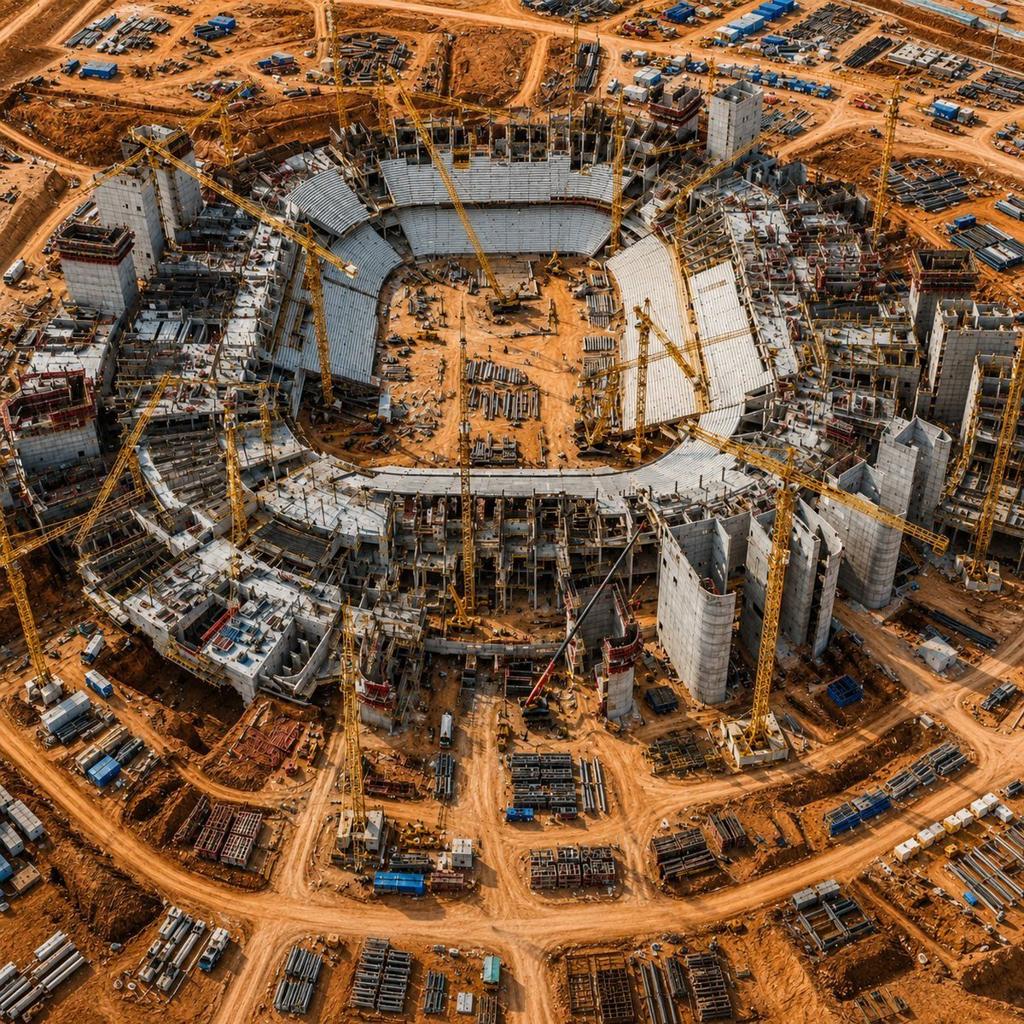
The scale of that programme gives the incoming government an important economic and infrastructure agenda.
World Cup preparation extends beyond football stadiums. It involves transport, accommodation, urban development, tourism and related infrastructure.
Morocco’s preparations have already generated international attention. Reuters reported earlier in September that the proposed venue for the 2030 World Cup final remained undecided by FIFA, despite statements from Morocco’s football federation leadership about a Casablanca-area venue.
That means some major World Cup decisions remain separate from the formation of El Mansouri’s government.
Her administration will nevertheless inherit responsibility for continuing Morocco’s preparations.
The King’s Role Remains Central
The appointment of a woman as prime minister should also be understood within Morocco’s constitutional monarchy.
The king retains important constitutional powers, including the appointment of the head of government from the party that wins the most seats in the House of Representatives. The king also presides over the Council of Ministers, which deals with strategic questions of state policy.
Consequently, El Mansouri’s new role does not represent a transfer of all state authority to the prime minister’s office.
Instead, her government operates within a political system in which the monarchy remains a central institution.
That context matters when assessing what the new prime minister can be expected to control directly and what responsibilities remain within the wider constitutional structure.
The Western Sahara File Remains on the Agenda
Another major issue awaiting the new administration is Western Sahara.
The supplied Africa News report says El Mansouri will continue the government’s autonomy plan for the disputed territory.
The issue has long been one of Morocco’s major foreign-policy priorities.
However, the constitutional division of responsibilities means that foreign policy and other strategic state matters also sit within the broader authority of the monarchy. The 2011 constitutional framework gives the king important responsibilities in areas including foreign relations, defence and strategic state policy.
For the new prime minister, therefore, the Western Sahara file forms part of a wider national policy environment in which the government and monarchy operate alongside one another.
What Happens After the Historic Appointment?
The immediate sequence is clear.
El Mansouri must conduct consultations aimed at forming a government. She will need to work within the parliamentary numbers produced by the September 23 election and establish sufficient support for the governing programme.
The arithmetic gives her party 97 seats against a 198-seat majority threshold.
The political task is to translate that result into a functioning governing coalition.
At the same time, the new administration inherits a policy agenda that includes youth employment, living costs, housing, social disparities and preparations for the 2030 World Cup. Reuters also reported that the government is expected to pursue economic reforms aimed at addressing youth dissatisfaction.
The scale of the agenda means coalition formation will be only the beginning of the government’s work.
A Historic Appointment Meets Hard Political Numbers
Fatima Ezzahra El Mansouri’s appointment changes an important chapter in Morocco’s political history: she is the country’s first woman prime minister.
But the election result places a numerical constraint on the government she is now trying to build.
PAM has 97 seats.
A majority requires 198.
The difference is 101.
Those figures explain why coalition negotiations will be central to the opening phase of El Mansouri’s premiership.
Her political record gives her experience in municipal administration, Parliament, national government and party leadership. Her new position, however, places those experiences against a broader national agenda involving young people, economic pressures, major infrastructure projects and strategic state priorities.
For Morocco’s first female PM, the historic appointment is therefore the beginning of a new phase rather than the conclusion of the political process.
The next chapter will be defined by the government she forms, the parliamentary support it secures and the policies it puts forward.
About the Author



