Introduction
Nigeria Public Accountability: Nigeria: Power, Policy & People | Daily News Review.
Nigeria’s public affairs on 14 October 2026 bring together a series of developments that differ in subject but share an important editorial question: what has been announced, what has actually happened, and what evidence is available to establish the difference?
The latest daily review examines the reported revision of the All Progressives Congress (APC) presidential campaign council ahead of the 2027 election, Finance Minister Taiwo Oyedele’s remarks on additional tax burdens, and an agreement between Nigeria and the African Development Bank (AfDB) to review development projects. It also considers a consumer-protection operation reported by the National Agency for Food and Drug Administration and Control (NAFDAC), calls by Niger Delta stakeholders for ageing pipelines to be replaced, the reported federal government position on solar-panel imports, and a demand for an independent audit of the Lagos–Calabar Coastal Highway.
These developments touch on political organisation, public revenue, development finance, consumer safety, energy policy and infrastructure accountability. Each involves different institutions, responsibilities and standards of proof.
The central concern is Nigeria public accountability: whether political announcements are followed by verifiable action, whether financing translates into delivered projects, whether consumer-safety claims are supported by evidence, and whether public institutions can explain their decisions and results.
For readers, the distinction matters. A reported appointment is not necessarily a party defection; a funding commitment is not proof of expenditure; and a call for an audit is not a finding of financial wrongdoing. Understanding what is known—and what remains uncertain—is essential to assessing the significance of the day’s developments.
STORY 1: APC Presidential Campaign Council: Reported Roles Ahead of 2027
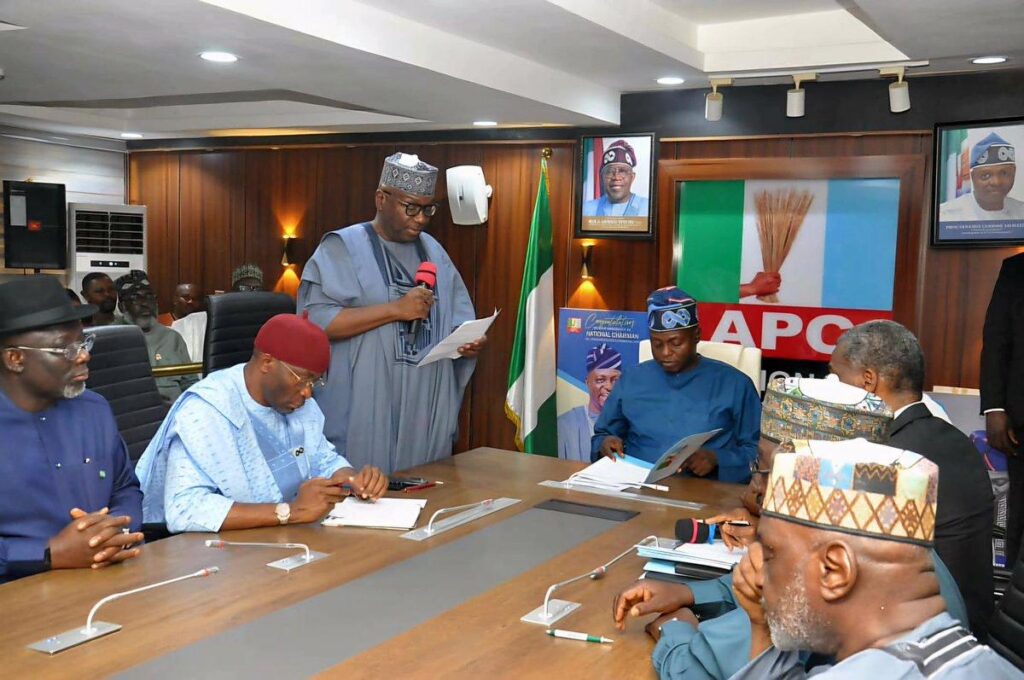
The All Progressives Congress has reportedly revised its presidential campaign council, assigning prominent political figures responsibilities in several states ahead of the 2027 presidential election. The reported appointments have drawn attention because some of the named politicians are associated with parties other than the ruling APC.
According to Channels Television’s report on the revised campaign council, the list includes Nyesom Wike for Rivers State and the Federal Capital Territory, Chukwuma Soludo for Anambra State, and Ademola Adeleke for Osun State. Abdulaziz Yari was also reported as the campaign Director-General, while Imo State Governor Hope Uzodimma was named as council secretary.
The council’s inauguration was scheduled for 11 a.m. on Wednesday, 14 October. However, the information available for this edition confirms the announced schedule, not conclusively that the inauguration took place. The status of the event and whether the named politicians accepted and began performing their reported responsibilities remain matters for confirmation.
The political context explains some of the attention surrounding the list. Wike and Adeleke are associated with the Peoples Democratic Party (PDP), while Soludo is associated with the All Progressives Grand Alliance (APGA). But a reported role in a campaign structure does not, by itself, establish that any of them has defected to the APC, formally joined a coalition or endorsed every position of the ruling party.
Political assignments, public endorsements, formal party membership and electoral support are different things. One should not be used as proof of another without further evidence.
Campaign councils can help political parties coordinate mobilisation, assign responsibilities and communicate their platforms. The reported state-level roles could therefore be significant to the APC’s organisational preparations. Yet a list of appointments does not establish how effectively those roles will be performed or how voters will respond.
The relevant test is what follows the announcement. Confirmation of the inauguration, statements from the politicians concerned, evidence that they have accepted their roles, and details of their actual campaign activities would help establish the practical significance of the reported changes.
The development is relevant to Nigeria public accountability because public discussion of political alignments should distinguish established actions from assumptions about allegiance or electoral advantage. Political prominence alone is not proof of a change in party membership, and a campaign assignment cannot establish a future election result.
For now, the defensible conclusion is limited: a revised APC campaign council and proposed state-level assignments have been reported. Whether the arrangements produce formal political changes or measurable organisational gains remains unresolved.
STORY 2: Nigeria’s Tax Policy: Oyedele Warns Against Additional Tax Burdens
Nigeria’s Minister of Finance and Coordinating Minister of the Economy, Taiwo Oyedele, has urged governments to exercise caution before imposing new taxes or increasing the burden on vulnerable people and productive businesses. His reported remarks bring the relationship between public revenue, economic activity and household finances into focus.
The comments were reported during discussions associated with the G24 meetings at the annual meetings of the International Monetary Fund and the World Bank in Bangkok, Thailand. In its report, Reuters described Oyedele’s comments on debt burdens and inclusive growth, including concerns about borrowing costs and the fiscal pressures facing developing economies.
The position is not simply a call for governments to stop collecting taxes. Public authorities need revenue to meet their obligations, including funding services, infrastructure and other public responsibilities. The policy question is how that revenue is raised, who bears the cost and whether the money is used effectively.
Tax measures can affect households and businesses in different ways. Depending on their design, they may change the cost of operating a business, influence prices or reduce the money households have available for other needs. The actual effect depends on the specific measure, the people or businesses liable to pay it, and how the resulting revenue is used. The supplied reporting does not establish a measured impact from a newly introduced tax measure arising from Oyedele’s remarks.
Borrowing also involves a trade-off. It can provide funds for investment when current revenue is insufficient, but it creates repayment obligations that future budgets must accommodate. The minister’s reported emphasis on savings, revenue mobilisation and productive borrowing therefore points to a broader question of fiscal choices: how governments can finance their responsibilities without unnecessarily weakening economic activity.
There is an important legal qualification. The reported remarks do not establish that Nigeria has introduced a new tax exemption, suspended an existing obligation or legally prohibited future tax increases. No specific new tax rate or legal directive is established in the supplied material.
Readers should consequently distinguish a statement of policy advice from an enacted legal change. A minister’s position may contribute to a policy debate, but it does not automatically amend tax obligations or guarantee that people will pay less.
The next evidence to watch is concrete government action: any formal directive, proposed measure, legislative change or implementation decision that follows. The details would need to establish which taxpayers are affected, when a measure takes effect and how its consequences are expected to be assessed.
This is an important aspect of Nigeria public accountability. Public discussion of taxation should not stop at whether a government intends to raise or reduce a burden. It should also examine the legal status of a measure, its design, its implementation and its actual effects on revenue and economic activity.
Until a specific action is established, Oyedele’s reported comments should be understood as advice about fiscal policy—not proof that a new tax rule has taken effect.
STORY 3: Nigeria–AfDB Development Projects: What the $5.1 Billion Commitment Means
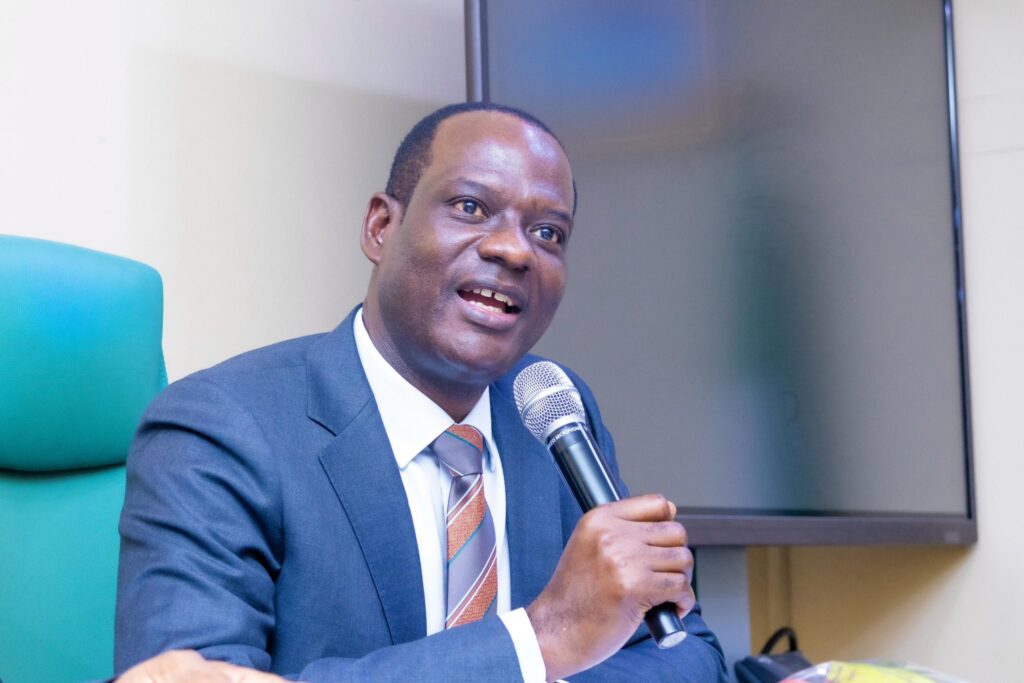
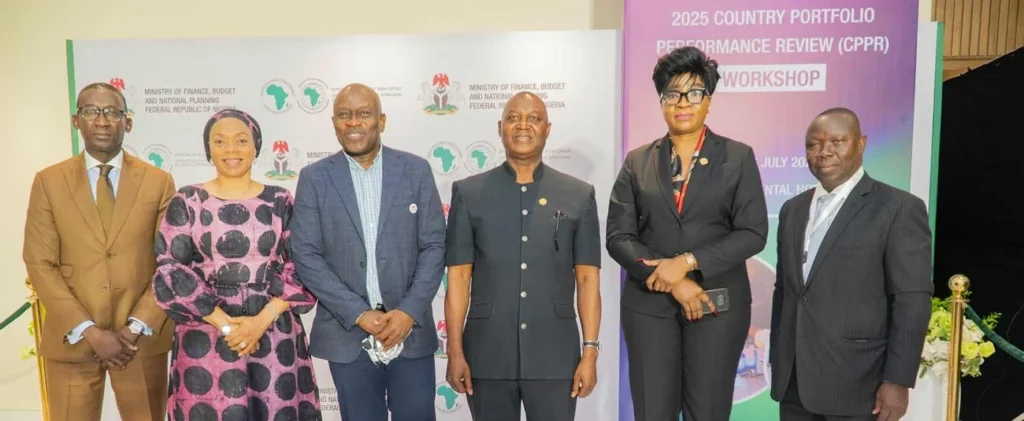
Nigeria and the African Development Bank have agreed to conduct a joint technical review of the bank’s project portfolio in the country, with the stated aim of identifying implementation obstacles and accelerating project delivery. The agreement was reached on 12 October in Bangkok, according to the editorial record supplied with the presenter script.
The Federal Ministry of Finance said the review would examine implementation bottlenecks and help align ongoing projects with the federal government’s development priorities. The parties also agreed to prepare for an official visit to Nigeria by the bank’s president, Sidi Ould Tah. The supplied material does not establish a date for that visit.
The scale of the portfolio provides important context. According to the African Development Bank’s account of its 2025 Country Portfolio Performance Review, the bank’s Nigerian portfolio included 52 public- and private-sector operations with commitments of US$5.1 billion. The figure cited in the reporting relates to the portfolio as of 31 October 2025, not a current October 2026 project-by-project accounting.
It is also essential to understand what the commitment figure measures. A financial commitment is not the same as money already disbursed, money actually spent or a completed project. A commitment indicates that financing has been committed under the relevant arrangements. It does not, on its own, reveal how much funding has reached implementing bodies, how much has been used or what infrastructure and services have been delivered.
That distinction matters when evaluating development finance. A large headline figure can indicate the scale of an agreed financing portfolio, but it cannot by itself demonstrate that projects are progressing on schedule or achieving their intended results.
The joint technical review could help clarify where projects face delays or other implementation problems. However, the agreement to conduct a review is a step towards examining delivery—not proof that implementation has already improved or that the problems affecting individual projects have been resolved.
The practical value of the exercise will depend on its findings and the actions that follow. Relevant information would include current project-level implementation status, the amount of financing disbursed, expenditure recorded, milestones achieved, delivery timelines and any corrective plans for delayed work.
Public accountability also requires clear responsibility. Where a project is behind schedule, readers need to know which institution is responsible for the relevant stage, what obstacle has been identified and whether a remedy has been agreed. Without such details, it is difficult to assess progress from a portfolio-wide commitment figure alone.
The planned visit by AfDB President Sidi Ould Tah is another development to watch, but the supplied record gives no confirmed date. It should therefore be described as a planned visit rather than a completed engagement.
For Nigeria, development finance becomes meaningful when it produces public value. That requires distinguishing money committed from money disbursed, expenditure recorded and results delivered. The review offers an opportunity to examine those distinctions, but the evidence of progress will need to come from its findings and subsequent implementation records.
In the context of Nigeria public accountability, the central question is not merely how much financing has been committed. It is what the portfolio has delivered, which projects need attention and whether the public can assess the results using clear, current information.
STORY 4: NAFDAC Consumer Protection: Suspected Counterfeit Drinks Operation in Lagos
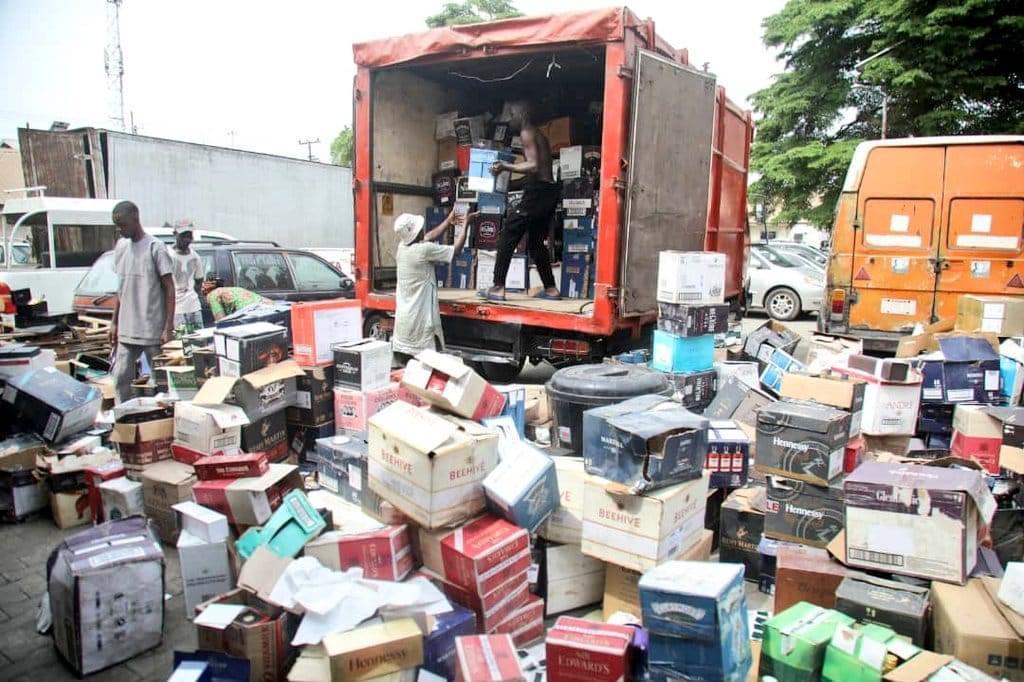
The National Agency for Food and Drug Administration and Control (NAFDAC) says it uncovered a suspected counterfeit alcoholic-beverage operation at Zamfara Plaza, within the BBA Trade Fair Complex in Ojo, Lagos State. The agency reported that two suspects were arrested during the operation.
According to Channels Television’s report citing NAFDAC, the operation involved more than 20 alleged illegal stores and seized products valued at over ₦2 billion. The report said the agency’s operation targeted suspected counterfeiting, the revalidation of expired or unsafe drinks for resale, and the stockpiling of banned imported products.
Those figures are significant, but they require careful attribution. The number of stores and the valuation of the seized products are reported through media accounts citing NAFDAC’s account. The material does not establish that the valuation has been independently audited.
There is also a clear distinction between an enforcement operation and a final finding of guilt. The reported arrests and allegations do not establish that the suspects have been convicted. Nor does the available information provide laboratory results, a final legal determination or a complete account of whether the products reached consumers.
This matters because suspected counterfeit or unsafe alcoholic beverages can raise serious consumer-protection concerns. Expired, misrepresented or otherwise unsafe products may pose risks, but a responsible public warning should be based on reliable evidence about the specific products involved and the hazards established through testing and investigation.
The next steps are therefore important. NAFDAC’s seizure inventory, laboratory findings, the status of the case and any specific consumer advisory or recall would help establish what products were involved and what action consumers should take. The supplied material does not provide those findings.
Product-specific information is particularly important. A general warning that does not identify affected products may create confusion, while a clear advisory supported by evidence can help consumers make informed decisions. No product list or laboratory-confirmed finding is supplied in the source for this edition, so this article cannot identify specific drinks as confirmed unsafe.
The operation also raises broader questions about inspection, product traceability and enforcement. The public needs to know what was seized, how the agency determined the products were suspect, what tests were conducted and what legal steps followed. These details would help distinguish initial allegations from established findings.
The reported valuation of more than ₦2 billion should not be interpreted as a confirmed financial loss to consumers or as proof that products of that value entered the market. It is a reported valuation of seized products attributed to the agency’s account; the supplied material does not establish consumer exposure or an independently audited figure.
For now, the established report is that NAFDAC says it conducted the operation and arrested two suspects, with additional figures reported through media accounts citing the agency. The allegations, product risks and legal outcome remain subject to further evidence.
Consumer protection depends on enforcement, but also on transparent findings. The next meaningful update should help Nigerians understand which products were involved, what testing established and what action the agency recommends.
STORY 5: Niger Delta Pipeline Integrity: Calls to Replace Ageing Infrastructure
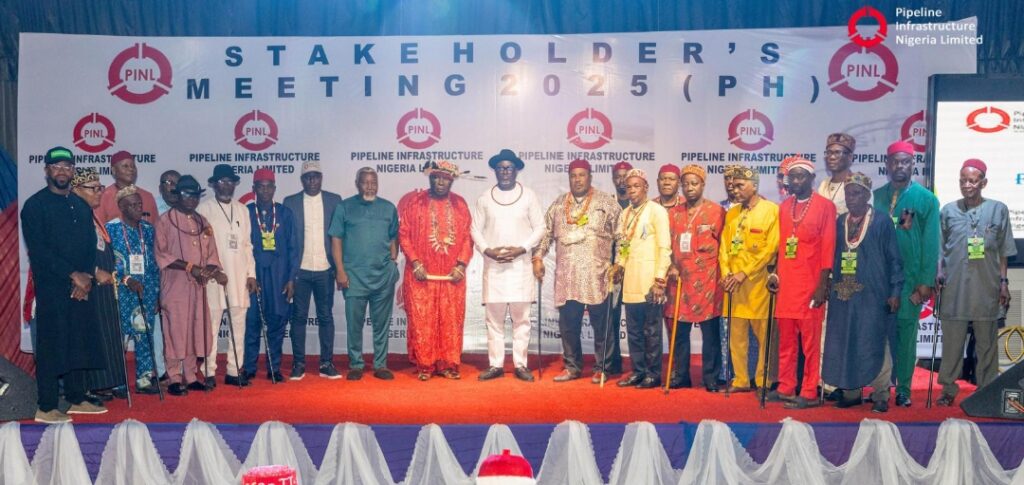
Stakeholders in the Niger Delta are calling for the replacement of ageing oil and gas pipelines and stronger environmental safeguards. The demands were raised during forums convened by Pipeline Infrastructure Nigeria Limited (PINL) on 9 and 10 October, according to the reporting reviewed for this edition.
The Guardian’s report on the stakeholders’ demands and PINL’s security update says community stakeholders called for the replacement of ageing pipelines and action on environmental concerns, including abandoned wellheads and gas flaring. One reported demand referred to pipelines said to have been in service for more than 60 years.
That age claim must remain attributed to the stakeholders who raised it: the supplied material does not include an engineering assessment establishing the age, condition or safety of individual pipelines.
PINL separately reported two consecutive months without pipeline vandalism in its operational areas. This is a company-reported security result. It does not, by itself, establish that the pipelines are in good physical condition or that environmental risks have been eliminated.
The distinction is important. Pipeline security and pipeline integrity are related to the safe operation of oil and gas infrastructure, but they are not the same thing. Preventing vandalism may help protect assets and maintain operations. Physical integrity, however, also depends on inspection, maintenance, engineering assessments, repairs and, where necessary, replacement.
A report of fewer vandalism incidents therefore cannot substitute for technical evidence about the condition of the infrastructure. Similarly, a stakeholder’s statement about a pipeline’s age does not establish that every pipeline in the region is unsafe. Responsibility and condition need to be assessed asset by asset.
The relevant owner, operator and regulator must be identified before responsibility for the condition of a particular pipeline or any failure is assigned. Useful records would include asset inventories, engineering inspection reports, maintenance histories, repair records and operator responses. These would help establish which assets require attention and what measures have been taken.
The public-interest implications extend to communities across the region. Pipeline integrity and environmental management can affect land, waterways, livelihoods and safety. However, the extent of any specific harm needs to be documented rather than assumed. The supplied material does not establish particular damage attributable to a specific pipeline in this reporting window.
Nor does the source establish that a funded, nationwide pipeline-replacement programme has been approved. Calls for replacement are demands for action, not proof that a programme has been authorised, funded or started.
The next evidence to watch includes technical assessments of the pipelines identified by stakeholders, maintenance records, formal responses from the responsible operators and any approved plans for repair or replacement. Such information would help determine the scope of the problem and whether the response matches the risks documented.
The reported two-month period without vandalism in PINL’s operational areas may be relevant to the company’s security activities, but it should not be treated as proof of infrastructure safety or a region-wide outcome. The coverage area and nature of the reported result matter.
The wider lesson for public accountability is that security performance, engineering safety and environmental protection require different kinds of evidence. Each should be evaluated on its own terms, with clear responsibility for the assets concerned.
For Niger Delta communities, the important question is not only whether interference with pipelines has declined in the areas PINL covers. It is whether the infrastructure is being assessed and maintained appropriately, whether environmental concerns are investigated, and whether any necessary replacement work is formally planned and funded.
STORY 6: Solar-Panel Imports: Nigeria’s Reported Position on Local Manufacturing
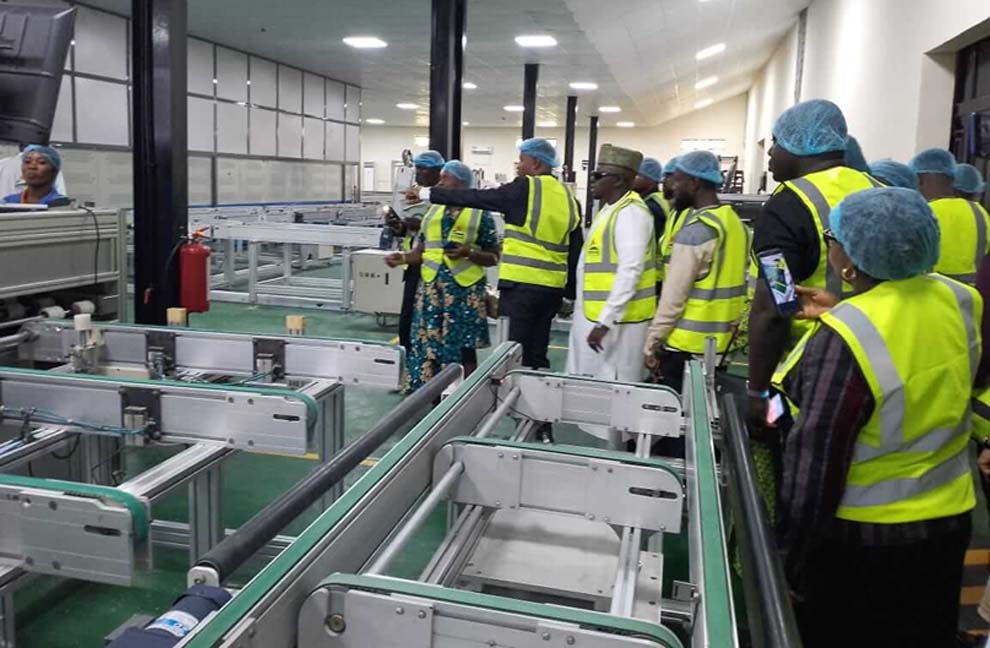
A report published by TheCable on Tuesday, 13 October, said the Federal Government was backing away from an immediate ban on solar-panel imports while emphasising standards, local manufacturing, technology transfer and skills development.
In its report, TheCable explained the government’s reported position on the proposed import ban, citing a statement attributed to the Minister of Innovation, Science and Technology, Kingsley Udeh.
The policy status requires particular care. According to the Stage 4 material accompanying the presenter script, the underlying ministerial statement appeared on 10 October, before the reporting window began. The report was published during the current window, but its publication date does not necessarily mean the underlying policy position was announced for the first time during that period.
The supplied material also does not establish whether an import ban had been formally approved, legally cancelled or remained under consideration. It would therefore be inaccurate to describe the report as confirmation that a formal ban had been cancelled.
The underlying policy debate concerns how Nigeria might support domestic manufacturing while ensuring access to solar equipment. Government measures intended to develop local industrial capacity could be designed to encourage production, technology transfer and skills development. At the same time, restrictions on imports could affect equipment availability and costs, depending on local production capacity, competition and the rules eventually adopted.
These are possible consequences, not measured outcomes established by the material supplied for this edition. No evidence is provided here showing how any proposed measure has affected solar-panel prices, domestic production or consumer access.
The distinction matters for households and businesses considering solar equipment as an alternative or supplement to an unreliable electricity supply. Their practical options would depend on the actual policy instrument, the standards applied, the supply of locally manufactured products and whether equipment is available at competitive prices.
A policy objective should not be confused with a result. An emphasis on local production does not, by itself, establish that domestic manufacturers can meet demand. Equally, a report that the government is reconsidering an immediate import restriction does not establish the legal status of the proposal.
The next step is to establish the formal position. This requires confirmation of the original ministerial statement, the status of the earlier import-ban proposal and whether any official directive has been issued. If a policy instrument exists, its terms and effective date would be necessary to assess its implications.
Until those details are available, the responsible reporting position is to describe the government’s reported emphasis on standards and local production without claiming that a ban has formally been cancelled.
The solar-panel debate illustrates why Nigeria public accountability requires clarity about the stages of policymaking. A reported position, a proposal, a formal directive and an implemented restriction are not interchangeable. The public needs to know which stage has been reached before drawing conclusions about affordability, industrial development or market access.
STORY 7: Lagos–Calabar Coastal Highway Audit: What the Records Need to Show
A call for greater transparency over the Lagos–Calabar Coastal Highway has renewed attention to the records needed to assess one of Nigeria’s major infrastructure projects. Peter Obi’s media office has called for an independent audit, seeking clarity about project expenditure, scope, progress and changes to the original plan.
The request was reported by The Cable in its coverage of the audit demand. The report attributed the call to the media office, with spokesperson Idris Zekeri identified in the statement.
The demand is a call for scrutiny; it is not proof that public funds have been misused. The material available for this edition does not establish that an independent audit has been commissioned or completed.
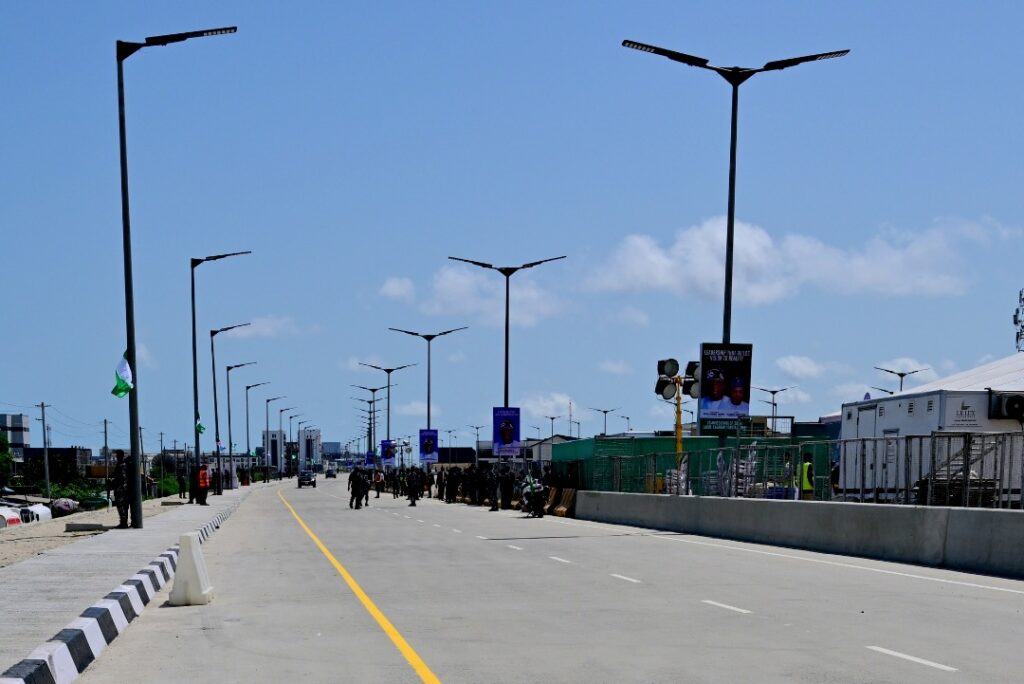
The Federal Ministry of Works has also provided an account of the project. In an update published on 7 October, the ministry said the first 47-kilometre section had been completed and described progress on a further section of approximately 55 kilometres. The ministry’s official project update also discusses construction progress and explains that some route redesigns were attributed to engineering conditions and existing or planned infrastructure.
These statements need to be kept in their proper context. The reported completion of the first section and progress on another section are figures attributed to the ministry’s update. They do not independently establish the complete financial position of the project, the full details of contract variations or the project-wide level of completion.
The ministry’s explanation for some route changes is relevant to understanding the government’s position, but it is not a substitute for the records required to assess those changes. Equally, a request for an audit does not establish that the project has been mismanaged.
A credible assessment would need several kinds of documentation. The approved project scope and contract documents would help establish what was authorised. Expenditure and payment records would show what was paid. Approved variations would help explain changes to the original contract, while implementation reports and milestone assessments would provide evidence of what had actually been delivered.
These records answer different questions. A contract can establish what work was agreed, but it cannot by itself demonstrate that the work was completed. A payment record can show that money was paid, but it does not alone establish the physical progress associated with that payment. Progress assessments can document delivery, while approved variations can clarify whether changes were formally authorised.
Taken together, the records would help the public assess whether expenditure corresponds with authorised work and whether delivery is proceeding against agreed milestones. To be useful, the information must also be sufficiently current and detailed to explain the status of the sections under discussion.
For taxpayers, road users, businesses and communities along the corridor, the central issue is public value: what was approved, what has been spent, what has been delivered and what remains to be done? Those questions cannot be settled by a political demand or a single official progress update alone.
The next step is to establish whether an independent audit has formally been commissioned and whether current contract, payment, variation and progress records are available for scrutiny. If an audit proceeds, its scope, methodology, findings and any subsequent corrective action would be relevant to the public’s assessment.
This is a clear example of the difference between accountability demands and accountability findings. The ministry’s progress account should be attributed accurately, and the audit request should be treated as a request for scrutiny. Neither, on its own, supplies the full set of evidence needed to assess the project.
For Nigeria public accountability, the relevant test is whether reliable records allow the public to compare authorised scope, expenditure, changes and actual delivery. The evidence in the supplied material establishes the existence of an audit demand and the ministry’s reported progress figures; it does not establish a completed independent audit or a finding of wrongdoing.
Conclusion
The seven developments examined in this edition show why Nigerian public affairs need to be assessed through evidence as well as announcements. The reported APC campaign-council revision raises questions about political organisation and the status of the individuals named. Taiwo Oyedele’s reported remarks highlight the need to distinguish fiscal advice from a change in tax law, while the Nigeria–AfDB review brings attention to the difference between financing commitments and projects that have actually been delivered.
The NAFDAC operation in Lagos requires further evidence about the products seized, laboratory findings and the legal status of the case. In the Niger Delta, stakeholders’ concerns about ageing pipelines need to be assessed against engineering reports, maintenance records and formally approved plans. The solar-panel debate remains dependent on clarification of the government’s formal policy position. And the Lagos–Calabar Coastal Highway audit demand highlights the importance of verifiable records of contracts, expenditure, variations and progress.
These are separate developments involving different institutions and responsibilities. They should not be treated as proof of one common cause or judged by the same evidence alone.
The broader lesson for Nigeria public accountability is practical: reported decisions need confirmation, policy proposals need clear legal status, financial commitments need implementation records, and allegations need evidence before they can become findings. Nigerians need accessible information that makes it possible to understand not only what officials, political actors and stakeholders say, but also what their actions establish.
The important next steps are therefore concrete: confirm the status of reported appointments, clarify formal policy decisions, publish relevant implementation information and establish what subsequent investigations or reviews find. Clear reporting must preserve the distinction between what is known and what still needs to be demonstrated.
Recommended Articles
1.Africa News Weekend Roundup: September 28 – October 4, 2026
Explore the major political, economic and security developments shaping Africa.
2.Nigeria News Roundup: Reforms, Security and Energy
Read more about the policies, security challenges and energy developments affecting Nigeria.
3.Global News Roundup: War, Energy, AI and the Economy
Understand the international developments influencing economic policy, technology and global affairs.
4.Nigerians Hate Tinubu? What the Data Really Shows
Examine public opinion, political narratives and the evidence behind claims about Nigerians’ views of President Bola Tinubu.
About the Author



