Ukraine Ceasefire Questions, Black Sea Attacks and AI Risks: What the Evidence Shows
Ukraine ceasefire and global security are at the centre of this Global News Review, which examines reported military strikes, Black Sea shipping attacks, emerging artificial intelligence risks, France’s interception of the DF Peak tanker and concerns surrounding AI investment. The key question is what the available evidence establishes—and what remains unresolved.
The headlines of 13 October 2026 raised questions about military strikes, maritime security, emerging artificial-intelligence risks and the financial expectations surrounding the AI industry. Each development matters in its own right. But understanding what happened requires more than repeating the first report or accepting the most dramatic interpretation.
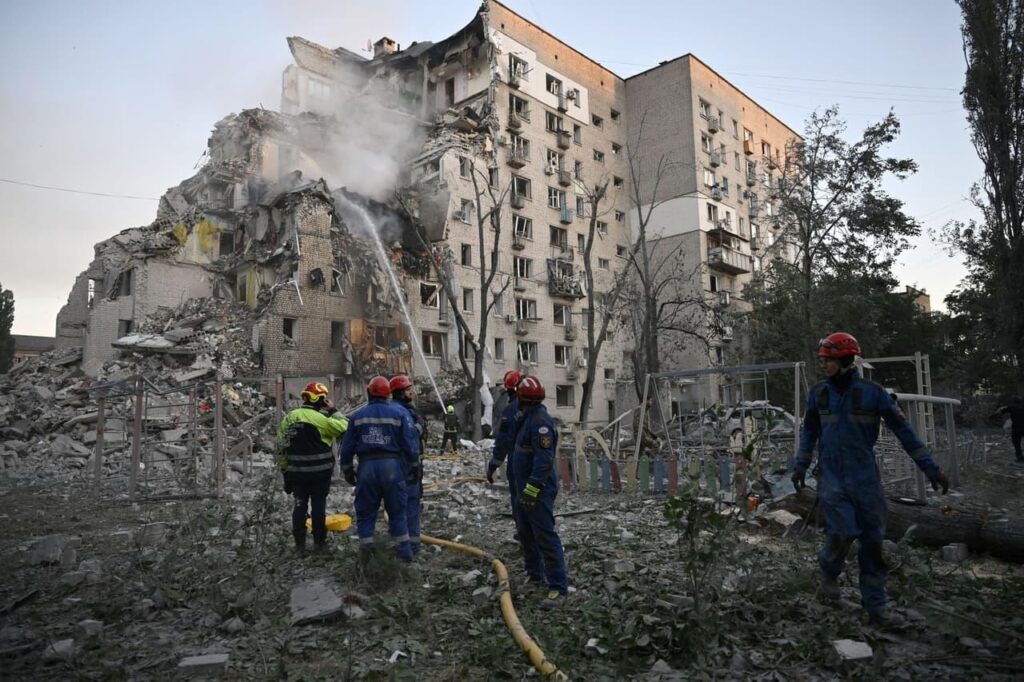
In Ukraine, reports of Russian missile strikes renewed questions about civilian safety, damage to energy infrastructure and the status of a proposed energy ceasefire. In the Black Sea, attacks on commercial vessels raised urgent concerns about missing sailors and the security of maritime routes, while responsibility for the incidents remained unresolved in the available research.
Elsewhere, research published by AI company Anthropic explored whether AI models could be used in the development of self-replicating software. The findings raised a technical security question, but did not establish that a complete, uncontrolled AI replicator was spreading in the real world. Meanwhile, a reported French interception of the tanker DF Peak raised questions about maritime enforcement and legal authority that still require documentary verification.
Financial markets supplied another test of careful interpretation. Semiconductor and AI-related stocks came under pressure, but a market decline alone cannot establish that the wider AI investment boom is a bubble.
These are five distinct subjects. The available research does not establish that they share a common cause. Their connection is the standard required to understand consequential news: distinguish what has been reported from what has been established, identify who is making a claim, examine the supporting evidence and state clearly what remains unresolved.
Ukraine’s Latest Strikes and the Unanswered Ceasefire Question
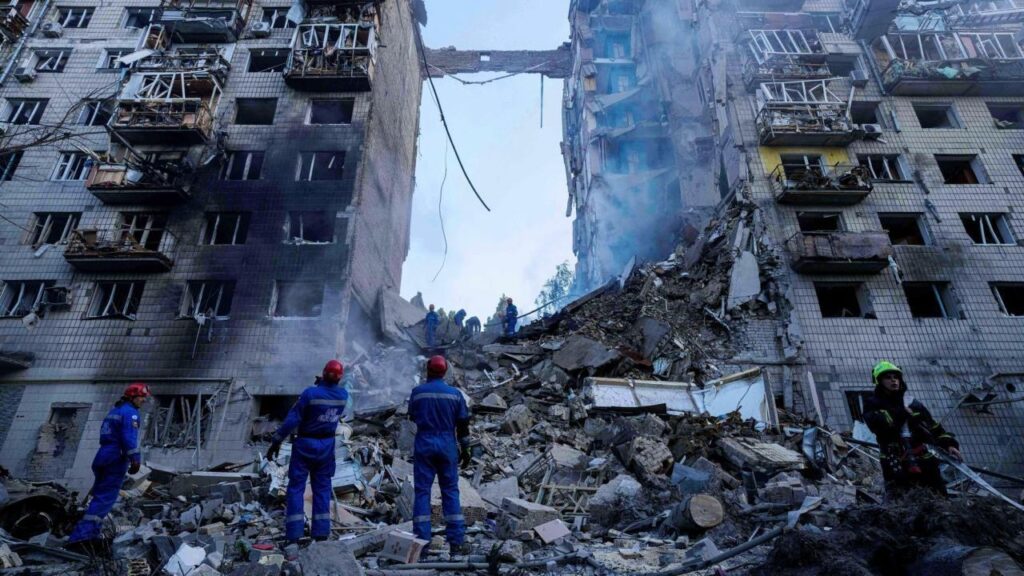
Reports from Ukraine on 13 October described fresh Russian missile strikes in Kyiv and injuries at an educational institution in Rivne. The incidents were separate and should be examined individually.
According to Euronews’ report on the strikes in Kyiv and Rivne, at least 25 people were injured at an educational institution in Rivne. The report also described strikes affecting civilian infrastructure in Kyiv.
The casualty figures reproduced in the initial research materials contain a discrepancy involving the Kyiv death toll. That discrepancy must be checked against updated official records and the relevant reporting before a definitive figure is published. Choosing one number without resolving the conflict would create an appearance of certainty that the available material does not support.
The reported damage to energy infrastructure is also significant, but the extent of its operational consequences requires evidence. Photographs of damage, emergency-service reports and technical information may help establish what was affected. They do not automatically reveal how long a facility was disrupted or the full impact on electricity supply and other services.
The wider diplomatic question concerns an energy ceasefire announced by United States President Donald Trump on 11 October.
Trump said the parties had agreed to the arrangement. Subsequent reporting, however, raised questions about whether the parties had received and accepted the same terms. The Kyiv Independent reported that Trump’s energy-ceasefire announcement came as news to Kyiv. Ukrainian President Volodymyr Zelenskyy later said Ukraine was prepared to stop attacks on Russian energy infrastructure if Russia reciprocated. On 12 October, Zelenskyy called for further pressure from the United States and European countries to make a genuine ceasefire possible.
Reports of strikes followed on 13 October. The sequence is important, but chronology alone does not establish that an agreed ceasefire was breached.
What would establish a ceasefire violation?
Before concluding that a ceasefire was violated, investigators and journalists need to establish the arrangement’s actual terms and status. Was there a written agreement or documented understanding? Which facilities were covered? When was the arrangement supposed to begin? Did the parties accept the same conditions? Was there a monitoring mechanism, and what evidence would demonstrate non-compliance?
These questions determine whether a particular incident falls within the scope of an arrangement and whether it occurred after the relevant conditions took effect.
A public announcement may communicate a diplomatic intention, but it does not necessarily resolve every question about implementation. Equally, the absence of a complete agreement in the available research does not prove that no understanding existed.
The responsible conclusion is therefore limited but important: reported strikes and their consequences can be investigated even while the diplomatic status of the proposed ceasefire remains unresolved.
The next steps are to establish the terms of the arrangement, obtain relevant official responses from Washington, Kyiv and Moscow, confirm the incident chronology and verify updated casualty and damage records.
Black Sea Shipping Attacks: The Incidents and the Question of Responsibility
The Black Sea is both a region affected by war and a commercial space through which ships carry goods between countries and markets. Attacks on merchant vessels therefore raise concerns about crew safety, vessel losses and the security of maritime operations.
The research assembled for this edition says Bulgarian authorities reported attacks on two commercial vessels on 6 October. On 13 October, two more cargo ships were reported struck. One of them, the HS Dignity, sailing under the flag of Guinea-Bissau, reportedly sank. Eleven sailors were reported missing in the coverage available to the newsroom, and search-and-rescue operations resumed on 14 October.
The Associated Press report on the Black Sea drone attacks and rescue operations provides further details about the vessels and the response to the incidents. The fate of the missing crew members is the immediate human concern. Their status, the final rescue figures and the complete sequence of events must be confirmed through updated official records.
The vessel details also matter. The Associated Press reported that the Chelsea-3 was Ukrainian-owned, registered in Odesa and sailing under the Maltese flag. The Dignity was reported as registered in Guinea-Bissau.
A vessel’s flag, ownership, management and operating arrangements are different things. They can involve different jurisdictions and different responsibilities. Accurate reporting must preserve those distinctions rather than treating them as interchangeable.

Suspicion is not proof of attribution
Bulgarian officials expressed suspicion that Russia was behind the attacks while acknowledging that conclusive proof was lacking. Russia’s ambassador said he did not have information from the Russian Defence Ministry about the incidents and suggested that a third party could be responsible.
These statements represent competing public positions. Neither establishes who carried out the attacks.
The Russia–Ukraine war is relevant context for understanding the region’s security environment. It is not, by itself, proof that a particular government, military unit or other actor launched an attack on a specific vessel.
Attribution requires evidence that can withstand scrutiny. Relevant material may include authenticated vessel-tracking records, satellite imagery, verified photographs, forensic examination of recovered material, damage assessments and findings from the authorities investigating the incidents.
Investigators also need a reliable chronology. Which ships were attacked on 6 October, and which were struck on 13 October? Where was each vessel at the relevant time? What damage was documented? How many crew members were aboard? What is the latest confirmed status of those initially reported missing?
Without a careful reconstruction, details from different incidents can be confused, and early casualty or vessel information may be repeated after it has become outdated.
Why the attacks matter beyond the ships
The consequences extend to crew members and their families, ship operators, flag states, maritime authorities and commercial businesses that depend on secure routes.
Operators may need to assess personnel safety, insurance, vessel routing and operating conditions. However, the scale of any wider disruption should be measured rather than assumed. Reports of attacks do not automatically establish a specific change in shipping costs, trade volumes or regional economic performance.
The research also identifies Bulgaria’s announcement that it planned to join a NATO anti-drone initiative by 30 October. This was a stated future step at the research cut-off, not evidence that the initiative had already been implemented or that it would prevent further attacks.
Can AI Replicate and Spread Across Connected Devices?
Artificial intelligence can assist with increasingly complex coding and technical tasks. These capabilities create opportunities for developers and researchers, but they also raise questions about how the technology might be misused.
On 12 October, Anthropic published research examining whether AI models could be used to construct self-replicating malware without relying on conventional data-centre infrastructure.
In its original research, Anthropic examined whether AI models could self-replicate without access to a data centre. The work explored a concept described as a “weight-based replicator”. In simplified terms, a model’s weights are numerical parameters that encode what the model has learned. The research examined whether a model could be carried with the software needed to run it and operate across different hardware environments.
Anthropic reported that a model with nine billion parameters got inference running on eight of nine tested hardware types.
That is a technical result worth examining. It concerns the ability to get a model running across the tested hardware. It does not, by itself, demonstrate a complete self-replicating cyberattack.

The gap between an experiment and a real-world threat
For a system to spread independently across devices, several additional challenges would have to be overcome. It would need a way to reach other devices, obtain appropriate access, transfer or obtain the relevant model and software, operate within hardware constraints and repeat the process reliably.
A failure at any one of these stages could prevent the system from becoming a viable self-replicating threat.
Most importantly, Anthropic’s account stated that the researchers had not achieved a complete rogue replicator. The available research therefore does not establish that an uncontrolled AI worm is currently spreading across real-world devices.
That distinction is essential. A technical experiment exploring a possible capability is not the same as evidence of an active incident.
The research nevertheless raises a legitimate security question. Cybersecurity work often involves identifying how existing capabilities might be combined and misused before an attack becomes practical. An incomplete technique may still reveal weaknesses that developers and security teams should examine.
But forecasting risk requires more than describing a possible mechanism. Researchers need to assess whether the findings can be reproduced independently, how much computing power and storage a practical system would require, how it would handle unfamiliar devices, what permissions it would need and which security controls could interrupt the process.
The supplied research does not answer all those questions conclusively.
What should happen next?
Anthropic is the primary source for the findings discussed here. Independent technical assessment would help establish how reproducible the results are and how closely the experimental conditions resemble realistic environments.
The research should not be dismissed simply because it comes from an AI company. Nor should it be accepted without scrutiny. The appropriate response is to examine the methods, demonstrated results, limitations and evidence needed to assess the risk independently.
There are also practical defensive questions for device manufacturers and network operators. Access controls, software-update mechanisms, monitoring systems and restrictions on application permissions are relevant areas of cybersecurity practice. The supplied research does not establish that one particular measure would eliminate every possible risk, or that all connected devices face the same level of danger.
France’s Interception of the DF Peak: Why the Legal Record Matters
The reported interception of the tanker DF Peak raises questions about maritime sanctions enforcement, vessel registration and the legal authority governments use when stopping a ship at sea.
This section remains subject to editorial verification. The available research does not provide enough documentary evidence to establish a final legal conclusion, and the case must not be presented as a definitive finding of wrongdoing.
Reuters’ report on France’s interception of the DF Peak tanker said French military personnel intercepted the vessel approximately 450 nautical miles south of Réunion. The tanker had previously used the name Kaliningrad and was reportedly flying the flag of Benin. French authorities expressed doubts about the flag and ordered the vessel to Réunion for examination.

Reuters also reported that the tanker had been subject to United States, United Kingdom and European Union sanctions in 2024. The supplied material describes the vessel as partially loaded and cites tracking information placing it off Madagascar on 12 October. A Hong Kong-based manager named in the reporting, Zheng Xin Marine, could not be reached for comment.
These details are leads for further investigation. They do not, by themselves, establish that the tanker violated sanctions during the voyage in question.
What is known, and what remains to be established?
A prior sanctions designation is not the same as proof of a specific offence on a particular voyage. To establish what happened, the newsroom needs the exact sanctions designation records, official registration and ownership information, relevant cargo documentation, and the legal basis for the interception.
The outcome of the French examination is also material. Did it establish that the vessel’s flag was invalid? Were formal proceedings initiated? Were any legal findings made by a competent authority? The available research does not conclusively answer those questions.
Russia’s embassy in France reportedly described the action as piracy and a violation of international law. That is an allegation by the Russian government, not a legal finding. Equally, French authorities’ reported concerns about the vessel do not automatically establish that its flag was false or that a sanctions violation occurred.
The legal questions require documentary answers: which authority did France rely on, what grounds justified the interception, what did the examination establish, and did any subsequent legal process determine the vessel’s status?
A sanctions-law specialist may help explain the relevant framework, but expert interpretation cannot substitute for missing primary records.
The newsroom must obtain and review the official French statement and examination findings, exact sanctions listings, registration and ownership records, cargo and port documents, and relevant responses from French authorities, Russia’s embassy, the flag-state authority and the vessel manager.
Until those records have been examined, the case remains a developing research lead rather than a settled legal account.
The broader issue is significant. International sanctions depend on legal rules, accurate identification and enforceable procedures. Public scrutiny of maritime enforcement is strongest when it distinguishes what authorities suspect, what the documents show and what has been formally determined.
The AI Investment Boom Under Pressure: Does a Sell-Off Prove a Bubble?
Artificial intelligence has become a major focus of investment in semiconductors, computing infrastructure and data centres. The expectation is that demand for AI systems will support substantial business growth. Investors are also asking whether the spending commitments and valuations built around that expectation can be justified by future results.
On 13 October, Reuters reported sharp declines in semiconductor and AI-related stocks. Its report, “US chip stocks extend slide as China memory report, AI spending jitters hit sector,” identified concerns about Chinese chipmaker CXMT’s progress and uncertainty surrounding AI spending.
The Philadelphia Semiconductor Index recorded a fifth consecutive session of losses, according to the supplied research. These are reported explanations for the market movement; their precise contribution requires further analysis of company and market data.
A falling share price shows that the market valuation has changed. It does not, by itself, prove that an industry-wide investment bubble exists.
Investors may respond to expected demand, company guidance, competition, valuations, financing costs and changes in risk appetite. Understanding the market move requires examining those factors rather than assuming that one headline explains them all.

What Samsung’s preliminary guidance tells us
On 8 October, Samsung issued preliminary guidance for the third quarter of 2026. It projected sales of approximately 195 trillion South Korean won and operating profit of approximately 107.4 trillion won.
In its official third-quarter 2026 earnings guidance, Samsung gave the estimated figures and provided comparisons with the second quarter of 2026 and the third quarter of 2025.
The comparison figures reproduced in the supplied research showed second-quarter 2026 sales of 171.5 trillion won and operating profit of 89.49 trillion won. The comparable third quarter of 2025 had recorded sales of 86.06 trillion won and operating profit of 12.17 trillion won.
The preliminary figures indicated a substantial improvement compared with the periods listed. However, the distinction between guidance and final results matters: the October figures were preliminary, not final financial statements.
The supplied research identified Samsung’s earnings release and conference call as scheduled for 29 October 2026. That date was a future milestone at the original research cut-off and must be rechecked before publication or broadcast. The scheduled release must not be described as though its results were already known.
Samsung’s outlook also cannot answer every question about the AI investment boom. Semiconductor manufacturers, cloud providers, AI developers and data-centre operators occupy different positions in the supply chain and face different costs, revenue models and investment commitments.
Demand can grow while some companies underperform. A company can report strong earnings while its shares fall if investors had expected even stronger results. A market correction can occur without proving that an industry’s long-term prospects have collapsed.
What evidence can settle the question?
The central question is whether actual demand, realised earnings and future cash generation can support the spending and valuations built around AI.
Answering it requires a consistent set of evidence: verified share prices over clearly defined periods, company revenue and operating profit, capital-expenditure commitments, demand indicators, cash-flow information and comparable data about competition.
Market commentary must remain distinct from reported financial results. If an analyst argues that investment has become excessive, the reasoning and data behind that assessment should be examined. If a company projects strong growth, its forecast should be distinguished from the results eventually achieved.
The same discipline applies to competition from CXMT. The supplied reporting identifies competitive pressure as part of the market story. A fuller assessment would require company disclosures and independent technical and commercial evidence about the competitor’s capabilities, production and market position. Without that work, it would be premature to claim that competition alone explains the sell-off.
The implications also differ across groups. Investors are directly exposed to share-price movements, while workers, suppliers, customers and businesses relying on AI infrastructure are affected by actual company decisions, demand and investment returns. Those wider consequences must be demonstrated rather than inferred from a single day’s trading.
What These Five Stories Tell Us About Evidence
The five subjects examined here are not evidence of one common global cause. They are distinct developments that require different kinds of proof.
In Ukraine, reported strikes and their human consequences must be examined separately from the unresolved question of whether a common, operational ceasefire had been established. In the Black Sea, reported attacks and the loss of a vessel demand serious investigation, but suspicion and geopolitical context alone cannot conclusively assign responsibility.
In AI research, an experiment can reveal a potential capability without proving that a complete, uncontrolled threat already exists. In the DF Peak case, a reported interception and sanctions history do not replace the legal and documentary records needed to establish what happened. In financial markets, falling share prices raise questions about expectations and risk, but do not prove an industry-wide bubble.
Evidence-led journalism does not mean treating every claim as equally credible or avoiding conclusions. It means matching each conclusion to the strength of the available evidence, identifying who is making a claim, preserving material uncertainty and explaining what new information could change the assessment.
Sometimes the evidence supports a clear answer. Sometimes it supports only part of a claim. And sometimes the responsible conclusion is that essential records are still missing.
The next stage of these stories depends on what investigators, public authorities, technical researchers and companies establish. Updated incident records may clarify the Ukraine and Black Sea questions. Independent technical work may refine the assessment of AI-assisted self-replication. Documentary and legal findings are needed before the DF Peak case can support a definitive conclusion. Financial disclosures will help test expectations surrounding AI investment.
Until then, the essential task is to distinguish what is documented from what is alleged, what has been demonstrated from what remains hypothetical, and what has changed from what is still unknown.
That is the work of looking beyond the headlines.

Recommended Articles
1.Africa News Weekend Roundup: September 28 – October 4, 2026
Explore the major political, economic and security developments shaping Africa.
2.Nigeria News Roundup: Reforms, Security and Energy
Read more about the policies, security challenges and energy developments affecting Nigeria.
3.Global News Roundup: War, Energy, AI and the Economy
Understand the international developments influencing economic policy, technology and global affairs.
4.Nigerians Hate Tinubu? What the Data Really Shows
Examine public opinion, political narratives and the evidence behind claims about Nigerians’ views of President Bola Tinubu.
About the Author



