Tupac Shakur Murder: 30-Year Mystery Finally Ends
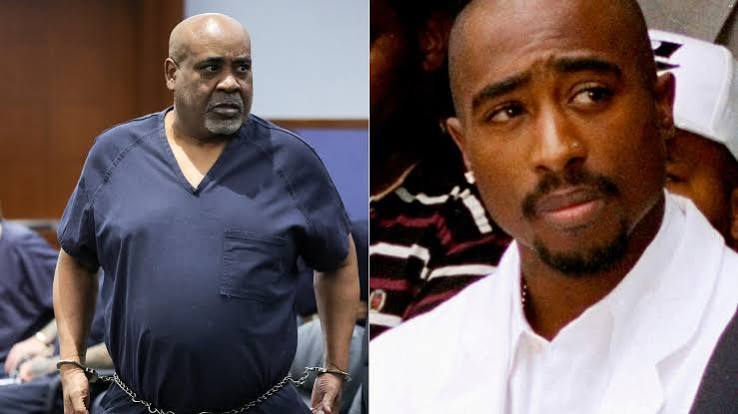
Nearly 30 years after Tupac Shakur was fatally shot in Las Vegas, the Tupac Shakur murder case has finally produced a conviction, with former gang leader Duane “Keffe D” Davis found guilty of first-degree murder with a deadly weapon.
A Nevada jury reached the verdict after less than three hours of deliberation, bringing a major legal development to a case that remained unresolved through decades of speculation, conspiracy theories and failed attempts to establish criminal responsibility. Davis, 63, was the first person charged in connection with Shakur’s killing and has said he intends to appeal.
The conviction does not answer every question surrounding the 1996 shooting. Davis was not accused of firing the weapon himself. Prosecutors instead argued that he orchestrated the attack, supplied the gun and directed the retaliation that led to Shakur being shot from a white Cadillac.
The case’s significance lies not only in the verdict but in how prosecutors eventually built a case after investigators had struggled for years to move the Tupac Shakur murder investigation toward a conviction.
The Tupac Shakur murder case began in Las Vegas
Shakur was 25 when he was shot on September 7, 1996, while travelling through Las Vegas. The rapper had been attending a Mike Tyson heavyweight boxing match earlier that evening and was travelling in a BMW driven by Death Row Records co-founder Marion “Suge” Knight.
A white Cadillac pulled alongside the vehicle at a red light and gunfire erupted. Shakur was struck multiple times and died six days later from his injuries.
Knight survived the attack after being wounded.
The killing occurred during one of the most turbulent periods in American hip-hop, when tensions between the East Coast and West Coast rap scenes were closely intertwined with gang rivalries. Shakur had become one of the most influential figures in rap, and his death rapidly developed into one of the genre’s defining mysteries.
For years, however, the investigation failed to produce a murder conviction.
Why did the Tupac murder case remain unsolved?

The absence of a conviction for almost three decades helped transform the Tupac Shakur murder into a cultural mystery as much as a criminal investigation.
The killing generated competing theories about who ordered the attack, who fired the shots and what role gang rivalries played in the events of that night.
One central figure was Orlando Anderson, Davis’s nephew. Prosecutors argued that Anderson was involved in the shooting and that Davis had organised the attack after Anderson was involved in a confrontation with Shakur and members of his entourage earlier that evening.
Anderson died in an unrelated shooting in 1998. He had denied involvement in Shakur’s killing.
His death meant that one of the people prosecutors associated with the shooting could never face trial.
Davis eventually became the central surviving figure from the group prosecutors said was inside the white Cadillac.
That distinction became important decades later.
The evidence that changed the Tupac Shakur murder case
The prosecution’s case was unusual because a significant part of its argument centred on Davis’s own words.
According to evidence presented at trial, Davis had acknowledged for years that he was inside the Cadillac from which the fatal shots were fired.
One particularly important piece of evidence was a recording of a 2008 police interview. Davis discussed his role in the killing during an interview connected to the investigation into the death of fellow rapper Christopher Wallace, known as The Notorious B.I.G.
Davis said he was in the vehicle but maintained that he did not fire the gun.
The prosecution later used statements from other interviews and public appearances, as well as Davis’s 2019 memoir, Compton Street Legend, to establish a pattern of admissions about his involvement.
The case therefore did not depend simply on investigators discovering a new witness decades after the shooting. Prosecutors argued that Davis had effectively been describing his own role in the case for years.
Reuters reported that prosecutors relied heavily on Davis’s public admissions, memoir and recorded statements, while the defence argued that the statements were exaggerated and lacked independent corroboration.
Why Davis’s own words became important evidence
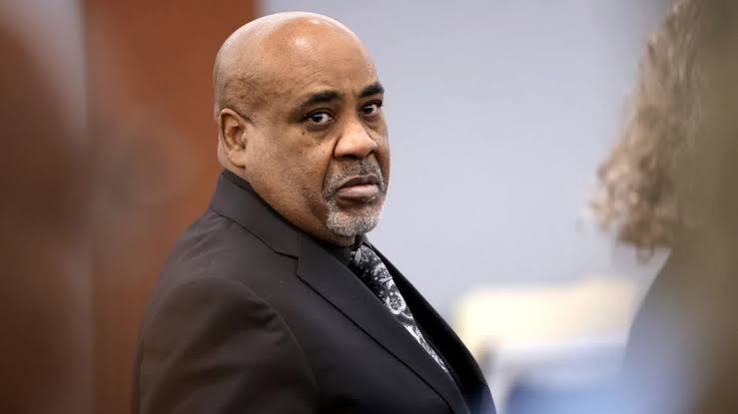
Davis’s statements had not always represented a straightforward admission of guilt.
He consistently maintained that he did not fire the fatal shots. His defence also argued that his public accounts should not be treated as reliable descriptions of the crime.
The defence sought to portray Davis as someone who exaggerated stories about his past to attract attention and generate income.
His lawyer, Michael Sanft, argued that Davis’s accounts were essentially fiction and that prosecutors were asking jurors to treat stories told for publicity as evidence of murder.
That created the central conflict at trial.
The prosecution wanted jurors to take Davis’s repeated descriptions of the killing seriously. The defence wanted them to regard those descriptions as unreliable boasts.
The jury ultimately accepted the prosecution’s interpretation.
Prosecutors portrayed Davis as the organiser
Prosecutors did not need to establish that Davis personally fired the weapon.
Their case was that he played the role of organiser or “shot caller” in the events that led to Shakur’s death.
Prosecutors argued that Anderson had been involved in a confrontation with Shakur and his associates earlier in the night and that the shooting represented retaliation.
They alleged that Davis obtained the firearm, assembled the group and directed the attack.
The prosecution therefore presented the killing as a planned act of retaliation rather than an unexplained shooting.
That distinction was crucial to the case against Davis.
If Davis did not fire the weapon, the prosecution still needed to persuade jurors that his role in organising the attack made him criminally responsible for the murder.
Nevada law allowed prosecutors to pursue that theory of responsibility.
The defence argued that Davis was a storyteller
Davis’s lawyers offered a sharply different interpretation.
They argued that his statements about Tupac were unreliable and that he had exaggerated his role for financial and publicity reasons.
The defence pointed to Davis’s memoir, interviews and public appearances as examples of how he had built a public identity around his connection to the famous murder.
Their argument was straightforward: a person telling sensational stories about a famous crime is not necessarily confessing to it.
The defence also challenged the lack of independent evidence directly connecting Davis to the fatal shooting.
The prosecution, however, argued that the repeated nature of Davis’s statements made it difficult to dismiss them as isolated inventions.
That dispute ultimately went to the jury.
The jury reaches a verdict
After closing arguments, jurors were given the case and reached a decision in less than three hours.
Davis was found guilty of first-degree murder with a deadly weapon.
The verdict represents the first conviction in the Tupac Shakur murder case, ending a legal investigation that had remained unresolved for nearly 30 years.
Davis stood in court as the verdict was read and later indicated that he intended to appeal.
Judge Carli Kierny set his sentencing for October 13.
Davis could face life in prison without parole, although the final sentence will be determined by the court.
Tupac’s family reacts to the conviction
The verdict produced an emotional response inside the courtroom.
Members of Shakur’s family held hands as the decision was read. Some cried and embraced.
His sister, Sekyiwa “Set” Shakur, was among those visibly affected by the verdict and embraced a prosecutor after the decision.
Outside the courtroom, fans also reacted emotionally, with reports of both tears and celebrations.
The response reflected the unusual place Shakur occupies in popular culture.
He was not simply a successful recording artist. His music, public image and political and social commentary made him an enduring cultural figure whose influence continued long after his death.
A murder that changed hip-hop history
Shakur’s death occurred at the height of the East Coast-West Coast rivalry that had come to define much of 1990s American hip-hop.
The rivalry involved major artists, record labels, producers and entourages, while tensions between the Bloods and Crips added another layer of danger to an already volatile environment.
Shakur had become closely associated with the West Coast scene after joining Death Row Records.
His albums and songs made him one of rap’s most commercially successful artists. He has sold more than 75 million records worldwide, according to the supplied source material.
His death therefore became larger than a single criminal investigation.
It became part of the mythology of hip-hop itself.
For generations of fans, the unanswered questions surrounding his killing became inseparable from discussions about violence, gang culture, celebrity and the rivalry that dominated rap music during the 1990s.
What the conviction changes
The conviction gives the Tupac Shakur murder case something it had lacked since 1996: a criminal verdict establishing legal responsibility for the killing.
But the verdict should not be interpreted as meaning every element of the case has been resolved.
Davis was convicted based on the prosecution’s theory of his role in orchestrating the killing. He was not accused of being the person who physically fired the fatal shots.
The prosecution’s case also relied substantially on Davis’s own statements, making the interpretation of those statements central to the verdict.
The conviction therefore closes an important legal chapter while leaving aspects of the wider story subject to continuing debate.
The next stage is Davis’s appeal
Davis told the court after the verdict that he intended to appeal.
His sentencing is scheduled for October 13.
The appeal process will provide another opportunity for his lawyers to challenge the conviction and the evidence used against him.
For now, however, the legal status of the case has changed dramatically.
A murder that remained unresolved for almost three decades has resulted in a conviction.
Why the Tupac Shakur murder verdict matters beyond the courtroom
The Tupac Shakur murder case has survived for nearly three decades because it sits at the intersection of crime, music, celebrity and American cultural history.
The investigation outlived some of the people connected to it. It generated countless theories and became one of the most recognisable unsolved cases associated with popular music.
The conviction of Duane Davis changes that narrative.
It establishes a legal finding of responsibility where there had previously been years of uncertainty.
Perhaps the most striking element is that the evidence prosecutors used to finally secure the conviction included statements Davis himself had made over many years.
A 2008 police interview, a later memoir and public accounts that once helped sustain his notoriety ultimately became central to the prosecution’s effort to hold him accountable.
The case is therefore not simply a story about a murder finally reaching court. It is also a story about how a decades-old investigation can be transformed when a suspect’s own public narrative becomes evidence.
For Tupac’s family, the conviction represents a long-awaited legal development.
For hip-hop, it marks the closing of one of the genre’s most enduring murder mysteries.
And for the American justice system, it demonstrates the difficult path from an unsolved killing to a courtroom verdict — even when nearly three decades have passed.
The Tupac Shakur murder case is no longer without a conviction. But with Davis preparing to appeal and questions remaining about the precise roles of those involved in the 1996 shooting, the legal story is not necessarily over.
SOURCE NOTE
The supplied primary source was a BBC report. Current reporting from Reuters independently confirms the September 2026 conviction, Davis’s role as the alleged organiser rather than shooter, the reliance on his statements and the October 13 sentencing date.
RELATED STORIES:
About the Author