Introduction
Nigeria News Today examines the major developments shaping the country, from President Bola Tinubu’s security directives ahead of the 2027 elections to the Rivers State pipeline explosion, federal revenue allocations, the reopening of the First Niger Bridge and progress in electricity metering. These stories highlight the continuing challenges of public safety, infrastructure, revenue management and essential services across Nigeria..
These developments concern different institutions and affect Nigerians in different ways. Together, they raise important questions about the implementation of government decisions, the protection of communities, the management of public funds and the performance of essential services.
The government’s security directives set out its priorities, but their effectiveness must be assessed through verifiable results. The explosion in Aleto has raised questions about injuries, property damage and allegations of earlier warnings. Meanwhile, the reported distribution of approximately ₦2.429 trillion in public revenue highlights the need to distinguish money allocated to governments from money spent and services delivered.
The reopening of the First Niger Bridge restored access to a major transport connection, while electricity metering figures indicated an increase in reported coverage. In both cases, the long-term benefits depend on evidence of implementation and performance.
This review examines five major stories and the facts, questions and consequences surrounding each development.
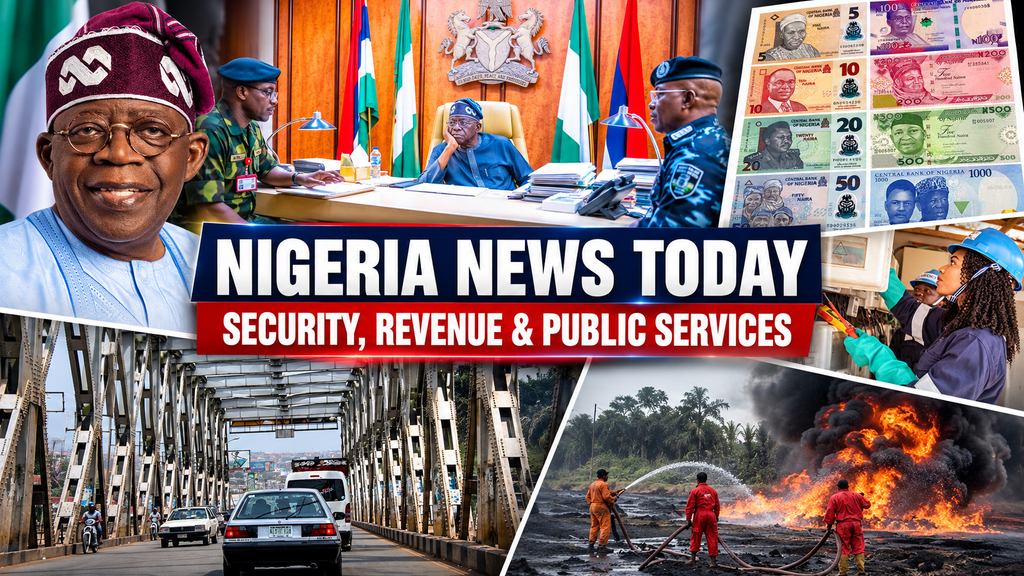
Story 1: Tinubu’s Security Directives — Measuring Results and Election Readiness
President Bola Tinubu has directed security agencies to intensify operations against terrorists and bandits, rescue abducted Nigerians and help create a secure environment for the 2027 elections.
Defence Minister Christopher Musa disclosed the directives after a National Security Council meeting chaired by the President at the Presidential Villa on 15 October.
According to TheCable’s report on the security directives, the President also called for efforts to ensure credible elections and rescue abducted citizens. Musa said the government was pursuing measures involving recruitment, training and equipment procurement, and referred to nearly ten aircraft and helicopters expected to be inaugurated.
The announcement sets out several responsibilities for Nigeria’s security institutions: responding to armed groups, pursuing the rescue of abducted people and preparing for an electoral process in which voters, candidates and election workers can participate without intimidation.
However, announcing priorities is not the same as demonstrating results. It remains unclear whether all the aircraft and helicopters mentioned are operationally ready. The announcement also does not establish how many abducted people have been rescued as a result of these directives or whether security conditions have measurably improved.
For families waiting for abducted relatives, the most important outcome is their safe return. For communities affected by armed violence, the concern is whether security operations reduce threats and allow residents to live, work and travel more safely.
The 2027 elections add another dimension to these responsibilities. Security preparations must protect voters, candidates, election officials and citizens participating in the electoral process. The public will need clear information about the agencies responsible, the preparations being undertaken and the progress that can be independently confirmed.
The government has stated its priorities. Their effectiveness must ultimately be judged through credible evidence of implementation and operational results.
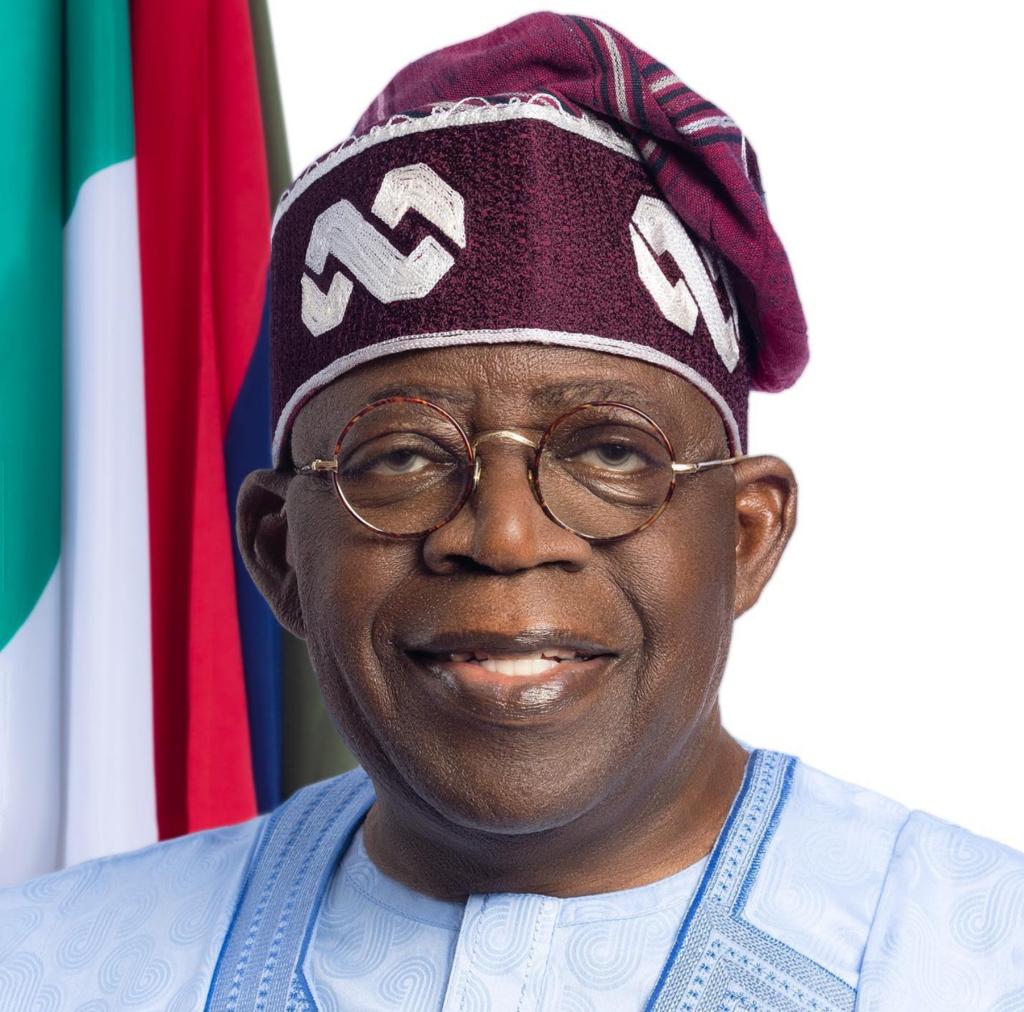
Story 2: Aleto Pipeline Explosion in Rivers State — What Caused the Incident?
An explosion involving a pipeline was reported in Aleto community, Eleme Local Government Area of Rivers State, at around 5 p.m. on 15 October.
Initial reports said at least 20 people were injured and approximately 50 houses were damaged or destroyed. The incident occurred along Old Bori Road, and reports attributed the pipeline to the Nigeria Gas Company.
TheCable’s report on the Rivers State pipeline explosion described the reported injuries and property damage and included residents’ allegations that the pipeline had been leaking before the explosion.
The casualty and damage figures were preliminary at the time of the reporting. The final number of people injured and the full extent of the damage require confirmation.
Residents reportedly alleged that the pipeline had been leaking for several weeks and that community representatives had notified the company or relevant authorities before the incident. These claims raise an important question: if the danger was reported before the explosion, what response followed?
The allegations should not be treated as proof that a company or public authority received a warning and ignored it. That conclusion would require evidence establishing the warning, who received it and what action was taken.
A credible investigation should examine pipeline inspection and maintenance records, reports of suspected leaks, relevant communications, emergency-service records and the operator’s response. The findings of any formal technical investigation would be essential to determining the cause and establishing whether safety requirements were breached.
The immediate priorities are to confirm the condition of those injured, document damage to homes and businesses, investigate the cause and ensure that the affected area is safe.
The incident also raises broader questions about how communities living near pipelines report suspected hazards and how operators and authorities respond to those reports. Whether those systems failed in this case remains to be established.
For residents, the important outcomes are reliable information, appropriate attention to those injured, an accurate assessment of the damage and action to address any continuing safety risks. Responsibility for the explosion should be determined by evidence rather than assumption.
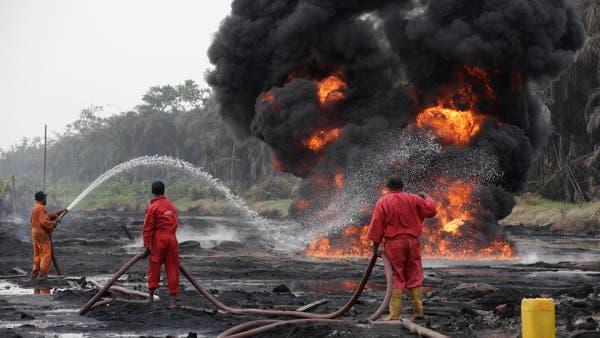
Story 3: FAAC Shares ₦2.429 Trillion — Revenue Is Not the Same as Spending
A Federal Ministry of Information release dated 15 October reported that ₦2.428823 trillion was distributed among the Federal Government, state governments and local government councils for September 2026. The release put gross revenue at ₦3.913 trillion.
The reported allocation breakdown was:
- Federal Government: ₦832.242 billion.
- State governments: ₦799.872 billion.
- Local government councils: ₦560.660 billion.
- Derivation revenue for oil-producing states: ₦236.049 billion.
These four amounts add up to ₦2.428823 trillion, matching the stated distributable total.
The ministry’s release, however, refers to an October 2025 FAAC meeting despite discussing revenue for September 2026. That apparent year inconsistency requires clarification. A separate report by Channels Television on the September 2026 revenue allocation refers to an October 2026 FAAC meeting.
The date inconsistency should be clarified by the ministry or the FAAC secretariat. It does not, on its own, establish wrongdoing.
The larger question is what the allocation means for Nigerians.
Revenue distributed to the different tiers of government forms part of the resources available to them. Federal, state and local authorities make spending decisions within their respective responsibilities, including decisions affecting infrastructure and public services.
But three concepts must remain distinct: revenue allocated, money spent and services delivered.
An allocation announcement describes the distribution of revenue. It does not establish that the recipient government has spent the funds. Even where expenditure has occurred, spending alone does not prove that a project was completed or that a public service improved.
The amount received by a state, for example, does not by itself establish whether a road has been completed, whether a health facility has received the resources it needs or whether local services have improved.
To assess what Nigerians gain from public revenue, the allocation figures must be considered alongside budget-execution records, expenditure disclosures, project documentation and evidence of service delivery.
The immediate task is to clarify the apparent meeting-year inconsistency. The broader accountability task is to follow the money through public records and examine what governments can demonstrate that their spending has achieved.
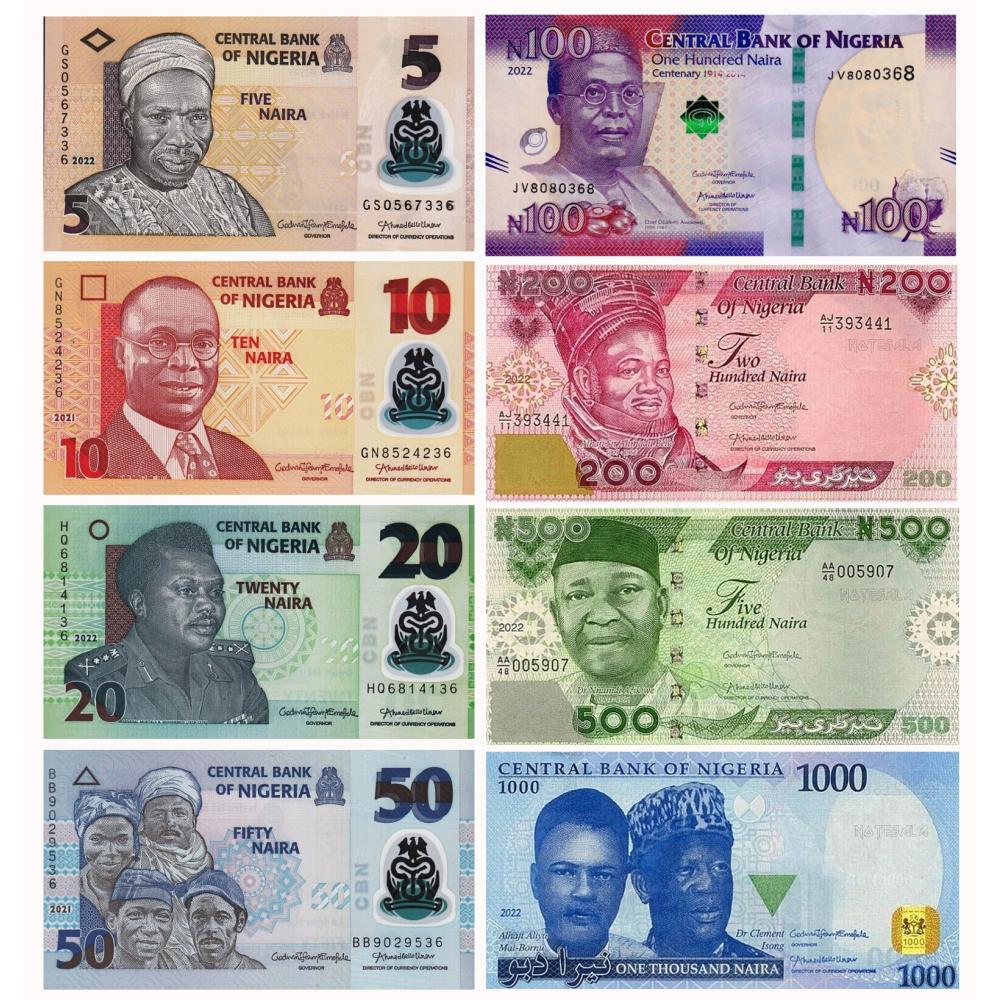
Story 4: First Niger Bridge Reopens After 38 Days — Are the Repairs Complete?
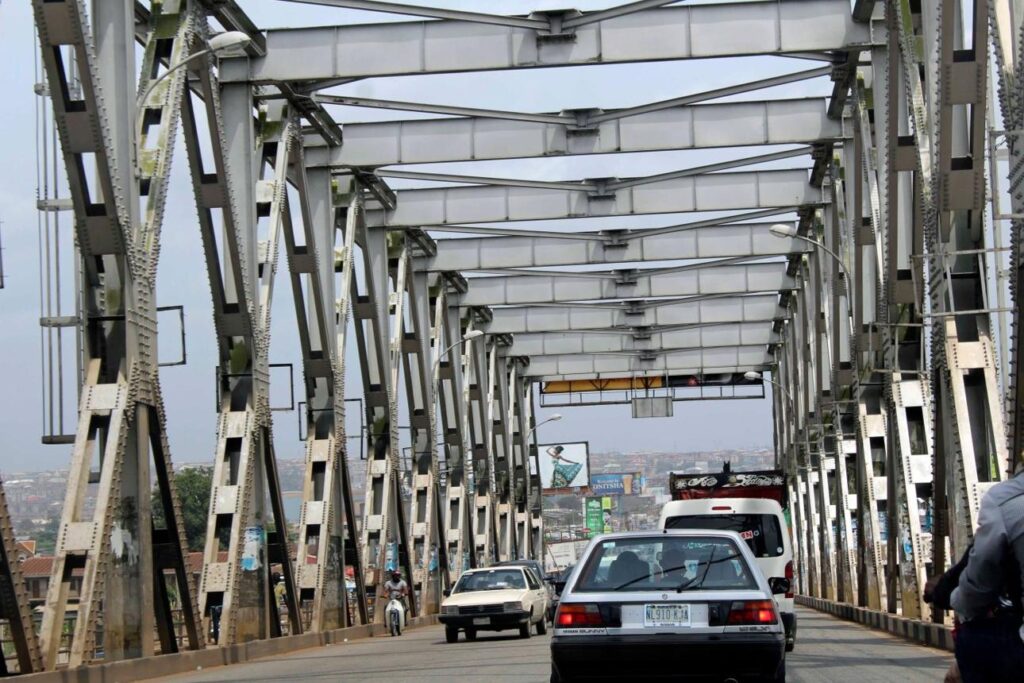
The First Niger Bridge reopened on 15 October after a reported closure of about 38 days for emergency rehabilitation.
The bridge connects Onitsha in Anambra State with Asaba in Delta State and serves commuters, traders, transport operators and businesses.
According to PUNCH’s report on the reopening, the bridge was closed on 7 September after vandalised structural components, including steelwork around expansion joints, were discovered. The initial expected reopening date was 21 September, but the closure was extended amid rainfall and other delays.
Channels Television’s report also covered the reopening and the rehabilitation work undertaken by the Federal Ministry of Works.
The reopening restored access across the route. However, the reporting used for this review indicated that some work remained outstanding. Reopening a bridge to traffic is not necessarily the same as completing every repair or independently confirming the long-term durability of the work.
For road users, the reopening is a practical improvement because it restores access across an important transport connection. But the lasting benefit depends on the quality of the rehabilitation and the ability to maintain the bridge.
The available reports do not provide an independent engineering assessment, a final completion certificate or a full maintenance plan. They also do not establish the total economic losses associated with the closure.
The relevant works authorities should clarify which tasks remain outstanding, what inspections have been conducted and what maintenance arrangements are in place. Making appropriate technical information available would help road users understand the status of the rehabilitation beyond the fact that traffic has resumed.
The reopening should be recognised as a significant development, but it should not automatically be treated as proof that every repair is complete or that long-term reliability has been independently established.
For now, the bridge is open again. The remaining questions concern the completion and quality of the repairs and the maintenance required to keep the route reliable.
Story 5: Electricity Metering Rises — What Do the Figures Mean for Customers?
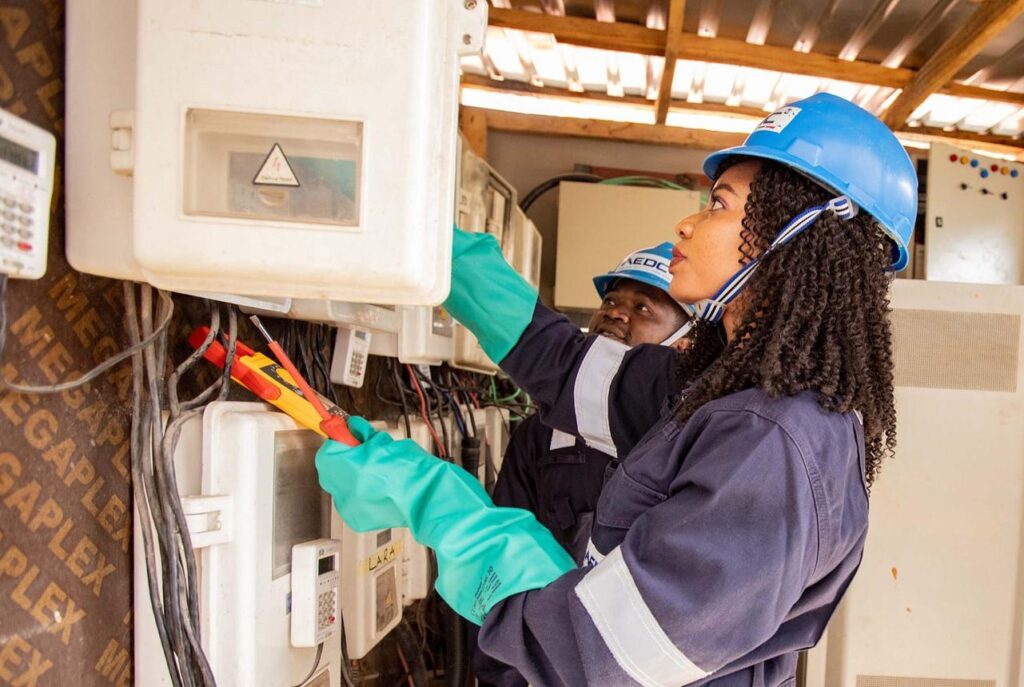
Electricity distribution companies reportedly metered 301,726 customers across Nigeria in July and August 2026, according to TheCable’s report citing Nigerian Electricity Regulatory Commission (NERC) figures.
The reported breakdown was 159,980 newly metered customers in July and 141,746 in August. The national metering rate reportedly increased from 62.37 per cent in July to 63.10 per cent in August, an increase of 0.73 percentage points.
The report attributed the figures to NERC’s metering status factsheet for the two months. The figures should be checked against the regulator’s original data and definitions before being treated as fully verified.
The reported increase indicates progress in metering coverage, but it does not, by itself, prove that electricity supply has improved, billing disputes have declined or consumers are paying less. Those outcomes require separate evidence.
A meter records electricity consumption for a customer and can help provide a basis for calculating bills. But the installation count alone cannot establish whether every meter is functioning properly, whether bills accurately reflect recorded consumption or whether customers can resolve billing disputes effectively.
The reported national rate also indicates that metering coverage remains incomplete. However, the figures cited here do not by themselves establish the exact number of customers still without meters or show how every distribution company is performing.
To assess the real impact, regulators and distribution companies need to be examined not only on the number of installations but also on functioning meters, billing complaints, estimated billing and the resolution of customer disputes.
The next step is to confirm the July and August figures against NERC’s original data and examine whether increased coverage is producing measurable benefits for consumers.
For electricity customers, the important measure is not simply how many meters have been installed. It is whether the system provides accurate bills, transparent processes and a fair way to challenge mistakes. The reported increase is a measure of coverage; the quality of the customer experience must be assessed separately.
Conclusion: The Evidence Behind Nigeria’s Public Decisions
The five stories reviewed here concern different areas of public life, but each demonstrates why announcements and headline figures must be examined alongside evidence of implementation.
The security directives set out the government’s priorities, while their effectiveness remains a matter for verifiable operational results. The Aleto pipeline explosion requires a credible investigation into its cause, the reported injuries and property damage, and the allegations of earlier warnings.
The reported FAAC distribution needs clarification of the apparent meeting-year inconsistency and must be followed through to evidence of public expenditure. The reopening of the First Niger Bridge restores access, but the completion and durability of the repairs remain important questions. The reported increase in electricity metering indicates a change in coverage, not conclusive evidence of better supply or billing outcomes.
These developments do not establish a single cause or prove a common institutional failure. They do show why responsible public accountability depends on accurate records, transparent reporting and measurable results.
For Nigerians, understanding public affairs means looking beyond what institutions say they intend to do and examining what the evidence shows they have done. That is the purpose of Nigeria: Power, Policy & People: to explain the decisions shaping the country, the institutions responsible and the questions that remain unanswered.
Recommended Articles
1.Africa News Weekend Roundup: September 28 – October 4, 2026
Explore the major political, economic and security developments shaping Africa.
2.Nigeria News Roundup: Reforms, Security and Energy
Read more about the policies, security challenges and energy developments affecting Nigeria.
3.Global News Roundup: War, Energy, AI and the Economy
Understand the international developments influencing economic policy, technology and global affairs.
4.Nigerians Hate Tinubu? What the Data Really Shows
Examine public opinion, political narratives and the evidence behind claims about Nigerians’ views of President Bola Tinubu.
About the Author