Nigeria’s presence in the global university rankings has expanded, with 29 Nigerian universities appearing in the 2027 Times Higher Education World University Rankings, up from 24 in the previous edition. Five institutions entered the ranking for the first time, providing a broader picture of Nigeria’s participation in the international higher-education landscape.
The latest results, released on September 30, 2026, place Nigeria within a wider expansion of higher-education representation across sub-Saharan Africa. Times Higher Education said the number of ranked institutions in the region increased from 55 to 69, with Nigeria recording the largest national representation at 29 universities.
The development changes the way Nigeria’s university rankings can be read. The immediate headline is the position of Covenant University, the University of Ibadan and the University of Lagos, which are jointly placed in the 801–1000 global band. But the broader story is the increase in the number of Nigerian institutions participating successfully in the ranking and the different performance areas highlighted by THE.
Nigeria University Rankings Expand From 24 to 29
The five-university increase represents the central numerical change in Nigeria’s 2027 results.
The country had 24 universities ranked in the 2026 edition. The latest table contains 29, meaning five additional institutions crossed the threshold required to receive a position in the global ranking.
The five new entrants are Osun State University, University of Maiduguri, Olabisi Onabanjo University, Kwara State University and Michael Okpara University of Agriculture, Umudike.
Their arrival does not place them all in the same part of the table. Osun State University is in the 1201–1400 band, the University of Maiduguri is in the 1401–1600 band, while Olabisi Onabanjo University and Michael Okpara University of Agriculture, Umudike are placed in the 1801–2000 and 2001+ bands respectively. Kwara State University is also in the 2001+ band.
The distinction matters because a university appearing in the global table does not necessarily mean all participating institutions occupy comparable positions. THE uses ranking bands across much of the table rather than assigning every university an individual numerical position.
The 2027 edition itself is broader than the previous one. According to the THE World University Rankings 2027 results, it covers 2,297 universities across 118 countries and territories, compared with 2,191 universities in the previous edition.

Five New Nigerian Universities Enter the Global Table
The arrival of the five new Nigerian institutions is one of the clearest changes in the national results.
Osun State University enters the 1201–1400 band, while University of Maiduguri appears in the 1401–1600 band. Olabisi Onabanjo University is placed in the 1801–2000 band. Kwara State University and Michael Okpara University of Agriculture, Umudike are in the 2001+ category.
The ranking therefore provides two different measures of Nigeria’s international university presence.
One is breadth — how many institutions are represented.
The other is position — where those institutions sit within the global ranking.
Nigeria’s 29 ranked universities show an increase in breadth, but the distribution across ranking bands demonstrates that representation remains uneven.
The top three Nigerian institutions are in the 801–1000 band. Four others — Ahmadu Bello University, Bayero University, Landmark University and the University of Ilorin — occupy the 1001–1200 band. Babcock University, Osun State University and the University of Nigeria, Nsukka are in the 1201–1400 band.
That spread continues through the remainder of the table.
Covenant, UI and UNILAG Occupy the 801–1000 Band
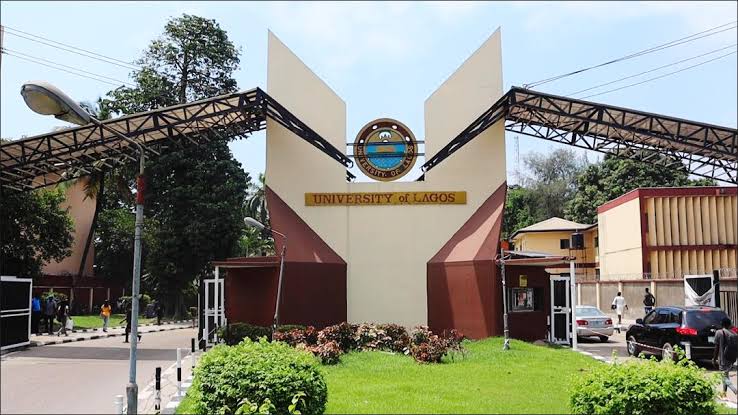
Covenant University, the University of Ibadan and the University of Lagos are jointly placed in the 801–1000 global band, making them the highest-ranked Nigerian institutions in the 2027 edition.
The result represents a change from the previous Nigerian ordering.
According to the supplied reports, Covenant University returned to the top Nigerian position after UI and UNILAG jointly occupied that position in the 2026 edition.
However, the 2027 result should not be interpreted as showing that one of the three occupies position 801 and another position 900 or 1,000. They are grouped within the same 801–1000 band.
That distinction is important when reporting global university rankings because banded results do not provide the same level of precision as an individual numerical rank.
The next group consists of Ahmadu Bello University and Bayero University, both placed in the 1001–1200 band. Landmark University and the University of Ilorin are also in that band.
The Ranking Measures More Than Reputation
The Times Higher Education ranking does not rely on a single measurement of university performance.
According to the THE World University Rankings 2027 methodology, THE evaluates research-intensive universities across five broad areas: teaching, research environment, research quality, international outlook and industry. The 2027 edition uses 17 performance indicators across those areas.
That methodology provides important context for understanding Nigeria’s results.
A university’s position is therefore not simply a measure of how well known it is among students or the general public. The ranking incorporates research-related measures alongside teaching, international engagement and links with industry.
The 2027 results also illustrate differences between Nigerian universities when individual performance areas are examined.
The supplied reports state that the University of Lagos recorded Nigeria’s highest research-quality score, at 67.8. Bayero University was identified as the Nigerian institution with the strongest international-outlook performance, while Covenant University recorded the highest industry score among Nigerian institutions.
This creates a more complicated picture than a simple national league table.
One institution may stand out in research quality, another in international outlook and another in industry connections.
For readers comparing Nigerian universities, those distinctions can be as important as the overall ranking band.
Nigeria Has the Largest Representation in Sub-Saharan Africa
Nigeria’s 29 ranked institutions also give the country a prominent place within the 2027 sub-Saharan African results.
THE says the number of ranked institutions in sub-Saharan Africa increased from 55 to 69, while Nigeria had the largest national representation with 29 universities.
The region’s highest-ranked university is the University of Cape Town, which rose to joint 147th globally from joint 164th in the previous edition.
That comparison provides useful context for Nigeria.
Nigeria has a much larger number of institutions represented in the table, but the country’s highest-ranked universities remain considerably further down the global table than the leading African institution identified by THE.
The figures therefore show both the scale of Nigeria’s higher-education system and the gap between broad representation and the position of individual institutions.
33 Nigerian Universities Appear as Reporter Institutions
One of the less prominent but significant parts of the 2027 results is the list of 33 Nigerian reporter institutions.
These universities submitted data for consideration but did not meet the requirements necessary to receive a ranking.
The distinction between a ranked university and a reporter institution is important.
A reporter institution is not the same thing as a university that simply failed to submit information. THE explains through its World University Rankings methodology that institutions that do not meet the ranking requirements can still provide data and appear as reporter institutions unless they opt out.
The 33 Nigerian reporter institutions include Abia State University, Abubakar Tafawa Balewa University, Adamawa State University, Ajayi Crowther University, Akwa Ibom State University, Baze University, Bingham University, Bowen University, Federal University of Petroleum Resources, Effurun, Rivers State University and University of Delta, among others.
The combined figures are therefore striking:
29 Nigerian universities are ranked.
33 additional Nigerian universities are listed as reporters.
That gives a broader view of Nigerian institutions engaging with the THE ranking process, even though the two groups should not be treated as equivalent.
What Does It Take to Enter the Ranking?
THE states that universities must meet specific eligibility requirements before receiving a position in the World University Rankings.
The official THE methodology states that eligible institutions must teach undergraduates, conduct research across a range of subjects and have produced at least 1,000 research publications between 2021 and 2025, with a minimum of 100 publications annually.
THE separately explains that institutions that do not meet ranking requirements can still submit data and appear as reporter institutions.
This makes research output particularly relevant to understanding why the ranking extends beyond conventional measures of teaching.
The ranking is designed around research-intensive universities, and the methodology incorporates research productivity, research environment and research quality alongside other measures.
For Nigeria, this means the expansion from 24 to 29 ranked universities cannot be understood simply as an increase in the number of institutions receiving international attention. It also reflects the number of institutions that meet the ranking framework’s eligibility requirements and participate in its data process.
A Wider Global Higher-Education Shift
Nigeria’s result comes as the global higher-education landscape continues to change.
THE’s 2027 World University Rankings analysis says Asian universities are gaining ground, with Tsinghua University moving to 11th globally and the National University of Singapore reaching 15th. The also notes that three Asian universities are now among the global top 15 for the first time.
At the top of the table, the University of Oxford retained first place for an 11th consecutive year.
The broader THE analysis also identifies funding pressures, artificial intelligence and changing approaches to university assessment as forces reshaping higher education.
Against that backdrop, Nigerian universities are competing within a global system in which research capacity, international collaboration, industry relationships and institutional adaptability increasingly shape how universities are measured.
The Nigerian numbers therefore sit within a much larger international transition.
More Universities, But Different Performance Profiles
The most significant lesson from the 2027 Nigeria university rankings is the difference between participation and position.
Nigeria has increased the number of universities appearing in the ranking from 24 to 29. Five institutions have joined the table, while 33 more are identified as reporter institutions.
At the same time, Nigeria’s highest-ranked universities remain within the 801–1000 global band, while the rest of the ranked institutions are distributed across progressively lower bands.
The results also show that institutional strengths differ.
UNILAG’s reported research-quality score, Bayero University’s international-outlook position and Covenant University’s industry score illustrate how the five THE pillars can produce different areas of institutional strength.
That makes the ranking more useful as a dataset than as a simple list of winners and losers.
For students, parents, academics and policymakers, the individual indicators can provide additional context when considering what a university is doing well and where its performance sits within the wider global system.
Nigeria’s 2027 Ranking in Numbers
The key figures tell the story:
- 29 Nigerian universities ranked
- 24 Nigerian universities in the previous edition
- 5 new Nigerian entrants
- 33 Nigerian reporter institutions
- 2,297 universities globally in the 2027 ranking
- 118 countries and territories represented
- 69 ranked institutions across sub-Saharan Africa
- 55 sub-Saharan African institutions in the previous edition
- 801–1000 band for Covenant University, UI and UNILAG
- 67.8 — UNILAG’s reported Nigerian-leading research-quality score.
Together, those numbers show a Nigerian university system with broader representation in the global ranking, but with institutions spread across several performance bands.
The Bigger Picture Behind Nigeria’s 29
The 2027 results provide a snapshot rather than a complete assessment of Nigerian higher education.
A global ranking cannot, by itself, capture every factor that matters to students or universities. THE’s own ranking methodology is built around defined indicators, with emphasis on teaching, research, research quality, international outlook and industry.
Within that framework, however, the movement from 24 to 29 is a measurable change.
The five new entrants increase Nigeria’s visibility in the global table. The 33 reporter institutions show that additional Nigerian universities are participating in the data process, although they did not qualify for a ranked position in this edition.
The challenge for institutions seeking stronger positions will therefore involve more than appearing on the list.
The 2027 results indicate that different dimensions of university performance matter simultaneously — from research output and quality to teaching, international outlook and relationships with industry.
For Nigeria, the next stage of the story will be whether the institutions now entering the global table can strengthen their positions and whether more of the reporter institutions eventually meet the criteria for ranking.
For now, the headline number is clear: Nigeria has moved from 24 to 29 ranked universities in the Times Higher Education World University Rankings.
Readers can also explore the full Times Higher Education World University Rankings for additional information on universities and ranking results.
And behind those five additional institutions is a much larger story about how Nigerian universities are positioning themselves in an increasingly competitive global higher-education system.
Recommended Coverage
Nigeria’s Polytechnic Reform: What Students Could Gain From the Changes
This provides additional context on changes affecting Nigeria’s tertiary education system and student pathways.
Obioma Success Akagburuonye: The Story Behind the Name
A related DSG Herald News feature that provides a different perspective on Nigerian education and public life.
Uche Nnaji Trial Begins After Not Guilty Plea
A separate current-affairs report useful for readers following Nigeria’s wider national news cycle.
NELFUND Refund Crisis: Schools Under Pressure
Relevant to the financial and institutional pressures affecting Nigeria’s higher-education sector.
About the Author



